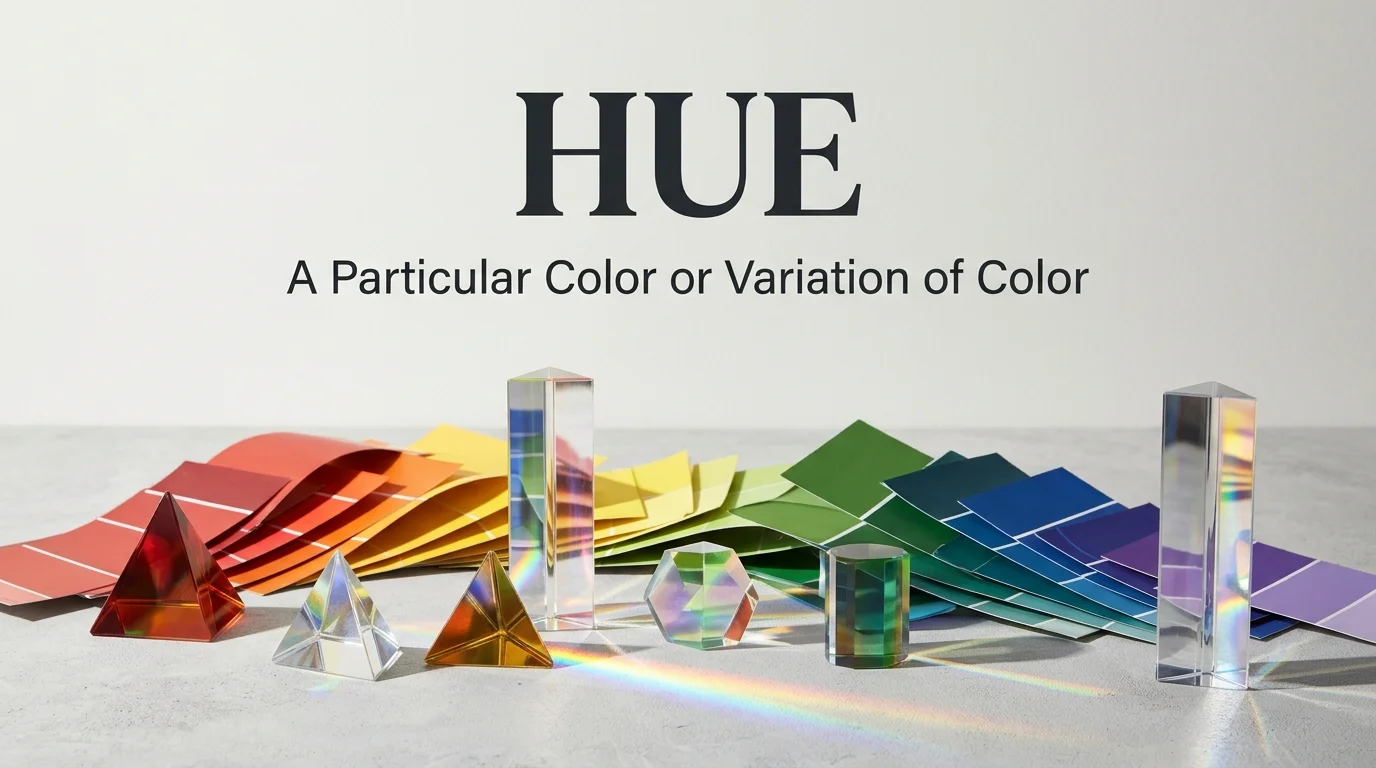
A synonym for hue is shade, tint, tone, color, or coloration. These words describe colors or variations in color. The best choice depends on the context, because some words refer to a specific color variation while others describe color more generally.
A synonym for hue is a useful search when you want to describe a sunset, choose paint for a room, or explain the colors in a photograph. The right word can make your description more vivid.
Imagine writing about a garden filled with flowers. Instead of repeating the word hue, you could describe the soft shade of a rose or the bright tint of a tulip.
Learning alternatives to hue also helps students, bloggers, content writers, and everyday English users express visual details more naturally. It makes descriptions clearer and more interesting.
Whether you are writing an essay, creating a blog post, or talking about your favorite colors, understanding hue and its alternatives can strengthen your vocabulary and communication skills.
What Does “Hue” Really Mean?
Hue is a noun that refers to a particular color or the quality that distinguishes one color from another, such as red, blue, green, or yellow.
In simple English, hue means the kind of color something has. People often use the word when discussing art, photography, interior design, fashion, nature, and digital images.
Native English speakers may use hue in everyday descriptions, but it is especially common in artistic and technical contexts. For example, a designer might adjust the hue of a photograph to make its colors warmer or cooler.
The word usually has a neutral tone. It does not automatically suggest that a color is beautiful, unpleasant, bright, or dull. Those meanings depend on the surrounding words.
Connotative Meaning
Connotation (the emotional or cultural associations a word carries beyond its basic definition) can change how readers understand a description.
- Positive tone: A golden hue can suggest warmth, beauty, or comfort.
- Negative tone: A sickly green hue can suggest illness or discomfort.
- Neutral tone: A blue hue simply identifies a color quality without expressing an opinion.
The word hue itself is generally neutral. Descriptive words surrounding it create most of the emotional effect.
Etymology of Hue
The word hue comes from Old English hīw, which referred to form, appearance, or color. It developed through the history of English into its modern meaning associated with color and its variations.
Old English (450–1100)
In Old English, hīw referred to appearance, shape, or color. Its meaning was broader than the modern use of hue, which focuses mainly on color.
Middle English (1100–1500)
During the Middle English period, the word developed into forms such as hew and hue. Its association with color and outward appearance continued to evolve.
Modern English (1500–Present)
In Modern English, hue became firmly established as a word for a particular color or color family. Today, it appears in creative writing, painting, photography, design, and color science.
Pronunciation of Hue
- US: /hjuː/
- UK: /hjuː/
Syllables
Hue — one syllable.
Affixation Pattern of Hue
- Root: hue
- Prefix: None
- Suffix: None
Hue is a simple, one-syllable word. It does not require a prefix or suffix to express its basic meaning.
Synonyms List:
Not every word related to color is an exact substitute for hue. The following alternatives include close synonyms and context-dependent choices. Each has a slightly different meaning, so choose the word that best fits your sentence.
Shade (Noun) — US /ʃeɪd/ | UK /ʃeɪd/
Meaning: A shade is a particular variation of a color, often described as lighter or darker than another version.
Tone/Register: Neutral; common in everyday English, fashion, art, and design.
Examples:
- I painted my bedroom a soft shade of blue.
- Which shade of lipstick looks best with this dress?
Color (Noun) — US /ˈkʌl.ɚ/ | UK /ˈkʌl.ə/
Meaning: Color is the general visual quality that distinguishes objects, including red, yellow, green, and blue.
Tone/Register: Neutral; suitable for almost every context.
Examples:
- The color of the sky changed before sunset.
- What color would you choose for the kitchen walls?
Tint (Noun) — US /tɪnt/ | UK /tɪnt/
Meaning: A tint is a lighter version of a color, commonly created by adding white.
Tone/Register: Neutral to technical; common in painting, cosmetics, and graphic design.
Examples:
- She selected a pale pink tint for the nursery.
- The artist added a white tint to soften the red paint.
Tone (Noun) — US /toʊn/ | UK /təʊn/
Meaning: A color tone can describe the character or appearance of a color, including its muted or softened quality.
Tone/Register: Neutral; widely used in art, photography, and interior design.
Examples:
- Warm tones made the living room feel welcoming.
- The photographer adjusted the tones in the final image.
Coloration (Noun) — US /ˌkʌl.əˈreɪ.ʃən/ | UK /ˌkʌl.əˈreɪ.ʃən/
Meaning: Coloration refers to the colors or overall color pattern of an object, animal, plant, or image.
Tone/Register: Formal to scientific; common in biology, photography, and descriptive writing.
Examples:
- The bird’s unusual coloration attracted everyone’s attention.
- The artist studied the natural coloration of the butterfly.
Pigment (Noun) — US /ˈpɪɡ.mənt/ | UK /ˈpɪɡ.mənt/
Meaning: A pigment is a substance that gives color to paint, ink, skin, or other materials.
Tone/Register: Technical; used in art, chemistry, cosmetics, and biology.
Examples:
- This paint contains a strong blue pigment.
- The researcher examined the pigments in the flower petals.
Usage note: A pigment is the coloring substance itself, not the color’s appearance. It is related to hue but is not always an interchangeable synonym.
Tinge (Noun) — US /tɪndʒ/ | UK /tɪndʒ/
Meaning: A tinge is a small amount of a color that appears in something else.
Tone/Register: Neutral; common in descriptive and conversational English.
Examples:
- The clouds had a tinge of pink at dawn.
- Her white dress showed a slight tinge of yellow.
Cast (Noun) — US /kæst/ | UK /kɑːst/
Meaning: A color cast is an overall color influence that makes an image or surface appear slightly tinted.
Tone/Register: Technical to neutral; common in photography and visual editing.
Examples:
- The old photograph had a yellow cast.
- The editor removed the green cast from the portrait.
Undertone (Noun) — US /ˈʌn.dɚˌtoʊn/ | UK /ˈʌn.də.təʊn/
Meaning: An undertone is a subtle underlying color that influences how a surface or another color appears.
Tone/Register: Neutral; common in makeup, paint selection, and design.
Examples:
- This beige paint has a warm undertone.
- The foundation has a pink undertone that suits her skin.
Overtone (Noun) — US /ˈoʊ.vɚˌtoʊn/ | UK /ˈəʊ.və.təʊn/
Meaning: In color description, an overtone is a noticeable secondary color quality that influences the overall appearance.
Tone/Register: Technical or descriptive; use when discussing layered color effects.
Examples:
- The silver fabric had a blue overtone.
- A faint golden overtone appeared in the photograph.
Usage note: In everyday English, overtone more often refers to an implied meaning or suggestion. Use it for color only when the context makes that meaning clear.
Complexion (Noun) — US /kəmˈplek.ʃən/ | UK /kəmˈplek.ʃən/
Meaning: Complexion describes the natural appearance and coloring of a person’s skin, especially the face.
Tone/Register: Neutral; common in beauty, portraiture, and personal descriptions.
Examples:
- The warm lighting complemented her complexion.
- The artist captured the natural complexion of the model.
Usage note: Complexion applies to skin appearance, not to every type of color.
Shade Variation (Noun Phrase) — US /ʃeɪd ˌver.iˈeɪ.ʃən/ | UK /ʃeɪd ˌveə.riˈeɪ.ʃən/
Meaning: Shade variation describes differences in lightness, darkness, or appearance within a color range.
Tone/Register: Neutral to technical; useful in design, printing, and product descriptions.
Examples:
- The tiles show a slight shade variation.
- The fabric collection includes several shade variations of green.
Tinge of Color (Noun Phrase) — US /tɪndʒ əv ˈkʌl. ɚ/| UK/tɪndʒ əv ˈkʌl.ə/ɚ/ | UK /tɪndʒ əv ˈkʌl.ə/
Meaning: A tinge of color is a small, often subtle amount of a particular color.
Tone/Register: Neutral; common in everyday descriptions and creative writing.
Examples:
- The snow had a tinge of blue in the evening light.
- I noticed a tinge of red around the horizon.
Color Shade (Noun Phrase) — US /ˈkʌl.ɚ ʃeɪd/ | UK /ˈkʌl.ə ʃeɪd/
Meaning: A color shade is a particular version of a color that differs from other versions in appearance.
Tone/Register: Neutral; common in shopping, fashion, and decorating conversations.
Examples:
- This color shade works well with cream furniture.
- I prefer a darker color shade for the front door.
Color Tone (Noun Phrase) — US /ˈkʌl.ɚ toʊn/ | UK /ˈkʌl.ə təʊn/
Meaning: Color tone describes the overall character of a color, including whether it appears warm, cool, muted, or balanced.
Tone/Register: Neutral to technical; useful in art and visual design.
Examples:
- The designer chose a cool color tone for the website.
- A softer color tone made the illustration more relaxing.
Pigmentation (Noun) — US /ˌpɪɡ.mənˈteɪ.ʃən/ | UK /ˌpɪɡ.menˈteɪ.ʃən/
Meaning: Pigmentation refers to the presence or distribution of pigment that gives color to skin, hair, eyes, or other materials.
Tone/Register: Scientific or formal; common in biology and dermatology.
Examples:
- The study examined pigmentation in different plant species.
- Natural pigmentation gives the butterfly its distinctive pattern.
Saturation (Noun) — US /ˌsætʃ.əˈreɪ.ʃən/ | UK /ˌsætʃ.əˈreɪ.ʃən/
Meaning: Saturation describes the intensity or purity of a color, from vivid to muted.
Tone/Register: Technical; used in photography, graphic design, and color science.
Examples:
- Increasing saturation made the flowers look more vivid.
- The designer reduced saturation to create a softer image.
Usage note: Saturation describes color intensity, not the hue itself.
Chromaticity (Noun) — US /ˌkroʊ.məˈtɪs.ə.ti/ | UK /ˌkrəʊ.məˈtɪs.ə.ti/
Meaning: Chromaticity describes the quality of a color apart from its brightness.
Tone/Register: Highly technical; common in color science, displays, and imaging research.
Examples:
- The laboratory measured the chromaticity of the light source.
- The display test compared chromaticity across different screens.
Pigmentary Color (Noun Phrase) — US /ˈpɪɡ.mənˌter.i ˈkʌl.ɚ/ | UK /ˈpɪɡ.men.tər.i ˈkʌl.ə/
Meaning: Pigmentary color refers to color produced by pigments that absorb or reflect particular wavelengths of light.
Tone/Register: Scientific; mainly used in specialized explanations of color.
Examples:
- The lesson explained pigmentary color in traditional painting.
- Pigmentary color can differ from the effects created by colored light.
Color Family (Noun Phrase) — US /ˈkʌl.ɚ ˌfæm.əl.i/ | UK /ˈkʌl.ə ˌfæm.əl.i/
Meaning: A color family is a group of related colors that share a common visual characteristic.
Tone/Register: Neutral; common in art, decorating, and fashion.
Examples:
- The designer used a blue color family throughout the room.
- Warm colors belong to a different color family from cool blues.
Chromatic Quality (Noun Phrase) — US /kroʊˈmæt.ɪk ˈkwɑː.lə.t̬i/ | UK /krəʊˈmæt.ɪk ˈkwɒl.ə.ti/
Meaning: Chromatic quality describes the color characteristics that distinguish one visual appearance from another.
Tone/Register: Academic or technical; suited to art criticism and color science.
Examples:
- The critic discussed the chromatic quality of the painting.
- The lighting changed the chromatic quality of the scene.
Color Character (Noun Phrase) — US /ˈkʌl.ɚ ˈker.ək.tɚ/ | UK /ˈkʌl.ə ˈkær.ək.tə/
Meaning: Color character refers to the distinctive visual impression created by a color or combination of colors.
Tone/Register: Descriptive; useful in design reviews and creative writing.
Examples:
- The muted palette gave the room a calm color character.
- The illustrator preserved the color character of the original scene.
Warmth (Noun) — US /wɔːrmθ/ | UK /wɔːmθ/
Meaning: In color description, warmth refers to the quality that makes colors such as red, orange, and yellow feel warm.
Tone/Register: Neutral to descriptive; common in painting, photography, and interiors.
Examples:
- The warm lighting added warmth to the wooden furniture.
- A touch of orange brought warmth to the blue composition.
Usage note: Warmth describes a quality of color rather than a specific hue.
Coolness (Noun) — US /ˈkuːl.nəs/ | UK /ˈkuːl.nəs/
Meaning: Coolness describes the visual quality associated with colors such as blue, green, and violet.
Tone/Register: Neutral; common in visual arts and design.
Examples:
- The coolness of the blue walls balanced the warm furniture.
- The artist used violet to increase the coolness of the scene.
Vividness (Noun) — US /ˈvɪv.ɪd.nəs/ | UK /ˈvɪv.ɪd.nəs/
Meaning: Vividness describes how strong, bright, and striking a color appears.
Tone/Register: Neutral to descriptive; useful in photography, art, and writing.
Examples:
- The vividness of the tropical flowers caught my attention.
- Better lighting brought out the vividness of the painting.
Brightness (Noun) — US /ˈbraɪt.nəs/ | UK /ˈbraɪt.nəs/
Meaning: Brightness describes how light or luminous a color appears.
Tone/Register: Neutral to technical; common in screens, photography, and everyday descriptions.
Examples:
- Lowering the screen brightness made the image easier to view.
- The brightness of the yellow paint stood out against the gray wall.
Usage note: Brightness is not the same as hue. A red and a blue can have different hues but similar brightness.
Dullness (Noun) — US /ˈdʌl.nəs/ | UK /ˈdʌl.nəs/
Meaning: Dullness describes a lack of brightness or vividness in a color.
Tone/Register: Neutral to negative; common in art criticism and everyday speech.
Examples:
- The dullness of the paint made the room feel lifeless.
- A brighter fabric helped reduce the dullness of the display.
Paleness (Noun) — US /ˈpeɪl.nəs/ | UK /ˈpeɪl.nəs/
Meaning: Paleness describes a light, faint, or weak appearance of color.
Tone/Register: Neutral; used in descriptions of colors, skin, and light.
Examples:
- The paleness of the blue suited the minimalist design.
- I liked the paleness of the pink flowers against the green leaves.
Richness (Noun) — US /ˈrɪtʃ.nəs/ | UK /ˈrɪtʃ.nəs/
Meaning: Richness describes the deep, full, or visually luxurious quality of a color.
Tone/Register: Positive and descriptive; common in art, fashion, and interiors.
Examples:
- The richness of the burgundy fabric made it look elegant.
- The painter captured the richness of the autumn leaves.
Muted Color (Noun Phrase) — US /ˈmjuː.t̬ɪd ˈkʌl.ɚ/ | UK /ˈmjuː.tɪd ˈkʌl.ə/
Meaning: A muted color is a softened or less intense color that does not appear especially bright.
Tone/Register: Neutral to descriptive; common in fashion, decorating, and design.
Examples:
- She chose muted colors for a peaceful bedroom.
- The muted color of the background kept attention on the text.
Color Variation (Noun Phrase) — US /ˈkʌl.ɚ ˌver.iˈeɪ.ʃən/ | UK /ˈkʌl.ə ˌveə.riˈeɪ.ʃən/
Meaning: Color variation refers to a difference in color appearance across objects, surfaces, or parts of an image.
Tone/Register: Neutral to technical; useful in art, printing, and product descriptions.
Examples:
- Natural color variation makes each stone unique.
- The designer checked color variation between the printed pages.
Tinge (Noun) — US /tɪndʒ/ | UK /tɪndʒ/
Meaning: A tinge is a slight trace of color that subtly changes the appearance of something.
Tone/Register: Neutral; common in descriptive and conversational English.
Examples:
- The morning mist had a silvery tinge.
- Her cream-colored curtains showed a faint brown tinge.
Cast (Noun) — US /kæst/ | UK /kɑːst/
Meaning: A cast is a noticeable color influence that affects the overall appearance of a surface or image.
Tone/Register: Neutral to technical; common in photography and visual editing.
Examples:
- The old photograph had a reddish cast.
- The studio lights gave his portrait a cool cast.
Undertone (Noun) — US /ˈʌn.dɚˌtoʊn/ | UK /ˈʌn.də.təʊn/
Meaning: An undertone is a subtle underlying color that influences the overall appearance of another color.
Tone/Register: Neutral; common in makeup, painting, and interior design.
Examples:
- The ivory wallpaper has a creamy undertone.
- A violet undertone makes this gray paint look cooler.
Overtone (Noun) — US /ˈoʊ.vɚˌtoʊn/ | UK /ˈəʊ.və.təʊn/
Meaning: An overtone is a secondary color quality that contributes to the overall appearance of a surface.
Tone/Register: Descriptive or technical; less common than undertone in everyday color discussions.
Examples:
- The metallic fabric has a golden overtone.
- The blue paint reveals a subtle green overtone in daylight.
Pigmentation (Noun) — US /ˌpɪɡ.mənˈteɪ.ʃən/ | UK /ˌpɪɡ.menˈteɪ.ʃən/
Meaning: Pigmentation refers to the presence or distribution of pigments that produce color in living tissue or other materials.
Tone/Register: Scientific or formal; common in biology and dermatology.
Examples:
- The researcher studied pigmentation in tropical fish.
- Differences in leaf pigmentation became visible during autumn.
Chromaticity (Noun) — US /ˌkroʊ.məˈtɪs.ə.ti/ | UK /ˌkrəʊ.məˈtɪs.ə.ti/
Meaning: Chromaticity describes a color’s quality independently of its brightness.
Tone/Register: Highly technical; used in color science, lighting, and display technology.
Examples:
- The engineer measured the chromaticity of the LED screen.
- The experiment compared the chromaticity of several light sources.
Saturation (Noun) — US /ˌsætʃ.əˈreɪ.ʃən/ | UK /ˌsætʃ.əˈreɪ.ʃən/
Meaning: Saturation describes the intensity or purity of a color.
Tone/Register: Technical; common in photography, digital art, and graphic design.
Examples:
- The editor increased saturation to make the flowers look more vivid.
- Lower saturation gave the photograph a softer appearance.
Brightness (Noun) — US /ˈbraɪt.nəs/ | UK /ˈbraɪt.nəs/
Meaning: Brightness describes how light or luminous a color or image appears.
Tone/Register: Neutral to technical; suitable for everyday and professional use.
Examples:
- The brightness of the yellow sign made it easy to notice.
- She reduced the screen brightness before watching the film.
Luminance (Noun) — US /ˈluː.mə.nəns/ | UK /ˈluː.mɪ.nəns/
Meaning: Luminance measures the intensity of light emitted or reflected from a surface in a particular direction.
Tone/Register: Technical; used in optics, photography, and display engineering.
Examples:
- The technician measured the screen’s luminance.
- Changes in luminance affected how clearly the image appeared.
Brilliance (Noun) — US /ˈbrɪl.jəns/ | UK /ˈbrɪl.jəns/
Meaning: Brilliance describes the striking brightness or vivid visual quality of a color.
Tone/Register: Positive and descriptive; common in art, jewelry, and creative writing.
Examples:
- The brilliance of the emerald fabric caught everyone’s attention.
- Sunlight enhanced the brilliance of the stained-glass windows.
Paleness (Noun) — US /ˈpeɪl.nəs/ | UK /ˈpeɪl.nəs/
Meaning: Paleness describes a faint or light appearance with little visible color intensity.
Tone/Register: Neutral; can sound negative when describing an unhealthy appearance.
Examples:
- The paleness of the lavender paint suited the bedroom.
- The artist captured the paleness of the winter sky.
Dullness (Noun) — US /ˈdʌl.nəs/ | UK /ˈdʌl.nəs/
Meaning: Dullness describes a lack of brightness or vividness in a color.
Tone/Register: Neutral to negative; common in visual descriptions.
Examples:
- The dullness of the brown walls made the room feel smaller.
- A fresh coat of paint removed the dullness from the hallway.
Richness (Noun) — US /ˈrɪtʃ.nəs/ | UK /ˈrɪtʃ.nəs/
Meaning: Richness describes the deep, full, or luxurious visual quality of a color.
Tone/Register: Positive and descriptive; common in fashion, painting, and interior design.
Examples:
- The richness of the plum velvet created an elegant atmosphere.
- The painter admired the richness of the autumn landscape.
Vividness (Noun) — US /ˈvɪv.ɪd.nəs/ | UK /ˈvɪv.ɪd.nəs/
Meaning: Vividness describes the strength and striking clarity of a color’s appearance.
Tone/Register: Neutral to positive; useful in art, photography, and writing.
Examples:
- The vividness of the tropical mural brightened the school corridor.
- The camera preserved the vividness of the sunset.
Warmth (Noun) — US /wɔːrmθ/ | UK /wɔːmθ/
Meaning: Warmth describes the visual quality associated with colors such as red, orange, and yellow.
Tone/Register: Positive or descriptive; common in art and interior design.
Examples:
- The warmth of the terracotta walls made the café inviting.
- A little amber added warmth to the digital illustration.
Coolness (Noun) — US /ˈkuːl.nəs/ | UK /ˈkuːl.nəs/
Meaning: Coolness describes the visual quality associated with colors such as blue, green, and violet.
Tone/Register: Neutral; common in photography, painting, and design.
Examples:
- The coolness of the turquoise tiles balanced the warm wooden floor.
- Pale violet introduced coolness into the composition.
Colorfulness (Noun) — US /ˈkʌl.ɚ.fəl.nəs/ | UK /ˈkʌl.ə.fəl.nəs/
Meaning: Colorfulness describes the degree to which something displays noticeable or varied colors.
Tone/Register: Neutral to positive; common in visual descriptions and academic writing.
Examples:
- The colorfulness of the street market impressed the visitors.
- The illustrator increased the colorfulness of the children’s book.
Chromatic Quality (Noun Phrase) — US /kroʊˈmæt.ɪk ˈkwɑː.lə.t̬i/ | UK /krəʊˈmæt.ɪk ˈkwɒl.ə.ti/
Meaning: Chromatic quality refers to the distinctive color characteristics of an object, image, or artwork.
Tone/Register: Academic or technical; useful in art criticism and color analysis.
Examples:
- The reviewer praised the chromatic quality of the landscape painting.
- Different lighting conditions changed the chromatic quality of the photograph.
Color Character (Noun Phrase) — US /ˈkʌl.ɚ ˈker.ək.tɚ/ | UK /ˈkʌl.ə ˈkær.ək.tə/
Meaning: Color character describes the distinctive impression created by a color or palette.
Tone/Register: Descriptive; suitable for creative writing and design discussions.
Examples:
- The designer maintained the color character of the original branding.
- Muted greens gave the illustration a natural color character.
Color Identity (Noun Phrase) — US /ˈkʌl.ɚ aɪˈden.t̬ə.ti/ | UK /ˈkʌl.ə aɪˈden.tɪ.ti/
Meaning: Color identity refers to the distinctive color choices that help identify a design, brand, or visual composition.
Tone/Register: Professional; common in branding, marketing design, and visual communication.
Examples:
- The company protected its color identity across all publications.
- The new packaging preserved the product’s familiar color identity.
Color Profile (Noun Phrase) — US /ˈkʌl.ɚ ˌproʊ.faɪl/ | UK /ˈkʌl.ə ˌprəʊ.faɪl/
Meaning: A color profile describes how a device or system represents and reproduces colors.
Tone/Register: Technical; common in photography, printing, and digital media.
Examples:
- The photographer selected the correct color profile before printing.
- A consistent color profile helped the studio match the images.
Color Spectrum (Noun Phrase) — US /ˈkʌl.ɚ ˌspek.trəm/ | UK /ˈkʌl.ə ˌspek.trəm/
Meaning: The color spectrum is the range of colors that can be observed in visible light or represented within a defined color system.
Tone/Register: Scientific to general; common in physics, art, and education.
Examples:
- The science teacher explained the visible color spectrum.
- The artwork explored colors across the entire spectrum.
Color Range (Noun Phrase) — US /ˈkʌl.ɚ reɪndʒ/ | UK /ˈkʌl.ə reɪndʒ/
Meaning: Color range refers to the selection or span of colors available in a palette, image, or material collection.
Tone/Register: Neutral to technical; useful in design, photography, and product descriptions.
Examples:
- The artist limited the color range to blues and greens.
- This printer supports a broad color range for detailed images.
Color Balance (Noun Phrase) — US /ˈkʌl.ɚ ˌbæl.əns/ | UK /ˈkʌl.ə ˌbæl.əns/
Meaning: Color balance describes the relationship among colors or the adjustment of color proportions in an image.
Tone/Register: Technical to neutral; common in photography and visual design.
Examples:
- The editor corrected the color balance in the wedding photographs.
- Good color balance kept the poster’s warm and cool elements harmonious.
Iridescence (Noun) — US /ˌɪr.əˈdes.əns/ | UK /ˌɪr.ɪˈdes.əns/
Meaning: Iridescence is the appearance of changing colors as a surface reflects light from different angles.
Tone/Register: Descriptive and scientific; common in nature writing, fashion, and materials science.
Examples:
- The butterfly’s wings displayed beautiful iridescence in the sunlight.
- The iridescence of the shell shifted from green to purple as she turned it.
Synonyms for Hue by Tone
The emotional tone of a synonym affects how your description feels to the reader. Grouping alternatives by their usual effect makes choosing the right word easier.
Positive
- Richness: suggests depth, fullness, or luxury.
- Vividness: suggests strong, lively colors.
- Warmth: creates a welcoming impression.
- Tint: can describe a delicate, attractive variation.
- Shade: works well in pleasant, specific descriptions.
Neutral
- Color: the broadest everyday choice.
- Hue: a specific color quality.
- Tone: describes a color’s character.
- Coloration: describes overall coloring or patterns.
- Color variation: identifies differences without judging them.
- Undertone: points to a subtle underlying color.
Negative
- Dullness: suggests a lack of brightness or visual interest.
- Cast: can indicate an unwanted color influence in an image.
- Paleness: may suggest weakness or a faint appearance, depending on context.
- Sickly hue: describes a color that appears unhealthy or unpleasant.
Playful or Informal
- Pop of color: an informal expression for a bright or noticeable color accent.
- Splash of color: a lively phrase for a noticeable area of color.
- Touch of color: a casual way to describe a small amount of color.
Tone depends on the complete phrase, not just the individual word. A pale blue may sound peaceful, while a pale complexion may suggest tiredness or illness. Choose words that match the impression you want to create.
“Hue” vs. Close Alternatives
Several words can replace hue in certain sentences, but their meanings are not identical. Understanding these differences helps you choose more precise vocabulary.
| Word | Main difference | Best used when |
|---|---|---|
| Hue | Identifies a particular color quality | Discussing red, blue, green, or other colors |
| Shade | Often describes a lighter or darker version of a color | Comparing paint, clothing, or makeup |
| Tint | Specifically refers to a lighter version of a color | Describing pale colors or paint mixtures |
| Tone | Describes a color’s character or a modified color appearance | Discussing muted, warm, or cool colors |
For example, the hue is blue, which identifies the color. The shade is dark blue, which gives more detail about its appearance. The tint is pale blue, suggesting a lighter version.
Remember that tone has several meanings in English. It can refer to a person’s voice, the mood of a message, or the character of a color.
How “Hue” Changes by Context
The best synonym for hue depends on what you are describing and who will read your words.
Daily Conversation
In everyday conversation, color and shade are usually the easiest alternatives. They sound natural and make your meaning clear without requiring technical knowledge.
For example, you might say, “I love this shade of green,” when shopping for a shirt. You could also ask, “What color is your new car?”
Writing and Blogging
Writers often use hue, shade, tint, and tone to avoid repeating the same word. These alternatives help create vivid descriptions without making sentences complicated.
For example, a travel blogger could describe a lake’s blue hue at sunrise and its changing shades throughout the afternoon.
Professional or Academic Writing
In design, photography, and scientific writing, more specialized terms can communicate precise information. Words such as chromaticity, saturation, and pigmentation are useful when discussing measurable or technical color properties.
However, use them only when they accurately describe the subject. A simple word such as color is often clearer than a technical term.
Creative and Informal Writing
Creative writers can use expressions such as splash of color, touch of color, or golden hue to create atmosphere. These expressions help readers imagine a scene.
For instance, “A golden hue spread across the hills” creates a warmer image than “The hills changed color.”
Common Mistakes Learners Make
English learners sometimes treat every color-related word as a direct synonym for hue. However, many alternatives describe different properties of color.
- Confusing hue with shade: Hue identifies the color family, while shade often describes a variation in lightness or darkness.
- Confusing hue with tint: A tint specifically refers to a lighter version of a color.
- Confusing hue with saturation: Saturation describes color intensity, not which color it is.
- Using technical words unnecessarily: Words such as chromaticity can make ordinary writing harder to understand.
- Repeating the same word too often: Replacing every occurrence of hue with shade may create inaccurate sentences. Choose alternatives according to meaning.
Register Notes: Formal vs. Informal English
Hue is suitable for both formal writing and creative descriptions. It sounds slightly more specialized than color in everyday conversation.
Color and shade work well in spoken English. Coloration and chromaticity are more suitable for scientific or technical contexts.
Expressions such as pop of color are informal and effective in lifestyle blogs, decorating advice, and casual conversations.
Real-Life Examples
These scenarios show how the word and its alternatives work in different situations.
Workplace: A graphic designer explains that the blue hue in a company logo should look consistent across printed materials.
Social situations: A friend asks which shade of green looks best on a jacket before buying it.
Media and pop culture: A film reviewer describes the warm hues used in a sunset scene to create a nostalgic atmosphere.
Writing and storytelling: A novelist describes a golden hue spreading over the village as the sun rises.
Each example uses color vocabulary for a different purpose. The designer focuses on consistency, the friend compares options, the reviewer describes visual mood, and the novelist creates an image.
Interactive Practice
Choose the best answer for each situation. The questions test meaning, natural usage, and the differences between close alternatives.
1. Which word identifies a basic color such as red or blue?
A. Pigment
B. Hue
C. Brightness
2. Which word describes a lighter version of red?
A. Tint
B. Saturation
C. Chromaticity
3. A photographer notices an unwanted yellow influence across a picture. What is it called?
A. Color family
B. Warmth
C. Color cast
4. Which word describes how intense or pure a color appears?
A. Saturation
B. Complexion
C. Paleness
5. Which word best describes the natural coloring of a bird?
A. Brightness
B. Coloration
C. Coolness
6. You want to describe a particular version of blue paint. Which word fits best?
A. Shade
B. Pigmentation
C. Chromaticity
7. Which term describes the subtle underlying color in beige paint?
A. Vividness
B. Undertone
C. Color variation
8. Which term is most suitable for a scientific discussion of skin color caused by pigments?
A. Pop of color
B. Shade variation
C. Pigmentation
9. Which expression sounds natural in a casual decorating blog?
A. A splash of color
B. Chromaticity measurement
C. Pigmentary properties
10. What does dullness suggest when describing paint?
A. High color intensity
B. A lack of vividness
C. A particular color family
11. Which word describes how light or luminous a color appears?
A. Brightness
B. Hue
C. Coloration
12. Which phrase best describes a group of related blues and greens?
A. A color family
B. A color cast
C. A pigment
Answer Key: b a c a b a b c a b a a
Reflection Task
Write two sentences about a sunset, a painting, or an item of clothing. Use hue in the first sentence and one suitable synonym in the second.
Check whether both words express the intended meaning. This short exercise can help you use color vocabulary naturally in everyday communication.
FAQs
1. What is the closest synonym for hue in everyday English?
The closest everyday synonym for hue is usually color. Both can identify a particular color, such as red or blue. However, hue is often preferred when discussing color distinctions in art, photography, and design. If you are describing a particular variation of a color, shade may be a more suitable choice.
2. Is hue the same as shade in color theory?
No. Hue refers to the color category, such as blue, green, or red. Shade often refers to a darker version of a color, especially one created by adding black in traditional color theory. In everyday English, people sometimes use shade more broadly for different versions of a color. The intended meaning depends on the context.
3. What is the difference between hue, tint, and tone?
Hue identifies the color itself. In traditional color theory, a tint is made by adding white to a color, while a tone is made by adding gray. A shade is commonly made by adding black. These distinctions are particularly helpful in painting, illustration, interior design, and digital art.
4. What is another word for hue in poetry and descriptive writing?
Words such as shade, color, tint, and tone work well in poetry and descriptive writing. You can also use phrases such as golden glow, blue cast, or touch of color when they accurately describe the scene. Choose words that support the mood and imagery instead of replacing hue mechanically.
5. What is the plural of hue, and how is it used?
The plural of hue is hues. It refers to multiple colors or different color qualities. For example, “The autumn forest displayed beautiful hues of red, orange, and gold.” The plural is common in literature, art criticism, photography, and descriptions of nature.
6. How is hue used in digital photography and graphic design?
In digital photography and graphic design, hue identifies the color component of an image, such as blue or green. Designers may adjust hue to change one color into another while considering saturation and brightness separately. Understanding these terms helps people describe edits accurately and communicate visual choices more clearly.
7. Can hue describe emotions or personality?
The word hue primarily refers to color, but writers can use color imagery to suggest emotions or atmosphere. For example, a golden hue may create a feeling of warmth, while a gray hue may suggest gloom. These associations come from the description and context rather than from an emotional meaning built into hue itself.
External Source
For a reliable explanation of color terminology, consult the
Encyclopaedia Britannica entry on color.
Conclusion
Learning a synonym for hue helps you describe colors more accurately. Words such as shade, tint, and tone make everyday conversations and creative descriptions more precise.
The right vocabulary also improves essays, blog posts, product descriptions, and storytelling. Each alternative adds a different detail, helping readers picture what you mean without unnecessary repetition.
You do not need to memorize every alternative at once. Start with familiar words such as color, shade, and tint, then explore more specialized terms as your English develops.
Practice using these words in emails, essays, and daily conversations. Choose one new synonym today and write a sentence with it to make your vocabulary stronger and more natural.

I’m Hezel, a passionate English language enthusiast and the creator of Synworda.com. I love exploring synonyms, vocabulary, grammar, and the many ways words can make communication clearer and more effective. Through Synworda.com, I create simple, practical, and easy-to-understand content for students, writers, professionals, and anyone who wants to improve their English. I enjoy breaking down confusing words and grammar concepts into helpful explanations with clear examples. I aim to make learning English feel less complicated and more enjoyable. I believe that understanding the right words can help everyone communicate with confidence in everyday life.