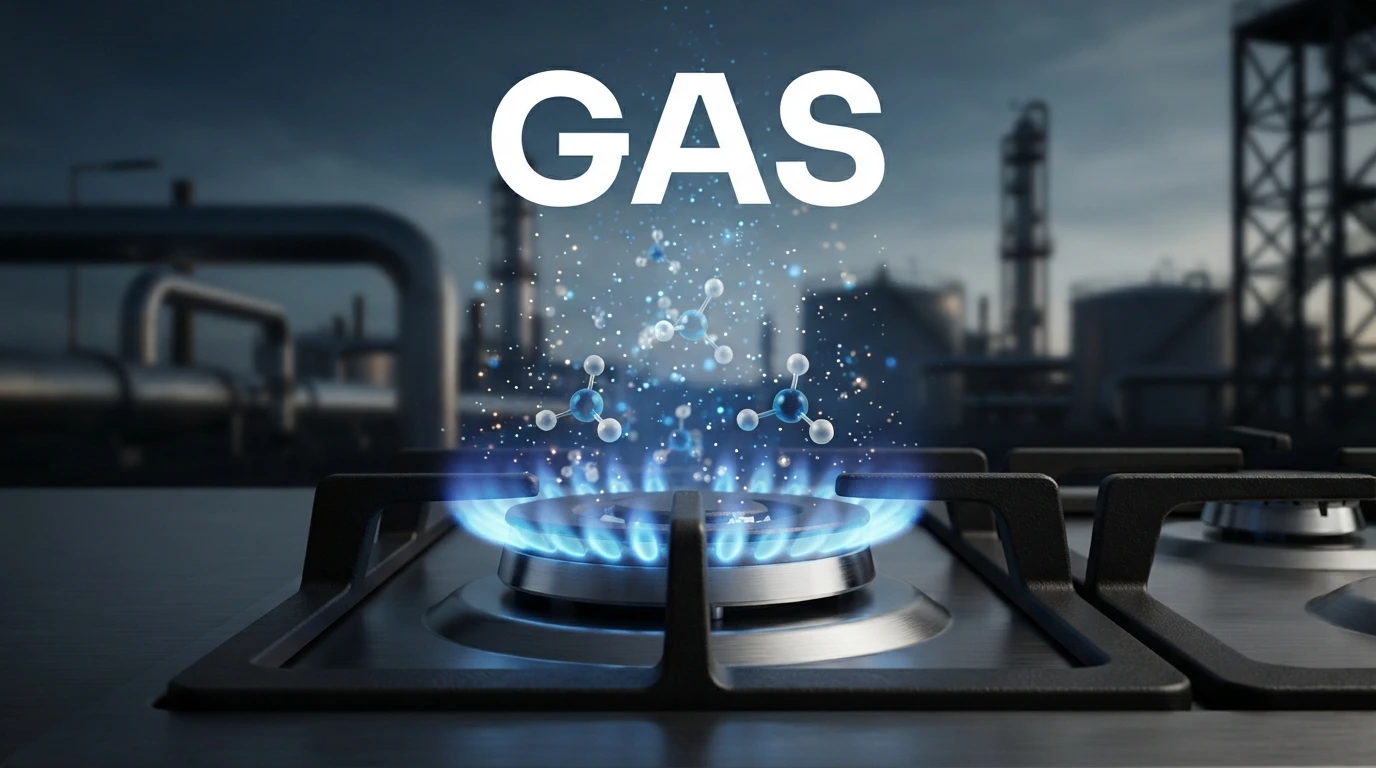
Synonyms for gas become useful when “gas” feels too general. Imagine describing fuel, a laboratory substance, or a strange smell without repeating one word.
For example, an American might say, “I need gas,” while a scientist may discuss “oxygen” or “nitrogen.” Context changes the best choice.
Learning a synonym for gas gives students, bloggers, writers, and everyday speakers more precise vocabulary for different situations.
Knowing a synonym for gas also helps you avoid awkward repetition. The right alternative can make an email, essay, article, or conversation sound more natural.
What Does “Gas” Really Mean?
Gas is a versatile English word with both literal and informal meanings.
In science, gas refers to a state of matter. A gas has no fixed shape or volume and expands to occupy the space available to it.
Oxygen, hydrogen, nitrogen, and carbon dioxide are examples of gases. They can be invisible, although some gaseous substances may have noticeable colors or smells.
In everyday language, gas can also mean fuel. In American English, it commonly means gasoline, especially when discussing cars.
The word has another everyday meaning in phrases such as natural gas, which refers to a fossil fuel consisting mainly of methane.
Informally, gas can also describe something amusing or enjoyable. For example, “The party was a gas” means that the party was fun.
Part of Speech
Gas is mainly used as a noun.
It can refer to:
- A state of matter
- A gaseous substance
- A fuel
- Gasoline in American English
- An enjoyable or amusing experience in informal English
It can also appear as a verb, especially in specialized or informal expressions.
Simple definition: Gas is a substance that expands freely to fill available space, or a fuel such as gasoline or natural gas, depending on context.
Connotative Meaning
Connotation (the feeling, association, or idea that a word can suggest beyond its basic meaning) varies with context.
Positive tone: In the informal expression “a gas,” the word suggests fun, laughter, or entertainment.
Negative tone: In phrases involving leaks, pollution, or toxic substances, gas can suggest danger or discomfort.
Neutral tone: Scientific uses are generally neutral. A sentence such as “The container holds nitrogen gas” simply describes a substance.
The important point is that gas itself is not automatically positive or negative. The surrounding words determine much of its emotional effect.
Etymology of “Gas”
The history of gas is unusual because the word was deliberately introduced into scientific vocabulary.
The term is generally credited to Flemish chemist Jan Baptista van Helmont, who used the word in the seventeenth century. He connected it with the Greek idea of chaos, reflecting the formless nature of the substance he was describing.
Old English: 450–1100
The modern word gas did not exist in Old English. Speakers used different words for concepts involving air, breath, wind, and vapor.
Middle English: 1100–1500
Gas was still not an established English term during this period. Ideas concerning air and airborne substances were expressed through other vocabulary inherited from Germanic and French sources.
Modern English: 1500–Present
The word appeared in scientific writing during the seventeenth century. Its use gradually expanded beyond science.
Today, gas is common in science, transportation, energy, household language, environmental discussions, and informal speech.
Pronunciation of “Gas”
US: /ɡæs/
UK: /ɡæs/
Syllables
gas
The word has one syllable.
Affixation Pattern of “Gas”
Root: gas
Prefix: none
Suffix: none
The word is a simple lexical form rather than a common English prefix-and-suffix formation.
Synonyms List:
There is an important vocabulary distinction to understand before choosing an alternative.
Some words below are contextual substitutes, not perfect dictionary synonyms. For example, petrol matches one meaning of American gas, while vapor overlaps with the scientific meaning.
The most natural replacement depends on what gas means in the original sentence.
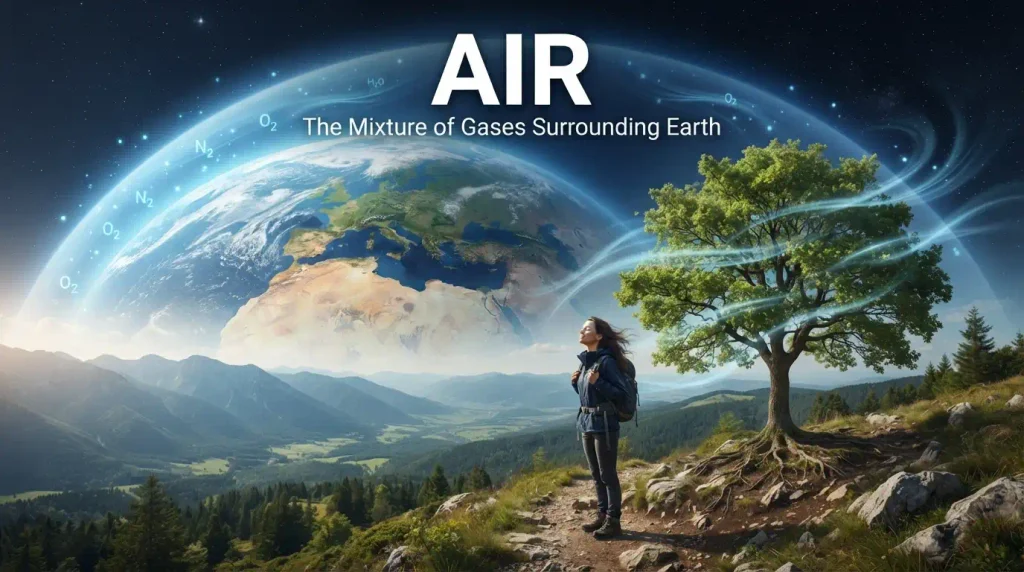
Air (Noun) — US /er/ | UK /eə/
Meaning: Air is the mixture of gases surrounding Earth and the substance people and animals breathe.
Examples:
- Fresh air entered through the open window.
- The children ran outside for some air.
Usage note: Air is suitable when the focus is the surrounding atmosphere rather than a particular chemical gas.
Vapor (Noun) — US /ˈveɪ.pɚ/ | UK /ˈveɪ.pə/
Meaning: Vapor is the gaseous form of a substance that is normally liquid or solid under ordinary conditions.
Examples:
- The liquid produced a visible vapor.
- A cloud of vapor appeared above the hot surface.
Usage note: Vapor is especially useful when evaporation or a change of state is important.
Fume (Noun) — US /fjuːm/ | UK /fjuːm/
Meaning: A fume is a strong gas, vapor, or airborne substance, often produced by chemicals, heat, or burning.
Examples:
- Strong fumes came from the cleaning product.
- We opened the door to clear the fumes.
Usage note: Fume often carries a warning or unpleasant association.
Emission (Noun) — US /ɪˈmɪʃ.ən/ | UK /ɪˈmɪʃ.ən/
Meaning: An emission is something released into the environment, especially a gas or pollutant.
Examples:
- The company reported lower emissions this year.
- Vehicle emissions affect urban air quality.
Usage note: This word is common in environmental, scientific, and policy writing.
Exhaust (Noun) — US /ɪɡˈzɑːst/ | UK /ɪɡˈzɔːst/
Meaning: Exhaust is the waste gas released by an engine or other combustion system.
Examples:
- The old car produced thick exhaust.
- The mechanic checked the exhaust system.
Usage note: Unlike the broad word gas, exhaust identifies the source and function of the released substance.
Smoke (Noun) — US /smoʊk/ | UK /sməʊk/
Meaning: Smoke is a visible mixture of gases and tiny particles created by burning.
Examples:
- Smoke filled the kitchen after the food burned.
- Gray smoke rose from the chimney.
Usage note: Smoke is not a general synonym for gas because it normally involves particles from combustion.
Mist (Noun) — US /mɪst/ | UK /mɪst/
Meaning: Mist is a cloud of tiny liquid water droplets suspended near the ground or another surface.
Examples:
- A light mist covered the garden.
- Morning mist disappeared as the sun rose.
Usage note: Mist describes droplets, not a general gaseous state, so it should only replace gas in very specific contexts.
Steam (Noun) — US /stiːm/ | UK /stiːm/
Meaning: Steam refers to water in gaseous form, especially when associated with heating or boiling.
Examples:
- Steam escaped from the kettle.
- The hot shower filled the room with steam.
Usage note: Steam is much more specific than gas because it identifies water.
Aerosol (Noun) — US /ˈer.ə.sɑːl/ | UK /ˈeə.rə.sɒl/
Meaning: An aerosol is a suspension of very small solid or liquid particles in a gas.
Examples:
- The spray creates an aerosol.
- Researchers studied airborne aerosol particles.
Usage note: This is mainly a scientific or technical term.
Atmosphere (Noun) — US /ˈæt.mə.sfɪr/ | UK /ˈæt.mə.sfɪə/
Meaning: In physical science, an atmosphere is the layer of gases surrounding a planet or other celestial body.
Examples:
- Earth’s atmosphere contains several gases.
- The spacecraft entered the planet’s atmosphere.
Usage note: Atmosphere refers to a whole gaseous layer, not normally to one isolated gas.
Gasoline (Noun) — US /ˈɡæs.ə.liːn/ | UK /ˈɡæs.ə.liːn/
Meaning: Gasoline is the liquid fuel used in many gasoline-powered vehicles.
Examples:
- The driver stopped for gasoline.
- The vehicle has a full gasoline tank.
Usage note: Gasoline is a more explicit term than gas when talking about vehicle fuel in American English.
Petrol (Noun) — US /ˈpet.rəl/ | UK /ˈpet.rəl/
Meaning: Petrol is the usual British English word for gasoline.
Examples:
- We need to buy petrol before the journey.
- The petrol station was closed.
Usage note: Use petrol when writing for a British English audience.
Fuel (Noun) — US /ˈfjuː.əl/ | UK /ˈfjuː.əl/
Meaning: Fuel is any substance or material used to produce energy through a process such as burning.
Examples:
- The aircraft requires a special type of fuel.
- Wood was once a common household fuel.
Usage note: Fuel is broader than gas because it includes liquids and solids as well as gases.
Natural Gas (Noun) — US /ˌnætʃ.ər.əl ˈɡæs/ | UK /ˌnætʃ.ər.əl ˈɡæs/
Meaning: Natural gas is a fossil fuel composed mainly of methane.
Examples:
- The building uses natural gas for heating.
- Natural gas is transported through pipelines.
Usage note: This phrase is appropriate when the specific fuel is natural gas rather than gasoline.
Propane (Noun) — US /ˈproʊ.peɪn/ | UK /ˈprəʊ.peɪn/
Meaning: Propane is a flammable gas commonly used as a fuel for heating, cooking, and outdoor equipment.
Examples:
- The outdoor heater runs on propane.
- We checked the propane cylinder before using the grill.
Usage note: Propane names a particular chemical rather than serving as a general replacement for gas.
Butane (Noun) — US /ˈbjuː.teɪn/ | UK /ˈbjuː.teɪn/
Meaning: Butane is a flammable gas commonly used in lighters and portable fuel systems.
Examples:
- The lighter uses butane.
- The camping stove requires a butane canister.
Usage note: Butane is another specific type of gas, so it should be used only when the substance is known.
Methane (Noun) — US /ˈmeθ.eɪn/ | UK /ˈmiː.θeɪn/
Meaning: Methane is a colorless and highly flammable gas that is the main component of natural gas.
Examples:
- The researchers measured methane in the atmosphere.
- Methane can be released during decomposition.
Usage note: Methane is more precise than natural gas when the chemical itself is being discussed.
Oxygen (Noun) — US /ˈɑːk.sɪ.dʒən/ | UK /ˈɒk.sɪ.dʒən/
Meaning: Oxygen is a chemical element that exists as a gas and is essential for human and animal respiration.
Examples:
- The diver carried an oxygen supply.
- Fire needs oxygen to continue burning.
Usage note: Oxygen is a specific gas, not a general synonym for every gaseous substance.
Nitrogen (Noun) — US /ˈnaɪ.trə.dʒən/ | UK /ˈnaɪ.trə.dʒən/
Meaning: Nitrogen is a colorless gas that makes up most of Earth’s atmosphere.
Examples:
- Nitrogen is widely used in scientific applications.
- The container was filled with nitrogen.
Usage note: This term is appropriate when the chemical identity matters.
Carbon Dioxide (Noun) — US /ˌkɑːr.bən daɪˈɑːk.saɪd/ | UK /ˌkɑː.bən daɪˈɒk.saɪd/
Meaning: Carbon dioxide is a colorless gas produced by processes including respiration and combustion.
Examples:
- Plants use carbon dioxide during photosynthesis.
- The sensor detected elevated carbon dioxide.
Usage note: This precise term is preferable when discussing the particular gas rather than gases generally.
Hydrogen (Noun) — US /ˈhaɪ.drə.dʒən/ | UK /ˈhaɪ.drə.dʒən/
Meaning: Hydrogen is the lightest chemical element and exists as a gas under ordinary conditions.
Examples:
- Hydrogen is being studied as an energy carrier.
- The experiment involved hydrogen gas.
Usage note: Hydrogen is a scientific name rather than a broad substitute for gas.
Helium (Noun) — US /ˈhiː.li.əm/ | UK /ˈhiː.li.əm/
Meaning: Helium is a light, nonflammable gas commonly associated with balloons and scientific applications.
Examples:
- The balloon was filled with helium.
- Helium is lighter than air.
Usage note: Helium is useful when the exact gas inside an object is known.
Neon (Noun) — US /ˈniː.ɑːn/ | UK /ˈniː.ɒn/
Meaning: Neon is a chemically inactive gas that can produce a characteristic glow in certain electrical signs.
Examples:
- Neon lights brightened the street.
- The display used neon gas.
Usage note: Neon belongs to the group of noble gases and is a specific scientific term.
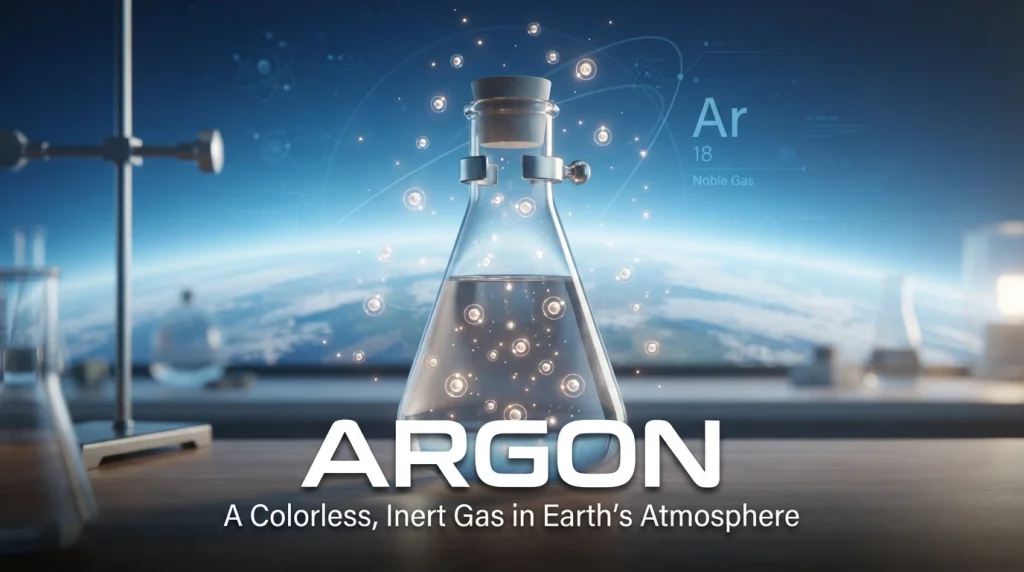
Argon (Noun) — US /ˈɑːr.ɡɑːn/ | UK /ˈɑː.ɡɒn/
Meaning: Argon is a colorless, chemically inactive gas found naturally in Earth’s atmosphere.
Examples:
- Argon is used in some welding applications.
- The laboratory stored the sample under argon.
Usage note: Argon is normally used in technical contexts where the exact gas matters.
Biogas (Noun) — US /ˈbaɪ.oʊ.ɡæs/ | UK /ˈbaɪ.əʊ.ɡæs/
Meaning: Biogas is a mixture of gases produced when organic material breaks down without oxygen.
Examples:
- The facility produces biogas from organic waste.
- Biogas can be captured and used for energy.
Usage note: Biogas identifies the source and composition of a particular fuel mixture.
Gasification (Noun) — US /ˌɡæs.ə.fəˈkeɪ.ʃən/ | UK /ˌɡæs.ɪ.fɪˈkeɪ.ʃən/
Meaning: Gasification is a process that converts carbon-containing materials into a gas mixture.
Examples:
- The researchers studied biomass gasification.
- Gasification can transform solid feedstock into usable gas.
Usage note: This is a process term, so it should not be treated as a direct noun-for-noun substitute for gas.
Vaporize (Verb) — US /ˈveɪ.pə.raɪz/ | UK /ˈveɪ.pə.raɪz/
Meaning: Vaporize means to change a substance into vapor or gas.
Examples:
- High temperatures can vaporize the liquid.
- The solvent quickly vaporized.
Usage note: Vaporize works when the intended meaning is a change of physical state.
Volatilize (Verb) — US /ˈvɑː.lə.t̬əl.aɪz/ | UK /ˈvɒl.ə.taɪ.laɪz/
Meaning: Volatilize means to cause or allow a substance to become volatile and enter the gas or vapor phase.
Examples:
- Heat may volatilize certain compounds.
- The process can volatilize the chemical.
Usage note: This is a specialized scientific verb and is uncommon in casual conversation.
Gaseous Matter (Noun Phrase) — US /ˈɡeɪ.ʃəs ˈmæt̬.ɚ/ | UK /ˈɡeɪ.si.əs ˈmæt.ə/
Meaning: Gaseous matter refers to material that exists in the gas state.
Examples:
- The experiment examined the behavior of gaseous matter.
- Heat can cause the material to become gaseous matter.
Usage note: This is a formal descriptive phrase rather than an everyday synonym.
Gas Phase (Noun Phrase) — US /ˈɡæs feɪz/ | UK /ˈɡæs feɪz/
Meaning: The gas phase is the state in which a substance exists as a gas.
Examples:
- The compound entered the gas phase.
- Scientists measured the substance in its gas phase.
Usage note: This term is mainly used in chemistry and physics.
Airborne Substance (Noun Phrase) — US /ˈer.bɔːrn ˈsʌb.stəns/ | UK /ˈeə.bɔːn ˈsʌb.stəns/
Meaning: An airborne substance is material carried or suspended in the air.
Examples:
- The filter removes airborne substances.
- Workers were exposed to an unknown airborne substance.
Usage note: This phrase is broader than gas because airborne material can include particles and droplets.
Airborne Pollutant (Noun) — US /ˈer.bɔːrn pəˈluː.tənt/ | UK /ˈeə.bɔːn pəˈluː.tənt/
Meaning: An airborne pollutant is a substance in the air that can contribute to environmental or health problems.
Examples:
- The monitoring station detected an airborne pollutant.
- The city introduced measures to reduce airborne pollutants.
Usage note: Use this when the emphasis is pollution rather than the physical state of the substance.
Effluent (Noun) — US /ˈef.lu.ənt/ | UK /ˈef.lu.ənt/
Meaning: Effluent is waste material discharged from an industrial, agricultural, or other process.
Examples:
- The plant monitors its gaseous effluent.
- Engineers tested the industrial effluent.
Usage note: Effluent can be liquid or gaseous, so gaseous effluent is more precise when discussing gas.
Off-Gas (Noun) — US /ˈɔːf ɡæs/ | UK /ˈɒf ɡæs/
Meaning: Off-gas is gas released from an industrial, chemical, or manufacturing process.
Examples:
- The system captures off-gas from the reactor.
- Engineers analyzed the off-gas for impurities.
Usage note: This is a specialized industrial term.
Flue Gas (Noun) — US /ˈfluː ɡæs/ | UK /ˈfluː ɡæs/
Meaning: Flue gas is the mixture of gases produced by combustion and discharged through a flue or exhaust system.
Examples:
- The plant monitors its flue gas.
- Filters remove pollutants from the flue gas.
Usage note: This term is common in engineering and environmental discussions.
Producer Gas (Noun) — US /ˈproʊ.duː.sɚ ɡæs/ | UK /ˈprəʊ.djuː.sə ɡæs/
Meaning: Producer gas is a combustible gas mixture made by passing air or another gas through heated carbon-containing material.
Examples:
- The furnace operated using producer gas.
- Engineers studied the composition of producer gas.
Usage note: This is a technical fuel term, not a general replacement for gas.
Syngas (Noun) — US /ˈsɪŋ.ɡæs/ | UK /ˈsɪŋ.ɡæs/
Meaning: Syngas is a mixture containing mainly hydrogen and carbon monoxide produced from carbon-based materials.
Examples:
- The facility produces syngas from biomass.
- Researchers analyzed the syngas after gasification.
Usage note: Syngas is short for synthesis gas and is primarily used in technical contexts.
Synthesis Gas (Noun) — US /ˈsɪn.θə.sɪs ɡæs/ | UK /ˈsɪn.θə.sɪs ɡæs/
Meaning: Synthesis gas is a combustible mixture of gases, mainly hydrogen and carbon monoxide, used in chemical production.
Examples:
- The process converts the material into synthesis gas.
- Synthesis gas can serve as a chemical feedstock.
Usage note: This is the expanded form of syngas.
Fuel Gas (Noun) — US /ˈfjuː.əl ɡæs/ | UK /ˈfjuː.əl ɡæs/
Meaning: Fuel gas is a combustible gas used to generate heat or energy.
Examples:
- The furnace requires a steady supply of fuel gas.
- Engineers checked the fuel gas system.
Usage note: This phrase identifies the gas by its function as a fuel.
Liquefied Petroleum Gas (Noun) — US /ˈlɪk.wə.faɪd pəˈtroʊ.li.əm ɡæs/ | UK /ˈlɪk.wɪ.faɪd pəˈtrəʊ.li.əm ɡæs/
Meaning: Liquefied petroleum gas is a fuel made mainly from propane, butane, or related hydrocarbons and stored under pressure.
Examples:
- The cooking system uses liquefied petroleum gas.
- The cylinder contains liquefied petroleum gas.
Usage note: It is commonly abbreviated as LPG.
Compressed Natural Gas (Noun) — US /kəmˈprest ˈnætʃ.ər.əl ɡæs/ | UK /kəmˈprest ˈnætʃ.ər.əl ɡæs/
Meaning: Compressed natural gas is natural gas stored under high pressure for use as a fuel.
Examples:
- The buses run on compressed natural gas.
- The vehicle was designed for compressed natural gas.
Usage note: The abbreviation CNG is common in technical and transportation contexts.
Biomethane (Noun) — US /ˌbaɪ.oʊˈmiː.θeɪn/ | UK /ˌbaɪ.əʊˈmiː.θeɪn/
Meaning: Biomethane is purified methane produced from organic material.
Examples:
- The facility produces biomethane from agricultural waste.
- Biomethane can be used as a renewable fuel.
Usage note: This term is more specific than the broader word biogas.
Landfill Gas (Noun) — US /ˈlænd.fɪl ɡæs/ | UK /ˈlænd.fɪl ɡæs/
Meaning: Landfill gas is a mixture of gases produced when organic waste decomposes in a landfill.
Examples:
- The site collects landfill gas.
- Engineers monitor methane in landfill gas.
Usage note: The term identifies gas by its source.
Sewer Gas (Noun) — US /ˈsuː.ɚ ɡæs/ | UK /ˈsuː.ə ɡæs/
Meaning: Sewer gas is a mixture of gases produced by the decomposition of organic matter in sewer systems.
Examples:
- The building was inspected for sewer gas.
- A plumber investigated a possible sewer gas leak.
Usage note: This term is generally associated with unpleasant odors and potentially hazardous conditions.
Town Gas (Noun) — US /ˈtaʊn ɡæs/ | UK /ˈtaʊn ɡæs/
Meaning: Town gas is a historical fuel gas formerly supplied through urban gas networks.
Examples:
- Town gas was once widely used for household lighting.
- Historical records describe the use of town gas.
Usage note: This term is mainly historical because modern gas supplies commonly use different fuels.
Coal Gas (Noun) — US /ˈkoʊl ɡæs/ | UK /ˈkəʊl ɡæs/
Meaning: Coal gas is a combustible gas historically produced from coal.
Examples:
- Coal gas was once used for street lighting.
- The museum displays equipment associated with coal gas production.
Usage note: This is primarily a historical and industrial term.
Coke-Oven Gas (Noun) — US /ˈkoʊk ˌʌv.ən ɡæs/ | UK /ˈkəʊk ˌʌv.ən ɡæs/
Meaning: Coke-oven gas is a gas produced during the manufacture of coke from coal.
Examples:
- The plant recovered coke-oven gas for energy.
- Engineers examined the composition of coke-oven gas.
Usage note: This is a specialized industrial term.
Carbon Monoxide (Noun) — US /ˌkɑːr.bən məˈnɑːk.saɪd/ | UK /ˌkɑː.bən məˈnɒk.saɪd/
Meaning: Carbon monoxide is a colorless and odorless gas produced by incomplete combustion.
Examples:
- The detector warned of carbon monoxide.
- Poor ventilation can allow carbon monoxide to accumulate.
Usage note: Use the specific chemical name when carbon monoxide is known rather than replacing it with the general word gas.
Nitrous Oxide (Noun) — US /ˈnaɪ.trəs ˈɑːk.saɪd/ | UK /ˈnaɪ.trəs ˈɒk.saɪd/
Meaning: Nitrous oxide is a colorless gas used in medicine, industry, and other applications.
Examples:
- The researchers measured nitrous oxide emissions.
- Nitrous oxide is studied as a greenhouse gas.
Usage note: This is a specific chemical name, not a universal synonym for gas.
Sulfur Dioxide (Noun) — US /ˈsʌl.fɚ daɪˈɑːk.saɪd/ | UK /ˈsʌl.fə daɪˈɒk.saɪd/
Meaning: Sulfur dioxide is a colorless gas with a strong odor that can be released during the burning of sulfur-containing fuels.
Examples:
- The monitoring station detected sulfur dioxide.
- Regulations limit sulfur dioxide emissions.
Usage note: This term is especially common in environmental and atmospheric science.
Chlorine Gas (Noun) — US /ˈklɔːr.iːn ɡæs/ | UK /ˈklɔː.riːn ɡæs/
Meaning: Chlorine gas is the gaseous form of chlorine, a reactive chemical substance.
Examples:
- The laboratory stored chlorine gas under controlled conditions.
- Sensors were installed to detect chlorine gas.
Usage note: This is a highly specific chemical term and should only be used when chlorine is actually meant.
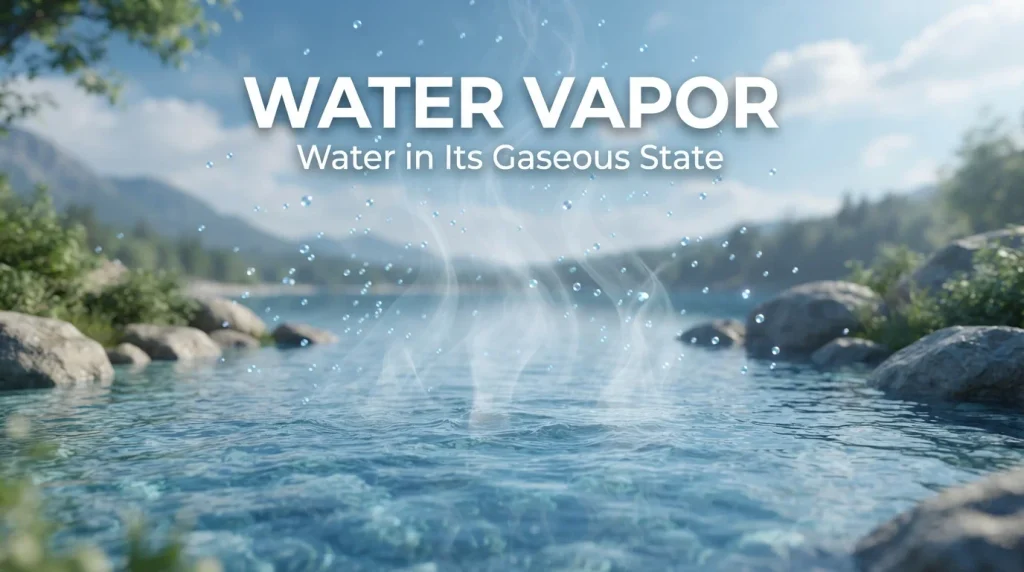
Water Vapor (Noun) — US /ˈwɔː.t̬ɚ ˈveɪ.pɚ/ | UK /ˈwɔː.tə ˈveɪ.pə/
Meaning: Water vapor is water in its gaseous state.
Examples:
- Warm air can hold more water vapor.
- Clouds form when water vapor condenses.
Usage note: This term is more precise than the broad word gas when the substance is water.
Choosing Among the Additional Terms
These 25 terms should not be treated as interchangeable.
For scientific descriptions, gaseous matter and gas phase describe the physical state of a substance.
When the emphasis is on material carried through the air, airborne substance or airborne pollutant may be more suitable.
In industrial and energy-related contexts, terms such as off-gas, flue gas, producer gas, syngas, and fuel gas provide greater specificity.
For fuel types and their sources, LPG, CNG, biomethane, and landfill gas are more precise choices.
When referring to a specific substance, terms such as carbon monoxide, nitrous oxide, sulfur dioxide, chlorine gas, and water vapor make the meaning clearer.
The most important vocabulary lesson is simple: a technically related word is not automatically a true synonym. Good English depends on selecting the term that matches the exact meaning.
Gas vs Close Alternatives
The closest alternative depends on which sense of gas is intended.
Gas vs vapor: Gas describes a state of matter broadly. Vapor usually focuses on a substance that has entered a gaseous state from a liquid or solid.
Gas vs fume: Fume often suggests an irritating, concentrated, or potentially harmful airborne substance. It carries a stronger sensory association.
Gas vs air: Air is a mixture of gases around us. Calling air simply “gas” removes important information about its composition and everyday function.
Gas vs gasoline: Gasoline is specifically vehicle fuel. American speakers often shorten it to gas in conversation.
Gas vs fuel: Fuel is a category rather than a specific substance. It can include gas, petrol, diesel, coal, wood, and other energy sources.
Synonyms for “Gas” by Tone
Neutral Vocabulary
Gas, air, vapor, gasoline, petrol, fuel, oxygen, nitrogen, and atmosphere can all sound neutral when used accurately.
Their tone is usually determined more by the subject than by emotional language.
Technical Vocabulary
Aerosol, methane, carbon dioxide, hydrogen, argon, gasification, volatilize, and emission are more specialized.
These terms are useful when scientific precision matters.
Words With a Negative Association
Fume, exhaust, and smoke can suggest pollution, irritation, burning, or an unpleasant environment.
That association makes them more descriptive than the neutral word gas.
Informal Vocabulary
Gas itself can be informal when it means gasoline in American English.
The expression a gas is also informal and means something entertaining or amusing.
Why Tone Matters
A synonym can change not only accuracy but also the reader’s impression.
Compare “gas,” “fume,” and “exhaust.” The first is broad, the second can suggest irritation, and the third immediately points toward an engine or combustion source.
Good vocabulary choice therefore depends on meaning + register + context.
How to Use “Gas” in Different Contexts
Daily Conversation
In ordinary American conversation, gas is especially common when discussing cars.
For example:
“Do we have enough gas to get home?”
In British English, petrol is normally used instead.
When discussing a substance, the surrounding nouns usually provide the necessary context:
“The tank contains gas.”
Writing and Blogging
General-interest writing can use gas when the meaning is already clear.
However, repeating it throughout an article may make the writing vague. A writer discussing vehicle pollution, for example, can distinguish between exhaust, emissions, and specific gases.
This creates variety without sacrificing accuracy.
Professional and Academic Writing
Professional writing usually benefits from naming the exact substance or process.
Instead of writing:
“The gas increased during the experiment.”
A technical writer might specify:
“The carbon dioxide concentration increased during the experiment.”
The second version gives the reader substantially more information.
Creative Writing
Creative writing often benefits from sensory vocabulary.
Words such as fume, smoke, mist, and vapor can help readers imagine what a scene looks, smells, or feels like.
The goal is not simply to replace gas. It is to select the word that creates the intended image.
Common Mistakes Learners Make
Using “Vapor” as a Universal Replacement
Vapor is not a substitute for every type of gas.
For instance, oxygen is normally called a gas, not simply “vapor.” Vapor has a more specific scientific meaning.
Confusing Petrol and Gasoline
These words describe essentially the same vehicle fuel but belong to different regional varieties.
Gasoline is standard in American English.
Petrol is standard in British English.
Calling Every Gas “Smoke”
Smoke is associated with combustion and contains particles.
A transparent laboratory gas should not normally be called smoke.
Using “Fume” for Harmless Gases
Fume often suggests something strong, irritating, or potentially harmful.
Using it for ordinary atmospheric gases can sound unnatural.
Replacing “Gas” With an Unnecessarily Technical Word
A simple sentence does not always need specialist terminology.
If a reader only needs to know that a container contains gas, replacing it with a highly technical term may reduce clarity rather than improve it.
Forgetting Regional Differences
American and British English sometimes use different vocabulary for fuel.
Knowing the intended audience prevents sentences such as:
“I need to fill the car with petrol.”
from sounding unusual to an American reader.
Register Notes
Gas is common in both spoken and written English.
Gasoline is neutral and somewhat more explicit than the American conversational gas.
Petrol is standard British vocabulary.
Vapor is common in general and scientific writing.
Fume and exhaust are everyday words but have more specific meanings.
Aerosol, volatilize, gasification, methane, argon, and carbon dioxide are more specialized and are most natural when the subject requires technical precision.
A useful rule is simple: choose the most specific familiar word that accurately expresses your meaning.
Real-Life Mini Scenarios
At a Gas Station
An American driver might say:
“I need to get gas before we leave.”
A British driver would more naturally say:
“I need to get petrol before we leave.”
The difference is regional rather than a difference in the fuel itself.
In a Laboratory
A researcher may write:
“The chamber contains nitrogen.”
Here, the specific chemical name is more informative than the broad word gas.
In a Garage
A mechanic might say:
“The exhaust needs to be checked.”
The word exhaust immediately identifies waste gases produced by the vehicle.
During Cleaning
Someone may warn:
“The fumes are quite strong.”
This conveys a stronger sense of irritation or discomfort than the neutral word gas.
In a Story
A writer might describe a mysterious scene:
“A thin vapor curled above the cold surface.”
Here, vapor creates a visual image without suggesting engine pollution or toxic chemicals.
Quick Selection Guide
When you need a replacement, ask what you actually mean:
- General gaseous substance: gas
- Surrounding mixture we breathe: air
- Gaseous form from evaporation: vapor
- Strong or irritating airborne substance: fume
- Waste from an engine: exhaust
- Visible product of burning: smoke
- Water in gaseous form: steam
- Something released into the environment: emission
- Vehicle fuel in American English: gasoline or gas
- Vehicle fuel in British English: petrol
- Energy-producing substance: fuel
- Specific fossil fuel: natural gas
- Specific chemical: methane, oxygen, nitrogen, hydrogen, etc.
- Particles suspended in a gas: aerosol
- Conversion into gas: gasification
- Changing into vapor: vaporize
This approach is more reliable than memorizing a long list of words as if they were interchangeable.
Practice Exercise:
1. An American driver says, “I need to get gas.” What does the sentence most likely mean?
A. The driver needs oxygen.
B. The driver needs gasoline.
C. The driver needs steam.
D. The driver needs air.
2. Which word would a British speaker normally use for vehicle fuel?
A. Gasoline
B. Petrol
C. Vapor
D. Exhaust
3. A scientist is discussing the gaseous form of water. Which term is most appropriate?
A. Petrol
B. Steam
C. Exhaust
D. Fuel
4. A car releases waste products from its engine. Which word fits best?
A. Exhaust
B. Mist
C. Helium
D. Atmosphere
5. A strong chemical smell fills a laboratory. Which word is most natural?
A. Fume
B. Petrol
C. Air
D. Neon
6. Which word refers to something released into the environment?
A. Emission
B. Balloon
C. Fuel
D. Mist
7. Which gas is commonly associated with floating balloons?
A. Nitrogen
B. Helium
C. Carbon dioxide
D. Exhaust
8. Which word describes a substance changing into vapor?
A. Vaporize
B. Petrol
C. Exhaust
D. Atmosphere
9. Which term refers to the gaseous layer surrounding a planet?
A. Atmosphere
B. Fuel
C. Fume
D. Butane
10. Which word is broader than gasoline?
A. Fuel
B. Steam
C. Oxygen
D. Mist
11. Which gas is the main component of natural gas?
A. Methane
B. Helium
C. Neon
D. Oxygen
12. Which term describes tiny solid or liquid particles suspended in a gas?
A. Aerosol
B. Petrol
C. Exhaust
D. Fuel
13. Which word is most appropriate for the gas that humans need for respiration?
A. Oxygen
B. Petrol
C. Smoke
D. Butane
14. Which sentence uses “gas” informally to mean something enjoyable?
A. The tank contains gas.
B. The laboratory measured the gas.
C. The comedy show was a gas.
D. The gas expanded inside the container.
15. A writer wants to describe a gas released by a vehicle as part of air pollution. Which word is most suitable?
A. Emission
B. Helium
C. Mist
D. Petrol
Answer Key: 1-B | 2-B | 3-B | 4-A | 5-A | 6-A | 7-B | 8-A | 9-A | 10-A | 11-A | 12-A | 13-A | 14-C | 15-A
Reflection Practice
Choose one word from this guide that you would not normally use.
Write one original sentence with it, then explain why that word is more precise than simply using gas.
FAQs
1. What is the closest synonym for gas?
The closest alternative depends on the meaning. Vapor can overlap with the scientific sense, while gasoline or petrol can replace the American fuel sense.
2. What is another word for gas in science?
Gas is already the standard scientific term for the state of matter. If a specific substance is known, its chemical name, such as oxygen, nitrogen, or methane, provides greater precision.
3. What is the American English meaning of gas?
In American English, gas commonly means gasoline when discussing vehicle fuel.
4. What is the British English equivalent of gas?
When gas means gasoline, the usual British English equivalent is petrol.
5. Can air be used as a synonym for gas?
Only in certain situations. Air is itself a mixture of gases, so it is not equivalent to every gas.
6. Is vapor the same as gas?
Not completely. Gas is the broader scientific term for a state of matter. Vapor usually refers to the gaseous phase of a substance that is normally liquid or solid under ordinary conditions.
7. Is smoke a type of gas?
Smoke contains gases, but it also contains tiny solid or liquid particles. Therefore, smoke is not simply another word for gas.
8. Is fume the same as vapor?
They overlap, but their usual emphasis differs. Vapor describes a physical state, while fume often highlights a strong, irritating, or potentially harmful airborne substance.
9. Why should writers use synonyms for gas?
Synonyms can improve precision and reduce unnecessary repetition. However, the goal should be accurate word choice rather than replacing every occurrence mechanically.
Conclusion
The best synonym for gas depends on what the original word means. Vapor, fume, exhaust, emission, gasoline, petrol, and fuel each serve different purposes.
Understanding these distinctions helps students choose vocabulary with confidence. It also gives bloggers and writers more ways to explain scientific, everyday, and creative ideas clearly.
Good synonym use is not about using the most complicated word. It is about selecting the word that gives readers the right meaning, tone, and level of detail.
Practice these alternatives in essays, emails, stories, and everyday conversations. The more you use them naturally, the easier precise English becomes.

I’m Hezel, a passionate English language enthusiast and the creator of Synworda.com. I love exploring synonyms, vocabulary, grammar, and the many ways words can make communication clearer and more effective. Through Synworda.com, I create simple, practical, and easy-to-understand content for students, writers, professionals, and anyone who wants to improve their English. I enjoy breaking down confusing words and grammar concepts into helpful explanations with clear examples. I aim to make learning English feel less complicated and more enjoyable. I believe that understanding the right words can help everyone communicate with confidence in everyday life.