Synonyms for geology can help when you want to describe Earth science without repeating the same word in every sentence or paragraph.
Imagine writing about rocks, fossils, mountains, and Earth’s layers. Using the right alternative can make your explanation clearer and more natural.
The synonym for geology depends on your context. Students, bloggers, writers, and English learners often need related terms with slightly different meanings.
Therefore, learning alternatives to synonyms for geology can improve vocabulary, academic writing, and everyday communication about our planet.
What Does “Geology” Really Mean?
Geology is the scientific study of Earth, including its rocks, minerals, layers, structure, history, and the natural processes that have shaped the planet.
In simple English, geology means the study of Earth and how it has changed over time.
The word is a noun.
For example:
Geology helps scientists understand how mountains formed.
She is studying geology at university.
Geology is commonly used in science, education, environmental studies, mining, geography, engineering, and natural-resource research.
Unlike many everyday nouns, geology has a strongly academic and scientific character. Consequently, it is especially common in textbooks, research papers, classrooms, documentaries, museums, and professional discussions.
Native English speakers generally understand geology as a scientific field rather than simply the study of rocks. Rocks are certainly important, but geology also covers Earth’s structure, materials, history, processes, and evolution.
Connotative Meaning
Connotation (the feeling, association, or implied meaning connected with a word) describes the emotional or social impression a word can carry.
Positive tone:
Geology can suggest discovery, scientific knowledge, exploration, and a deeper understanding of Earth.
Negative tone:
The word itself normally has no negative emotional meaning. However, particular geological topics can involve hazards such as earthquakes, landslides, or volcanic eruptions.
Neutral tone:
In most situations, geology is a neutral scientific term used to describe the study of Earth.
Etymology
The word geology comes from Greek roots.
It combines gē, meaning “earth,” with -logia, meaning “study,” “account,” or “discourse.”
Therefore, the basic idea behind geology is the study or account of Earth.
The modern scientific use of the term developed in European scholarship during the late eighteenth century. It became increasingly established as scientists began treating Earth history, rocks, minerals, and geological processes as a systematic field of study.
Geology in Old English: 450–1100
The modern word geology did not exist in Old English.
Instead, Old English speakers used native words and expressions connected with earth, land, ground, stone, and natural features.
Therefore, it would be inaccurate to claim that geology was an Old English word.
Geology in Middle English: 1100–1500
The modern scientific term was still not established during the Middle English period.
However, English vocabulary related to earth, stone, land, ground, and natural formations continued to develop through everyday use and contact with French and Latin.
Geology in Modern English: 1500–Present
The scientific term geology emerged much later, especially during the eighteenth century.
By the nineteenth century, geology had become a recognized scientific discipline. Since then, the field has expanded to include areas such as tectonics, paleontology, mineralogy, volcanology, sedimentology, and geochemistry.
Pronunciation
US: /dʒiˈɑːlədʒi/
UK: /dʒiˈɒlədʒi/
Syllables
ge-ol-o-gy
Affixation Pattern of Geology
Root: geo- / geō- — earth
Prefix: geo- — earth or Earth-related
Suffix: -logy — study or branch of knowledge
The word is therefore built around the idea of studying Earth.
Synonyms List:
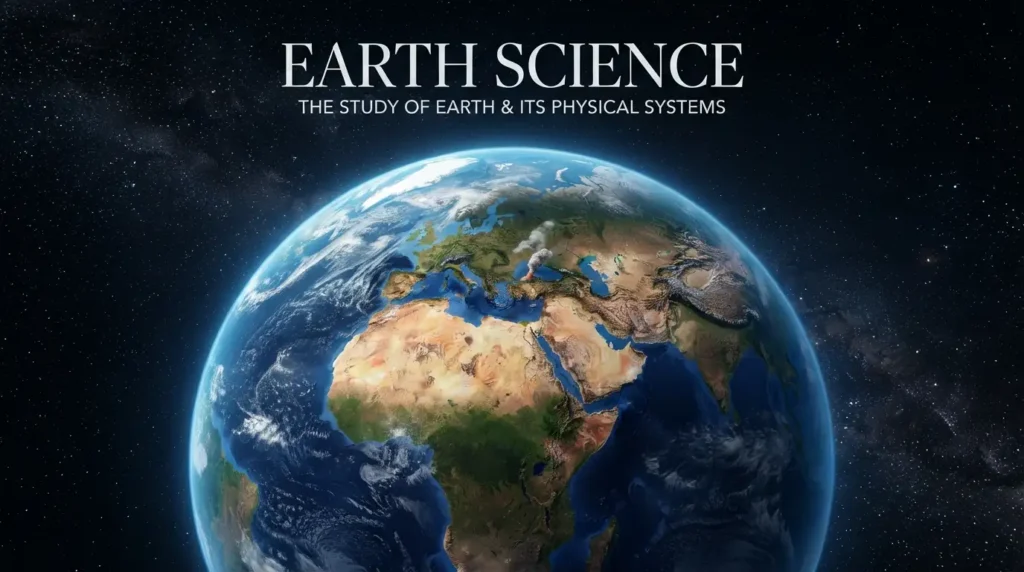
Earth Science (Noun) — US / UK Pronunciation
US: /ˈɜːrθ ˌsaɪəns/
UK: /ˈɜːθ ˌsaɪəns/
Meaning: Earth science is the broad study of Earth and its physical systems, including geology, atmosphere, oceans, and related processes.
Tone/Register: Academic, educational, scientific
Example:
She chose Earth science because she enjoys learning about our planet.
The course covers geology as well as atmospheric and oceanic processes.
Geoscience (Noun) — US / UK Pronunciation
US: /ˈdʒiːoʊˌsaɪəns/
UK: /ˈdʒiːəʊˌsaɪəns/
Meaning: Geoscience is a broad scientific term covering the study of Earth and its physical systems.
Tone/Register: Academic, professional, scientific
Example:
He works in geoscience research.
The program combines several Earth-related scientific disciplines.
Geological Science (Noun Phrase) — US / UK Pronunciation
US: /ˌdʒiːəˈlɑːdʒɪkəl ˈsaɪəns/
UK: /ˌdʒiːəˈlɒdʒɪkəl ˈsaɪəns/
Meaning: Geological science refers specifically to the scientific study of Earth’s materials, structure, history, and processes.
Tone/Register: Formal, academic
Example:
Her research focuses on geological science.
The department offers several geological science courses.
Earth Studies (Noun Phrase) — US / UK Pronunciation
US: /ˈɜːrθ ˌstʌdiz/
UK: /ˈɜːθ ˌstʌdiz/
Meaning: Earth studies is a broad educational term for studying Earth and its natural systems.
Tone/Register: Educational, general
Example:
Earth studies introduced the students to rocks and natural landscapes.
He became interested in Earth studies during high school.
Study of the Earth (Noun Phrase) — US / UK Pronunciation
US: /ˈstʌdi əv ði ˈɜːrθ/
UK: /ˈstʌdi əv ði ˈɜːθ/
Meaning: This phrase directly describes the investigation of Earth’s structure, materials, history, and processes.
Tone/Register: Neutral, educational
Example:
Geology is the scientific study of the Earth.
The study of the Earth can reveal how ancient environments changed.
Earth Sciences (Plural Noun) — US / UK Pronunciation
US: /ˈɜːrθ ˌsaɪənsɪz/
UK: /ˈɜːθ ˌsaɪənsɪz/
Meaning: Earth sciences is a collective term for scientific disciplines concerned with Earth.
Tone/Register: Academic, professional
Example:
She plans to major in Earth sciences.
The university has a strong Earth sciences department.
Geognosy (Noun) — US / UK Pronunciation
US: /dʒiːˈɑːɡnəsi/
UK: /dʒiːˈɒɡnəsi/
Meaning: Geognosy is an older term concerning knowledge of Earth’s structure and materials.
Tone/Register: Historical, technical
Example:
The textbook uses geognosy in its historical discussion of Earth science.
Modern geology largely replaced this terminology.
Geology Study (Noun Phrase) — US / UK Pronunciation
US: /dʒiˈɑːlədʒi ˈstʌdi/
UK: /dʒiˈɒlədʒi ˈstʌdi/
Meaning: Geological study refers generally to the academic investigation of geological subjects.
Tone/Register: Educational, neutral
Example:
Her geology study focuses on sedimentary rocks.
The project requires careful geological study in the field.
Geological Studies (Plural Noun) — US / UK Pronunciation
US: /ˌdʒiːəˈlɑːdʒɪkəl ˈstʌdiz/
UK: /ˌdʒiːəˈlɒdʒɪkəl ˈstʌdiz/
Meaning: Geological studies are investigations into rocks, minerals, Earth’s structure, history, or geological processes.
Tone/Register: Academic, professional
Example:
Geological studies were conducted before construction began.
The researchers published their geological studies last year.
Earth Geology (Noun Phrase) — US / UK Pronunciation
US: /ˈɜːrθ dʒiˈɑːlədʒi/
UK: /ˈɜːθ dʒiˈɒlədʒi/
Meaning: Earth geology emphasizes the geological characteristics and processes of our planet.
Tone/Register: Scientific, explanatory
Example:
The documentary explores Earth’s geology.
The lesson explains Earth’s geological history.
Physical Geology (Noun) — US / UK Pronunciation
US: /ˈfɪzɪkəl dʒiˈɑːlədʒi/
UK: /ˈfɪzɪkəl dʒiˈɒlədʒi/
Meaning: Physical geology studies Earth’s materials and the physical processes that shape the planet.
Tone/Register: Academic, scientific
Example:
She is taking a course in physical geology.
The class examines volcanoes, minerals, and plate movement.
Historical Geology (Noun) — US / UK Pronunciation
US: /hɪˈstɔːrɪkəl dʒiˈɑːlədʒi/
UK: /hɪˈstɒrɪkəl dʒiˈɒlədʒi/
Meaning: Historical geology investigates Earth’s geological past and the changes that occurred over geological time.
Tone/Register: Academic, scientific
Example:
Historical geology helps explain ancient environments.
The course examines major changes in Earth’s past.
Structural Geology (Noun) — US / UK Pronunciation
US: /ˈstrʌktʃərəl dʒiˈɑːlədʒi/
UK: /ˈstrʌktʃərəl dʒiˈɒlədʒi/
Meaning: Structural geology studies the deformation and arrangement of rocks within Earth’s crust.
Tone/Register: Technical, academic
Example:
His research involves structural geology.
The fieldwork examines faults and folds.
Regional Geology (Noun) — US / UK Pronunciation
US: /ˈriːdʒənəl dʒiˈɑːlədʒi/
UK: /ˈriːdʒənəl dʒiˈɒlədʒi/
Meaning: Regional geology examines the geological characteristics of a particular geographical area.
Tone/Register: Academic, scientific
Example:
The report describes the regional geology of the valley.
Regional geology can explain why nearby landscapes differ.
Applied Geology (Noun) — US / UK Pronunciation
US: /əˈplaɪd dʒiˈɑːlədʒi/
UK: /əˈplaɪd dʒiˈɒlədʒi/
Meaning: Applied geology uses geological knowledge to address practical problems involving construction, resources, hazards, and the environment.
Tone/Register: Professional, technical
Example:
Applied geology plays a role in engineering projects.
The team used geological data to assess the site.
Environmental Geology (Noun) — US / UK Pronunciation
US: /ɪnˌvaɪrənˈmentəl dʒiˈɑːlədʒi/
UK: /ɪnˌvaɪərənˈmentəl dʒiˈɒlədʒi/
Meaning: Environmental geology examines relationships between geological processes, Earth materials, and environmental conditions.
Tone/Register: Academic, professional
Example:
Environmental geology can help assess natural hazards.
Her research explores geological influences on water quality.
Planetary Geology (Noun) — US / UK Pronunciation
US: /ˈplænəˌteri dʒiˈɑːlədʒi/
UK: /ˈplænɪtəri dʒiˈɒlədʒi/
Meaning: Planetary geology studies the geological features and processes of planets, moons, asteroids, and other bodies.
Tone/Register: Scientific, academic
Example:
Planetary geology helps scientists study Mars.
The researcher analyzes images of lunar rock formations.
Mineralogy (Noun) — US / UK Pronunciation
US: /ˌmɪnəˈrɑːlədʒi/
UK: /ˌmɪnəˈrɒlədʒi/
Meaning: Mineralogy is the branch of science that studies minerals, including their properties, composition, and formation.
Tone/Register: Scientific, academic
Example:
She specializes in mineralogy.
The laboratory identified several minerals in the sample.
Petrology (Noun) — US / UK Pronunciation
US: /pəˈtrɑːlədʒi/
UK: /pəˈtrɒlədʒi/
Meaning: Petrology is the study of rocks, including their origins, composition, and formation.
Tone/Register: Scientific, academic
Example:
His research focuses on petrology.
Petrology helps scientists understand how different rocks formed.
Sedimentology (Noun) — US / UK Pronunciation
US: /ˌsedɪmənˈtɑːlədʒi/
UK: /ˌsedɪmənˈtɒlədʒi/
Meaning: Sedimentology studies sediments and sedimentary rocks and the processes that create them.
Tone/Register: Technical, academic
Example:
She studies sedimentology in coastal environments.
The research examines layers of ancient sediment.
Paleontology (Noun) — US / UK Pronunciation
US: /ˌpeɪliənˈtɑːlədʒi/
UK: /ˌpæliənˈtɒlədʒi/
Meaning: Paleontology studies ancient life through fossils and geological evidence.
Tone/Register: Scientific, academic
Example:
Paleontology can reveal how prehistoric animals lived.
He became interested in fossils through paleontology.
Volcanology (Noun) — US / UK Pronunciation
US: /ˌvɑːlkəˈnɑːlədʒi/
UK: /ˌvɒlkəˈnɒlədʒi/
Meaning: Volcanology is the study of volcanoes, volcanic activity, and related geological processes.
Tone/Register: Scientific, technical
Example:
Her research is focused on volcanology.
Volcanology can improve understanding of volcanic activity.
Seismology (Noun) — US / UK Pronunciation
US: /saɪzˈmɑːlədʒi/
UK: /saɪzˈmɒlədʒi/
Meaning: Seismology is the study of earthquakes and the movement of seismic waves through Earth.
Tone/Register: Scientific, academic
Example:
He studied seismology after becoming interested in earthquakes.
Seismology provides important information about Earth’s interior.
Geochemistry (Noun) — US / UK Pronunciation
US: /ˌdʒiːoʊˈkemɪstri/
UK: /ˌdʒiːəʊˈkemɪstri/
Meaning: Geochemistry examines the chemical composition and processes of Earth and its geological materials.
Tone/Register: Scientific, academic
Example:
Her work combines geology and geochemistry.
The analysis revealed unusual chemical patterns in the rock.

Geophysics (Noun) — US / UK Pronunciation
US: /ˌdʒiːoʊˈfɪzɪks/
UK: /ˌdʒiːəʊˈfɪzɪks/
Meaning: Geophysics applies physical principles to understand Earth’s structure and processes.
Tone/Register: Scientific, technical
Example:
Geophysics can help researchers investigate Earth’s interior.
The project uses geophysical measurements to study underground structures.
Geomorphology (Noun) — US / UK Pronunciation
US: /ˌdʒiːoʊmɔːrˈfɑːlədʒi/
UK: /ˌdʒiːəʊmɔːˈfɒlədʒi/
Meaning: Geomorphology studies landforms and the natural processes that shape Earth’s surface.
Tone/Register: Academic, scientific
Example:
Geomorphology explains how rivers shape valleys.
The researcher studies coastal landforms.
Hydrogeology (Noun) — US / UK Pronunciation
US: /ˌhaɪdroʊdʒiˈɑːlədʒi/
UK: /ˌhaɪdrəʊdʒiˈɒlədʒi/
Meaning: Hydrogeology studies groundwater and its movement through geological materials.
Tone/Register: Scientific, technical
Example:
Hydrogeology is important when studying underground water.
The team examined groundwater movement beneath the region.
Economic Geology (Noun) — US / UK Pronunciation
US: /ˌiːkəˈnɑːmɪk dʒiˈɑːlədʒi/
UK: /ˌiːkəˈnɒmɪk dʒiˈɒlədʒi/
Meaning: Economic geology examines geological materials and deposits that have practical economic value.
Tone/Register: Professional, scientific
Example:
Economic geology examines mineral deposits.
The course explores how geological resources form.
Marine Geology (Noun) — US / UK Pronunciation
US: /məˈriːn dʒiˈɑːlədʒi/
UK: /məˈriːn dʒiˈɒlədʒi/
Meaning: Marine geology studies the geological features and processes of the ocean floor and marine environments.
Tone/Register: Scientific, academic
Example:
Marine geology helps researchers understand the ocean floor.
The expedition collected samples for marine geology research.
Quaternary Geology (Noun) — US / UK Pronunciation
US: /kwəˈtɜːrnəri dʒiˈɑːlədʒi/
UK: /kwəˈtɜːnəri dʒiˈɒlədʒi/
Meaning: Quaternary geology focuses on Earth’s most recent geological period and its deposits, environments, and changes.
Tone/Register: Specialized, academic
Example:
The study focuses on Quaternary geology.
Researchers examined recent sediments from the region.
Comparative Geology (Noun Phrase) — US / UK Pronunciation
US: /kəmˈpærətɪv dʒiˈɑːlədʒi/
UK: /kəmˈpærətɪv dʒiˈɒlədʒi/
Meaning: Comparative geology involves comparing geological structures, materials, or processes across different locations or bodies.
Tone/Register: Academic, scientific
Example:
Comparative geology can reveal similarities between regions.
The researchers compared rock formations from two continents.
Geological Science Research (Noun Phrase) — US / UK Pronunciation
US: /ˌdʒiːəˈlɑːdʒɪkəl ˈsaɪəns rɪˈsɜːrtʃ/
UK: /ˌdʒiːəˈlɒdʒɪkəl ˈsaɪəns rɪˈsɜːtʃ/
Meaning: This phrase refers to systematic research into Earth’s geological materials, structure, history, and processes.
Tone/Register: Formal, academic
Example:
The university supports geological science research.
Their research focuses on ancient rock formations.
Tectonics (Noun) — US / UK Pronunciation
US: /tɛkˈtɑːnɪks/
UK: /tɛkˈtɒnɪks/
Meaning: Tectonics is the study of the large-scale movement and deformation of Earth’s crust and lithosphere.
Tone/Register: Academic, scientific
Example:
Tectonics explains how large sections of Earth’s crust move.
The region has a complex tectonic history.
Plate Tectonics (Noun) — US / UK Pronunciation
US: /pleɪt tɛkˈtɑːnɪks/
UK: /pleɪt tɛkˈtɒnɪks/
Meaning: Plate tectonics describes the movement and interaction of Earth’s large lithospheric plates.
Tone/Register: Academic, scientific
Example:
Plate tectonics helps explain the formation of mountain ranges.
Earthquakes often occur near active plate boundaries.
Stratigraphy (Noun) — US / UK Pronunciation
US: /strəˈtɪɡrəfi/
UK: /strəˈtɪɡrəfi/
Meaning: Stratigraphy is the study of rock layers and their sequence, age, and relationships.
Tone/Register: Academic, technical
Example:
Stratigraphy helped researchers identify the age of the rock layers.
The study examines the area’s complex stratigraphy.
Geochronology (Noun) — US / UK Pronunciation
US: /ˌdʒiːoʊkrəˈnɑːlədʒi/
UK: /ˌdʒiːəʊkrəˈnɒlədʒi/
Meaning: Geochronology is the study of the ages and timing of geological materials and events.
Tone/Register: Scientific, academic
Example:
Geochronology can help determine when a rock formed.
The researchers used geochronology to establish the site’s age.
Geochronometry (Noun) — US / UK Pronunciation
US: /ˌdʒiːoʊkrəˈnɑːmətri/
UK: /ˌdʒiːəʊkrəˈnɒmətri/
Meaning: Geochronometry involves measuring geological time and determining numerical ages of Earth materials.
Tone/Register: Highly technical, scientific
Example:
Geochronometry provides numerical estimates for geological events.
The study used precise geochronometric techniques.
Biostratigraphy (Noun) — US / UK Pronunciation
US: /ˌbaɪoʊstrəˈtɪɡrəfi/
UK: /ˌbaɪəʊstrəˈtɪɡrəfi/
Meaning: Biostratigraphy uses fossils to identify and compare the ages and sequences of rock layers.
Tone/Register: Academic, scientific
Example:
Biostratigraphy helped researchers correlate the rock layers.
Fossils provided important evidence for the analysis.
Geodesy (Noun) — US / UK Pronunciation
US: /dʒiːˈɑːdəsi/
UK: /dʒiːˈɒdəsi/
Meaning: Geodesy is the science of measuring Earth’s shape, size, orientation, and gravitational field.
Tone/Register: Scientific, technical
Example:
Geodesy provides precise measurements of Earth’s surface.
Modern satellites have improved geodetic measurements.
Geobiology (Noun) — US / UK Pronunciation
US: /ˌdʒiːoʊbaɪˈɑːlədʒi/
UK: /ˌdʒiːəʊbaɪˈɒlədʒi/
Meaning: Geobiology studies the interactions between life and Earth’s physical and chemical systems.
Tone/Register: Academic, interdisciplinary
Example:
Geobiology examines how organisms influence geological environments.
Her research connects biology with Earth science.
Geomicrobiology (Noun) — US / UK Pronunciation
US: /ˌdʒiːoʊˌmaɪkroʊbaɪˈɑːlədʒi/
UK: /ˌdʒiːəʊˌmaɪkrəʊbaɪˈɒlədʒi/
Meaning: Geomicrobiology examines how microorganisms interact with geological materials and processes.
Tone/Register: Scientific, specialized
Example:
Geomicrobiology explores how microbes affect minerals.
The research investigates microorganisms living deep underground.
Geotechnics (Noun) — US / UK Pronunciation
US: /ˌdʒiːoʊˈtɛknɪks/
UK: /ˌdʒiːəʊˈtɛknɪks/
Meaning: Geotechnics applies knowledge of Earth materials to construction, engineering, and ground-related problems.
Tone/Register: Professional, technical
Example:
Geotechnics is important when designing foundations.
The engineers conducted geotechnical studies before construction.
Geotechnical Science (Noun Phrase) — US / UK Pronunciation
US: /ˌdʒiːoʊˈtɛknɪkəl ˈsaɪəns/
UK: /ˌdʒiːəʊˈtɛknɪkəl ˈsaɪəns/
Meaning: Geotechnical science examines the behavior and properties of soil, rock, and other Earth materials for engineering purposes.
Tone/Register: Professional, academic
Example:
Geotechnical science supports safe construction practices.
The project required detailed ground analysis.
Geohazards (Noun) — US / UK Pronunciation
US: /ˌdʒiːoʊˈhæzərdz/
UK: /ˌdʒiːəʊˈhæzədz/
Meaning: Geohazards are natural geological events or conditions that can threaten people, property, or infrastructure.
Tone/Register: Scientific, environmental
Example:
The region faces several geohazards.
Scientists monitor areas vulnerable to geological hazards.
Geomaterials (Noun) — US / UK Pronunciation
US: /ˌdʒiːoʊməˈtɪriəlz/
UK: /ˌdʒiːəʊməˈtɪəriəlz/
Meaning: Geomaterials are naturally occurring Earth materials such as rocks, minerals, and soils used or studied in scientific and engineering contexts.
Tone/Register: Technical, professional
Example:
The laboratory tested several geomaterials.
Engineers studied the properties of the local geomaterials.
Geodynamics (Noun) — US / UK Pronunciation
US: /ˌdʒiːoʊdaɪˈnæmɪks/
UK: /ˌdʒiːəʊdaɪˈnæmɪks/
Meaning: Geodynamics examines the forces and processes that cause movement and change within Earth.
Tone/Register: Scientific, academic
Example:
Geodynamics helps explain movement deep inside Earth.
The research focuses on the geodynamics of Earth’s mantle.
Geomagnetism (Noun) — US / UK Pronunciation
US: /ˌdʒiːoʊˈmæɡnətɪzəm/
UK: /ˌdʒiːəʊˈmæɡnətɪzəm/
Meaning: Geomagnetism is the study of Earth’s magnetic field and its variations.
Tone/Register: Scientific, technical
Example:
Geomagnetism provides clues about Earth’s interior.
Scientists monitor changes in Earth’s magnetic field.
Paleoclimatology (Noun) — US / UK Pronunciation
US: /ˌpeɪlioʊˌklaɪməˈtɑːlədʒi/
UK: /ˌpæliəʊˌklaɪməˈtɒlədʒi/
Meaning: Paleoclimatology studies Earth’s climate in the distant past using geological, biological, and other evidence.
Tone/Register: Academic, scientific
Example:
Paleoclimatology reveals how Earth’s climate changed over time.
Scientists examine ancient sediments to reconstruct past climates.
Paleoecology (Noun) — US / UK Pronunciation
US: /ˌpeɪlioʊiˈkɑːlədʒi/
UK: /ˌpæliəʊiˈkɒlədʒi/
Meaning: Paleoecology studies ancient ecosystems and relationships between organisms and their environments.
Tone/Register: Academic, scientific
Example:
Paleoecology can reveal what ancient ecosystems looked like.
Fossils provide valuable evidence for paleoecological research.
Speleology (Noun) — US / UK Pronunciation
US: /spiːliˈɑːlədʒi/
UK: /spiːliˈɒlədʒi/
Meaning: Speleology is the scientific study and exploration of caves and their geological features.
Tone/Register: Scientific, specialist
Example:
Speleology helps scientists understand underground cave systems.
The researchers documented unusual formations during their expedition.
Glaciology (Noun) — US / UK Pronunciation
US: /ˌɡleɪsiˈɑːlədʒi/
UK: /ˌɡlæsiˈɒlədʒi/
Meaning: Glaciology is the scientific study of glaciers, ice sheets, and related ice processes.
Tone/Register: Academic, scientific
Example:
Glaciology helps researchers understand changing ice environments.
The scientist spent several months studying glacier movement.
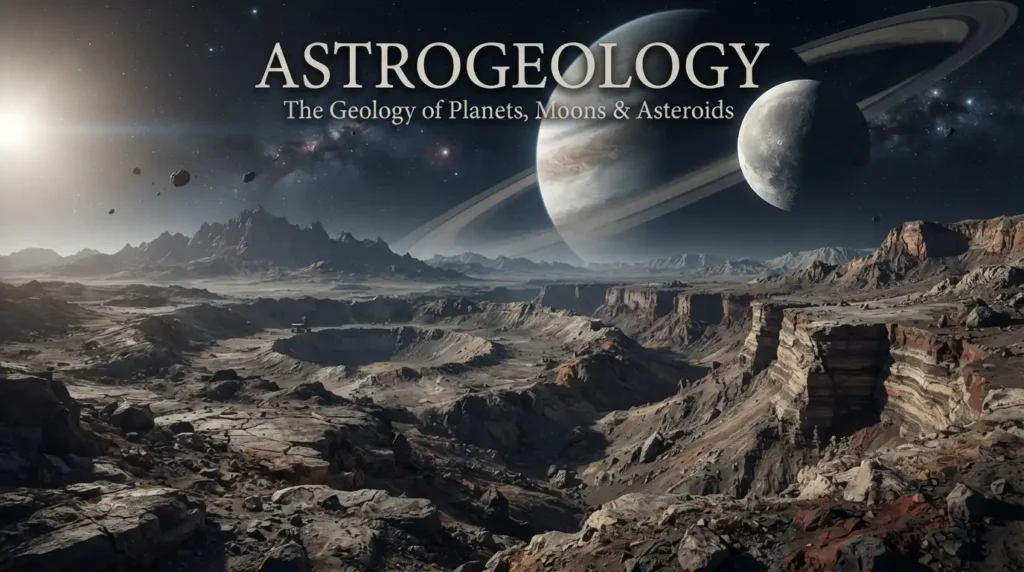
Astrogeology (Noun) — US / UK Pronunciation
US: /ˌæstroʊdʒiˈɑːlədʒi/
UK: /ˌæstrəʊdʒiˈɒlədʒi/
Meaning: Astrogeology studies the geological features and processes of planets, moons, asteroids, and other celestial bodies.
Tone/Register: Scientific, academic
Example:
Astrogeology helps scientists investigate the surfaces of other planets.
The mission provided new data for astrogeology research.
Quick Usage Note
These 20 terms are not all exact dictionary synonyms for “geology.” They are additional closely related geological fields, concepts, and scientific terms. This distinction is important because using a specialist term as a direct replacement for geology can change the meaning of a sentence.
Synonyms for Geology by Tone
Because geology is fundamentally a scientific term, its alternatives do not naturally divide into emotional positive and negative synonyms in the same way as words such as happy or angry.
Instead, tone is mainly influenced by register, breadth, and specialization.
Positive or Discovery-Focused
These terms can create a sense of exploration or scientific discovery:
- Earth science
- Geoscience
- Earth studies
- Planetary geology
- Geological science
They work well when discussing learning, exploration, discovery, or scientific understanding.
Neutral
These are useful for straightforward explanations:
- Geology
- Study of the Earth
- Earth sciences
- Geological studies
- Geology study
These expressions fit educational and general informational writing.
Negative
There are no standard negative synonyms for geology.
However, geology may appear in discussions of geological hazards, including earthquakes, volcanic eruptions, landslides, and unstable ground.
Therefore, terms such as seismology or volcanology should not be treated as negative synonyms.
Playful or Informal
There are no widely accepted playful synonyms for geology in standard English.
In casual conversation, however, someone might simply say Earth science when speaking about the subject.
Why Tone Matters in Word Choice
Choosing the right alternative makes your writing more accurate.
For example, geoscience can sound broader than geology. Meanwhile, mineralogy is much narrower because it focuses on minerals.
Similarly, Earth science can include several fields beyond geology.
Therefore, context should guide your word choice.
Geology vs Close Alternatives
Geology vs Earth Science
The term Geology specifically focuses on Earth’s materials, structure, history, and geological processes.
Earth science is broader and can include geology, atmospheric science, oceanography, and related disciplines.
Use geology when the subject is rocks, Earth’s structure, fossils, or geological history.
Use Earth science when discussing Earth as a complete natural system.
Geology vs Geoscience
Geoscience is often used as a broad umbrella term for scientific disciplines concerning Earth.
Geology is one major part of that broader scientific area.
Therefore, these words can overlap, but they are not always interchangeable.
Geology vs Mineralogy
Geology covers a broad range of subjects involving Earth.
Mineralogy specifically focuses on minerals.
For example, a geologist may study a mountain range, while a mineralogist may focus on the minerals found inside its rocks.
How Geology Changes by Context
Daily Conversation
In everyday speech, geology is usually used when someone talks about rocks, mountains, fossils, earthquakes, or Earth’s history.
For example:
“I took geology in college.”
“The geology around this area is fascinating.”
In casual conversation, Earth science may sound more accessible to people who are unfamiliar with technical terminology.
Writing or Blogging
Bloggers can use geology, Earth science, and geoscience depending on the subject.
For example, an article about rock formations may naturally use geology.
Meanwhile, a broad article about Earth’s atmosphere, oceans, rocks, and climate may benefit from the wider term Earth science.
As a result, varying vocabulary carefully can improve readability without sacrificing accuracy.
Professional or Academic Writing
Academic writing often requires precise terminology.
Consequently, specialists may use terms such as:
- structural geology
- physical geology
- historical geology
- mineralogy
- geochemistry
- geophysics
- sedimentology
- volcanology
The narrower term should be selected when the research concerns a particular branch.
Creative or Informal Use
Creative writing may use phrases such as Earth’s ancient history, the science of rocks, or the study of our planet.
These are not exact synonyms. Nevertheless, they can make a general-audience explanation easier to understand.
Common Mistakes Learners Make
Mistake 1: Treating Every Earth-Related Word as a Synonym
Not every Earth science term means geology.
For instance, meteorology focuses on the atmosphere and weather. Therefore, it should not replace geology in a sentence about rocks.
Mistake 2: Using Mineralogy for All Geological Topics
Mineralogy is only one specialized area.
If your sentence discusses earthquakes, plate tectonics, or mountain formation, mineralogy may be too narrow.
Mistake 3: Confusing Geology and Geography
Geography studies places, spatial relationships, landscapes, people, and Earth’s physical and human features.
Geology focuses more specifically on Earth’s materials, structure, history, and geological processes.
Mistake 4: Calling Geoscience an Exact Synonym
Geoscience and geology overlap heavily.
However, geoscience can function as a broader umbrella term. Therefore, replacing geology with geoscience should depend on the intended scope.
Mistake 5: Overusing Technical Terms
Academic vocabulary can make writing sound precise.
However, too many specialized terms can make a simple explanation difficult to follow. Use technical vocabulary when it genuinely adds meaning.
Native Usage Notes
In normal English, geology is the safest choice when you mean the scientific study of Earth’s rocks, structure, history, and processes.
Earth science works well when you want a broader and more accessible term.
In academic or professional writing, geoscience can describe the wider family of sciences concerned with Earth.
For a specific field, choose a specialized term such as petrology, mineralogy, or seismology only when that narrower subject is relevant.
For related vocabulary, an internal article about synonyms for geography can also help learners distinguish the two fields.
Real-Life Mini Scenarios
Workplace
An engineer reviews the geology of a construction site before work begins.
For a groundwater project, the team may instead consult hydrogeology.
Social Situation
Someone visiting a national park might say:
“The geology here is incredible.”
That simple sentence can refer to unusual rocks, cliffs, formations, or geological history.
Media and Pop Culture
A documentary about Mars might discuss planetary geology.
Similarly, a documentary about dinosaurs may combine paleontology with geological evidence.
Writing and Storytelling
A travel writer might describe the geology beneath a dramatic mountain landscape.
A science writer, however, might use geomorphology when explaining how the landscape developed.
How to Choose the Right Alternative
The easiest method is to identify the exact subject first.
For the broad scientific study of Earth, geology or geoscience is usually the right choice.
When discussing a wider group of Earth-related disciplines, Earth science works better.
A discussion about minerals specifically calls for mineralogy.
For the scientific study of rocks, petrology is the more precise term.
When earthquakes are the main subject, seismology is the appropriate choice.
Volcanic activity is more accurately described through volcanology.
Research involving sediments and sedimentary processes often uses sedimentology.
For Earth’s chemical composition and chemical processes, geochemistry is more suitable.
The study of Earth’s physical properties and internal processes falls under geophysics.
Landforms and the processes that shape them are primarily studied through geomorphology. If you mean landforms, choose geomorphology.
Therefore, the best synonym is not always the closest-looking word. Instead, it is the term that matches the exact meaning you want to communicate.
Interactive Practice Quiz
Choose the best answer for each situation.
1. Which word describes the broad scientific study of Earth?
A. Mineralogy
B. Earth science
C. Petrology
D. Volcanology
2. A scientist studies minerals and their properties. Which term fits best?
A. Mineralogy
B. Geomorphology
C. Seismology
D. Paleontology
3. Which field focuses on earthquakes?
A. Petrology
B. Seismology
C. Sedimentology
D. Geochemistry
4. A researcher studies rocks and how they formed. Which specialized field is most suitable?
A. Petrology
B. Meteorology
C. Oceanography
D. Geography
5. Which word is broader than geology?
A. Petrology
B. Earth science
C. Mineralogy
D. Volcanology
6. Someone studies volcanic activity. Which term is most precise?
A. Geophysics
B. Volcanology
C. Mineralogy
D. Geomorphology
7. Which term focuses on ancient life and fossils?
A. Paleontology
B. Hydrogeology
C. Geochemistry
D. Structural geology
8. A scientist investigates groundwater beneath a city. Which field fits?
A. Hydrogeology
B. Petrology
C. Paleontology
D. Planetary geology
9. Which term studies Earth’s chemical processes and composition?
A. Geochemistry
B. Geomorphology
C. Seismology
D. Historical geology
10. Which field focuses on landforms and how they develop?
A. Geomorphology
B. Mineralogy
C. Volcanology
D. Geochemistry
11. A Mars research project examines rocks and surface formations. Which term is appropriate?
A. Planetary geology
B. Economic geology
C. Hydrogeology
D. Sedimentology
12. Which phrase is most accessible for a general audience?
A. Earth science
B. Petrology
C. Geochemistry
D. Structural geology
13. A scientist examines faults and folds in Earth’s crust. Which field is most precise?
A. Structural geology
B. Paleontology
C. Mineralogy
D. Marine geology
14. A researcher investigates layers of ancient sediment. Which field is relevant?
A. Sedimentology
B. Seismology
C. Geophysics
D. Volcanology
15. Which word is safest when you simply mean the scientific study of Earth’s materials, structure, history, and processes?
A. Geology
B. Meteorology
C. Biology
D. Astronomy
Reflection Task: Write one sentence using geology, geoscience, or another suitable related term. Then explain why that word fits your context.
Answer Key: 1-B | 2-A | 3-B | 4-A | 5-B | 6-B | 7-A | 8-A | 9-A | 10-A | 11-A | 12-A | 13-A | 14-A | 15-A
FAQs
What is another word for geology in simple English?
A simple alternative is Earth science, although it is somewhat broader than geology. You can also say the study of the Earth when explaining the subject to beginners. However, geology remains the most precise everyday term when you specifically mean Earth’s rocks, minerals, structure, history, and geological processes.
Is geoscience the same as geology?
Geoscience and geology overlap significantly, but they are not always identical. Geoscience can refer to a broader group of Earth-related sciences, while geology specifically focuses on Earth’s materials, structure, history, and geological processes. Therefore, geoscience works well when your discussion includes several Earth science disciplines.
What is the difference between geology and Earth science?
Geology is primarily concerned with Earth’s materials, structure, history, and geological processes. Earth science is a broader expression that can include geology along with atmospheric science, ocean science, and other disciplines. Consequently, geology is better for a specific geological topic, while Earth science works well for a wider subject.
What is the scientific word for studying rocks?
The most relevant specialized term is petrology, which focuses on rocks, their composition, origins, and formation. Geology is broader because it includes rocks along with minerals, Earth’s structure, geological history, and natural processes. Therefore, petrology is appropriate when your topic specifically concerns the scientific study of rocks.
What branch of geology studies minerals?
Mineralogy is the branch of geology and Earth science that studies minerals. It examines their composition, structure, physical properties, classification, and formation. Therefore, mineralogy is more precise than geology when your subject is specifically about minerals rather than Earth’s geological systems as a whole.
What branch of geology studies earthquakes?
Seismology studies earthquakes and seismic waves. It is closely connected with geology and geophysics because earthquakes provide valuable information about Earth’s interior and geological activity. If your topic focuses specifically on earthquake behavior, seismic waves, or earthquake processes, seismology is more precise than the general term geology.
What is a broad synonym for geology?
Geoscience and Earth science are useful broad alternatives, but they are not perfect synonyms. Both can cover a wider range of Earth-related scientific disciplines. If you specifically mean rocks, minerals, Earth’s structure, and geological history, geology remains the more exact term.
Conclusion
Learning a synonym for geology is useful because different contexts require different levels of precision, from simple Earth science explanations to specialist research.
Moreover, related terms such as geoscience, mineralogy, petrology, and geochemistry help writers explain Earth’s fascinating systems more clearly.
For students and bloggers, these vocabulary choices can make essays and articles more varied. For speakers, they can make scientific ideas easier to communicate.
Finally, practice these terms in emails, essays, study notes, and daily conversations. The more you use them, the more naturally accurate your vocabulary becomes.

I’m Hezel, a passionate English language enthusiast and the creator of Synworda.com. I love exploring synonyms, vocabulary, grammar, and the many ways words can make communication clearer and more effective. Through Synworda.com, I create simple, practical, and easy-to-understand content for students, writers, professionals, and anyone who wants to improve their English. I enjoy breaking down confusing words and grammar concepts into helpful explanations with clear examples. I aim to make learning English feel less complicated and more enjoyable. I believe that understanding the right words can help everyone communicate with confidence in everyday life.