A synonym for glitter can make your writing shine when you need a fresher way to describe something bright, sparkling, or eye-catching.
Imagine sunlight touching a lake. The water seems to sparkle, shimmer, and gleam as light moves across its surface.
That simple scene shows why knowing a synonym for glitter matters. Students, bloggers, writers, and daily English users all need precise vocabulary.
Moreover, learning alternatives to glitter helps you describe light, beauty, decoration, and excitement without repeating the same word.
What Does “Glitter” Really Mean?
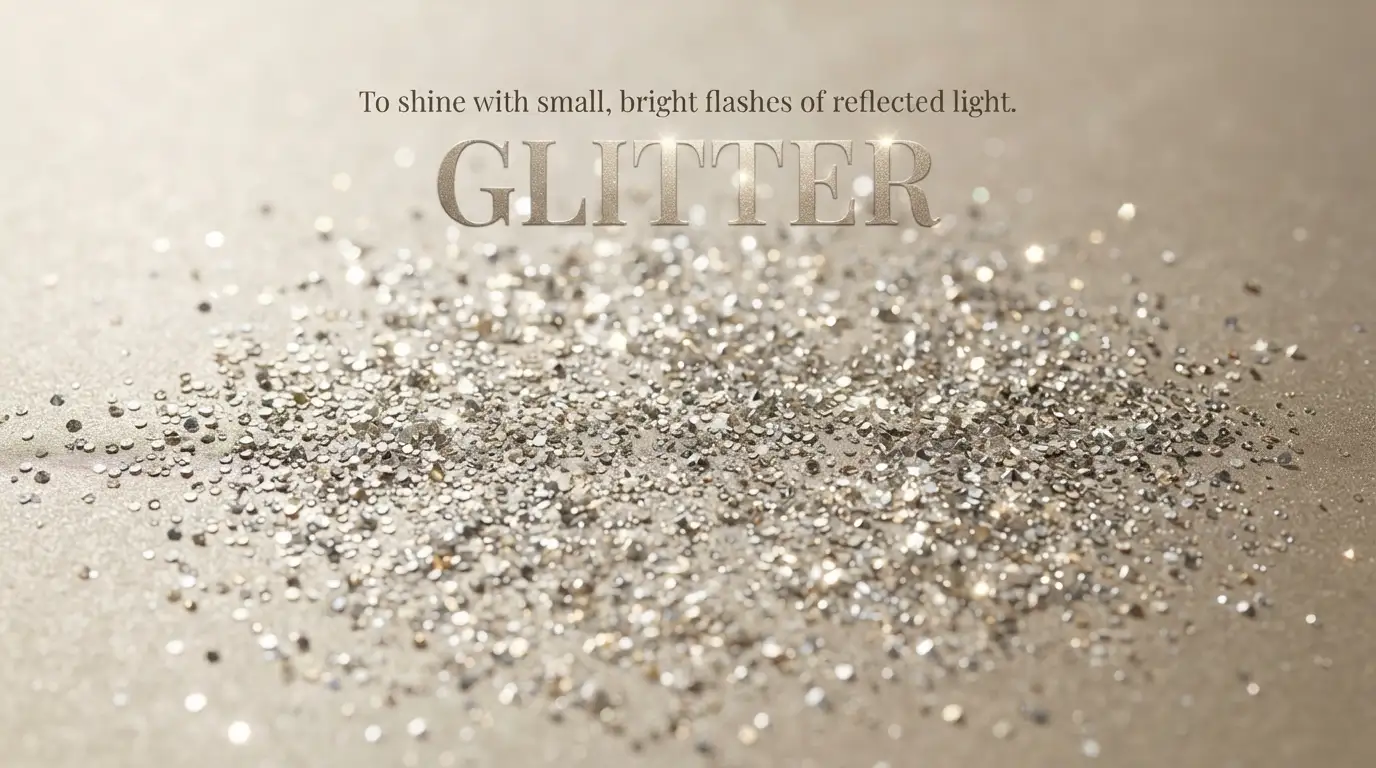
Glitter means to shine brightly with many small flashes of reflected light. It can describe physical objects, surfaces, eyes, decorations, or even something figuratively exciting.
As a verb, glitter means to shine with small, bright flashes.
Example:
The stars glittered above the quiet town.
As a noun, glitter refers to tiny shiny particles used mainly for decoration.
Example:
The children covered the card with silver glitter.
Native speakers commonly use glitter when something looks bright, sparkling, decorative, or visually attractive. It can describe jewelry, stars, water, clothing, decorations, eyes, and festive objects.
The word can also have a figurative meaning. For example, someone’s eyes may “glitter” with excitement, anger, or amusement.
Therefore, the best synonym depends on what kind of brightness you want to describe.
Connotative Meaning
Connotation (the emotional or cultural feeling associated with a word) can influence how glitter sounds in different situations.
Positive Tone
Glitter can suggest beauty, celebration, glamour, excitement, and visual appeal.
Example:
The decorations glittered under the lights.
Negative Tone
In some contexts, glitter can suggest excessive decoration, artificial beauty, or superficial glamour.
Example:
The advertisement focused more on glitter than substance.
Neutral Tone
In a neutral context, glitter simply describes bright flashes of reflected light.
Example:
Ice crystals glittered in the morning sun.
Thus, context determines whether the word feels elegant, playful, dramatic, or slightly critical.
Etymology
The word glitter has Germanic roots. It developed through Middle English forms connected with shining and sparkling.
It is generally linked to Old Norse glitra, meaning “to glitter” or “to shine.” Related Germanic forms also expressed the idea of brightness.
Old English: 450–1100
The exact modern form glitter was not established in Old English. However, Old English contained several words associated with shining, brightness, and radiance.
Middle English: 1100–1500
During Middle English, forms related to gliteren appeared. These forms described shining, sparkling, or producing flashes of light.
Modern English: 1500–Present
Over time, glitter became established as both a verb and noun. Today, it describes natural flashes of light as well as the small reflective particles used for decoration.
Pronunciation
US: /ˈɡlɪtər/
UK: /ˈɡlɪtə/
Syllables
glit-ter
Affixation Pattern of Glitter
Root: glitter
Prefix: None
Suffix: None in the basic modern word
The -er ending is part of the historical development of the word rather than a productive suffix added to create the modern verb.
Synonyms List:
The best synonym depends on the type of light, surface, movement, or emotional effect you want to describe.
Sparkle (Verb/Noun) — US /ˈspɑːrkəl/ | UK /ˈspɑːkəl/
Meaning: To shine with bright, lively flashes of light.
Tone/Register: Neutral, descriptive, positive
Example:
The diamonds sparkled beneath the showroom lights.
Her eyes sparkled when she heard the good news.
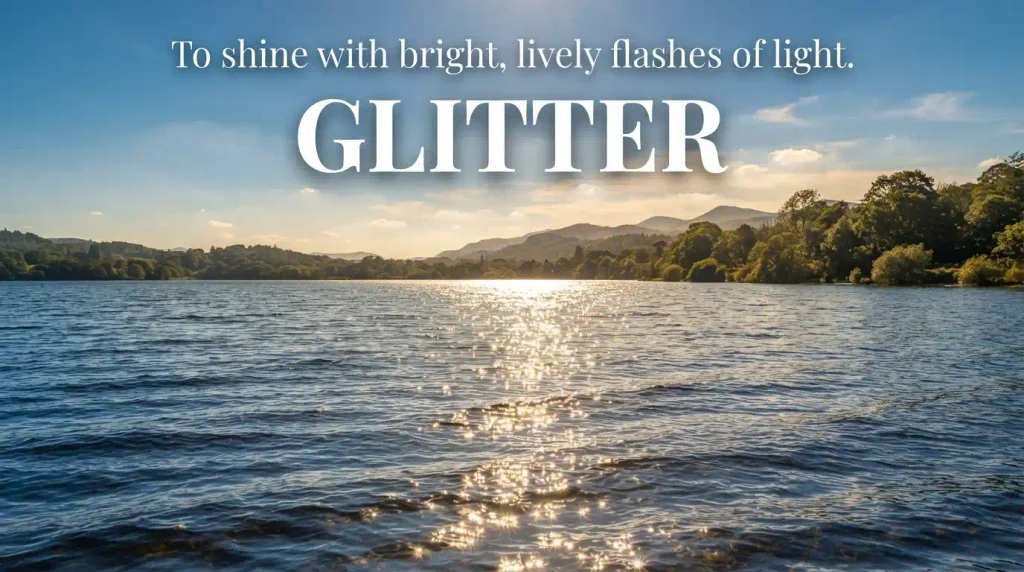
Shimmer (Verb/Noun) — US /ˈʃɪmər/ | UK /ˈʃɪmə/
Meaning: To shine with a soft, wavering, or gently moving light.
Tone/Register: Descriptive, literary, neutral
Example:
The lake shimmered in the afternoon sun.
Her dress shimmered as she walked across the stage.
Gleam (Verb/Noun) — US /ɡliːm/ | UK /ɡliːm/
Meaning: To shine with a clear, steady, or reflected light.
Tone/Register: Neutral, descriptive
Example:
The polished table gleamed after cleaning.
A small smile gleamed in his eyes.
Glimmer (Verb/Noun) — US /ˈɡlɪmər/ | UK /ˈɡlɪmə/
Meaning: To shine faintly or appear as a small, weak light.
Tone/Register: Literary, descriptive
Example:
A glimmer of sunlight appeared through the clouds.
We saw a faint glimmer from the distant village.
Twinkle (Verb/Noun) — US /ˈtwɪŋkəl/ | UK /ˈtwɪŋkəl/
Meaning: To shine with quick, small flashes of light.
Tone/Register: Friendly, expressive, informal
Example:
The stars twinkled above the campsite.
Her eyes twinkled with amusement.
Radiate (Verb) — US /ˈreɪdieɪt/ | UK /ˈreɪdieɪt/
Meaning: To send out light, heat, energy, or a strong impression from a central point.
Tone/Register: Formal, academic, descriptive
Example:
The lamp radiated a warm golden light.
She seemed to radiate confidence during the presentation.
Glow (Verb/Noun) — US /ɡloʊ/ | UK /ɡləʊ/
Meaning: To produce a steady, warm, or soft light.
Tone/Register: Neutral, common
Example:
The candles glowed on the dinner table.
Her face had a healthy glow after the walk.
Shine (Verb/Noun) — US /ʃaɪn/ | UK /ʃaɪn/
Meaning: To give off or reflect light.
Tone/Register: Neutral, everyday
Example:
The sun shone through the window.
His shoes shone after he polished them.
Flash (Verb/Noun) — US /flæʃ/ | UK /flæʃ/
Meaning: To produce or reflect a sudden, brief burst of bright light.
Tone/Register: Neutral, dynamic
Example:
The mirror flashed in the sunlight.
A camera flash lit up the room.
Flicker (Verb/Noun) — US /ˈflɪkər/ | UK /ˈflɪkə/
Meaning: To shine with an unsteady light that repeatedly becomes brighter and dimmer.
Tone/Register: Neutral, descriptive
Example:
The candle flickered beside the window.
The fire flickered throughout the night.
Dazzle (Verb/Noun) — US /ˈdæzəl/ | UK /ˈdæzəl/
Meaning: To impress or temporarily overwhelm someone with intense brightness or beauty.
Tone/Register: Expressive, dramatic
Example:
The stage lights dazzled the audience.
Her performance dazzled everyone in the room.
Radiance (Noun) — US /ˈreɪdiəns/ | UK /ˈreɪdiəns/
Meaning: A bright or glowing quality that seems to come from something.
Tone/Register: Formal, literary
Example:
The bride’s smile added warmth and radiance.
The garden was filled with morning radiance.
Luminosity (Noun) — US /ˌluːməˈnɑːsəti/ | UK /ˌluːmɪˈnɒsəti/
Meaning: The quality or degree of producing or reflecting light.
Tone/Register: Academic, technical
Example:
The photographer adjusted the image’s luminosity.
The moon’s luminosity changed the appearance of the landscape.
Lustre / Luster (Noun) — US /ˈlʌstər/ | UK /ˈlʌstə/
Meaning: A soft, attractive shine on a surface.
Tone/Register: Formal, descriptive
Example:
The antique vase still had its original luster.
Regular polishing restored the metal’s natural lustre.
Sheen (Noun) — US /ʃiːn/ | UK /ʃiːn/
Meaning: A smooth, subtle surface shine.
Tone/Register: Neutral, descriptive
Example:
The wooden floor had a beautiful sheen.
A light sheen covered the freshly painted wall.
Scintillate (Verb) — US /ˈsɪntəleɪt/ | UK /ˈsɪntəleɪt/
Meaning: To give off small flashes of light or display lively brilliance.
Tone/Register: Formal, literary
Example:
The frost scintillated under the morning sun.
Her conversation scintillated with clever ideas.
Coruscate (Verb) — US /ˈkɔːrəskeɪt/ | UK /ˈkɒrəskeɪt/
Meaning: To flash or sparkle brightly.
Tone/Register: Literary, highly formal
Example:
The waves coruscated beneath the bright sun.
The jewels coruscated under the gallery lights.
Glittering (Adjective) — US /ˈɡlɪtərɪŋ/ | UK /ˈɡlɪtərɪŋ/
Meaning: Shining brightly with many small flashes of reflected light.
Tone/Register: Neutral, descriptive
Example:
They walked beside a glittering river.
The glittering decorations filled the hall.
Sparkling (Adjective) — US /ˈspɑːrkəlɪŋ/ | UK /ˈspɑːkəlɪŋ/
Meaning: Shining brightly or appearing lively and energetic.
Tone/Register: Positive, common
Example:
She wore a sparkling silver dress.
His sparkling personality made everyone feel welcome.
Shiny (Adjective) — US /ˈʃaɪni/ | UK /ˈʃaɪni/
Meaning: Having a bright surface that reflects light.
Tone/Register: Everyday, informal to neutral
Example:
The new car has a shiny black finish.
He bought a shiny pair of shoes.
Brilliant (Adjective) — US /ˈbrɪljənt/ | UK /ˈbrɪljənt/
Meaning: Extremely bright, vivid, or impressive.
Tone/Register: Neutral to formal
Example:
The sky became brilliant orange at sunset.
She wore a brilliant blue scarf.

Radiant (Adjective) — US /ˈreɪdiənt/ | UK /ˈreɪdiənt/
Meaning: Shining brightly or showing great happiness and warmth.
Tone/Register: Positive, expressive
Example:
She looked radiant in the morning light.
The garden appeared radiant after the rain.
Glistening (Adjective) — US /ˈɡlɪsənɪŋ/ | UK /ˈɡlɪsənɪŋ/
Meaning: Shining with small reflections, often because something is wet or smooth.
Tone/Register: Descriptive, literary
Example:
The leaves were glistening after the rain.
Her face was glistening under the stage lights.
Gleaming (Adjective) — US /ˈɡliːmɪŋ/ | UK /ˈɡliːmɪŋ/
Meaning: Shining brightly because a surface is clean, polished, or reflective.
Tone/Register: Neutral
Example:
The kitchen had gleaming counters.
His freshly polished shoes were gleaming.
Effulgent (Adjective) — US /ɪˈfʌldʒənt/ | UK /ɪˈfʌldʒənt/
Meaning: Shining with great brightness or brilliance.
Tone/Register: Very formal, literary
Example:
The poem describes an effulgent sunrise.
The palace appeared effulgent beneath the evening sky.
Resplendent (Adjective) — US /rɪˈsplɛndənt/ | UK /rɪˈsplɛndənt/
Meaning: Extremely impressive, beautiful, or richly decorated.
Tone/Register: Formal, literary
Example:
The hall looked resplendent during the ceremony.
She arrived in a resplendent evening gown.
Glister (Verb/Noun) — US /ˈɡlɪstər/ | UK /ˈɡlɪstə/
Meaning: To shine with small flashes of light.
Tone/Register: Literary, less common
Example:
The frost glistered in the early sunlight.
Tiny drops glistered on the grass.
Flashing (Adjective) — US /ˈflæʃɪŋ/ | UK /ˈflæʃɪŋ/
Meaning: Producing quick or repeated bursts of reflected light.
Tone/Register: Neutral, descriptive
Example:
The flashing lights attracted everyone’s attention.
She noticed a flashing reflection in the window.
Illuminated (Adjective) — US /ɪˈluːməneɪtɪd/ | UK /ɪˈluːməneɪtɪd/
Meaning: Lit or made visible by artificial or natural light.
Tone/Register: Formal, neutral
Example:
The illuminated building looked beautiful at night.
An illuminated sign guided visitors toward the entrance.
Glint (Verb/Noun) — US /ɡlɪnt/ | UK /ɡlɪnt/
Meaning: To give a small, sharp flash of reflected light.
Tone/Register: Neutral, descriptive
Example:
A ring glinted in the afternoon sun.
I noticed a glint of silver near the doorway.
Spark (Verb/Noun) — US /spɑːrk/ | UK /spɑːk/
Meaning: To produce a brief, bright flash of light.
Tone/Register: Neutral, dynamic
Example:
The wire sparked when it touched the metal.
A tiny spark appeared beside the campfire.
Blaze (Verb/Noun) — US /bleɪz/ | UK /bleɪz/
Meaning: To shine with a very strong or intense light.
Tone/Register: Dramatic, expressive
Example:
The lamps blazed across the stage.
The desert blazed beneath the midday sun.
Burnish (Verb) — US /ˈbɝːnɪʃ/ | UK /ˈbɜːnɪʃ/
Meaning: To polish a surface until it develops a smooth, attractive shine.
Tone/Register: Formal, descriptive
Example:
The craftsman burnished the copper until it shone.
She burnished the wooden frame with a soft cloth.
Polish (Verb/Noun) — US /ˈpɑːlɪʃ/ | UK /ˈpɒlɪʃ/
Meaning: To make a surface smooth and shiny by rubbing or treating it.
Tone/Register: Neutral, everyday
Example:
He polished the silver before the ceremony.
The cleaner polished the table until it looked bright.
Reflect (Verb) — US /rɪˈflɛkt/ | UK /rɪˈflɛkt/
Meaning: To send light back from a surface.
Tone/Register: Neutral, academic
Example:
The glass reflected the afternoon sunlight.
White walls reflect more light than dark walls.
Radiate (Verb) — US /ˈreɪdieɪt/ | UK /ˈreɪdieɪt/
Meaning: To send out light or energy from a source.
Tone/Register: Formal, scientific
Example:
The heater radiated a gentle warmth.
The lamp radiated light across the room.
Beam (Verb/Noun) — US /biːm/ | UK /biːm/
Meaning: To send out a strong, focused ray of light.
Tone/Register: Neutral, descriptive
Example:
The flashlight beamed across the dark path.
A narrow beam entered through the curtains.
Glare (Verb/Noun) — US /ɡler/ | UK /ɡler/
Meaning: To shine with an excessively bright or harsh light.
Tone/Register: Neutral, often negative
Example:
The headlights glared through the fog.
The screen produced an uncomfortable glare.
Blare (Verb/Noun) — US /bler/ | UK /bler/
Meaning: To shine or appear with striking intensity; less commonly used for visual brightness than sound.
Tone/Register: Dramatic, literary
Example:
The sun blared through the dusty window.
Bright signs seemed to blare above the busy street.
Incandesce (Verb) — US /ˌɪnkənˈdɛs/ | UK /ˌɪnkənˈdɛs/
Meaning: To emit visible light because of intense heat.
Tone/Register: Technical, scientific
Example:
The metal began to incandesce as its temperature rose.
The heated wire incandesced inside the device.
Luminesce (Verb) — US /ˌluːməˈnɛs/ | UK /ˌluːmɪˈnɛs/
Meaning: To emit light without becoming extremely hot.
Tone/Register: Scientific, technical
Example:
Certain organisms luminesce in dark water.
The material began to luminesce under ultraviolet light.
Fluoresce (Verb) — US /flʊəˈrɛs/ | UK /flʊəˈrɛs/
Meaning: To emit visible light after absorbing electromagnetic radiation.
Tone/Register: Scientific, technical
Example:
The minerals fluoresced under ultraviolet light.
The dye fluoresces brightly under special lighting.
Phosphoresce (Verb) — US /ˌfɑːsfəˈrɛs/ | UK /ˌfɒsfəˈrɛs/
Meaning: To continue emitting light after the source of energy has been removed.
Tone/Register: Scientific, technical
Example:
The markings phosphoresced after the lights were turned off.
The material continued to phosphoresce in the darkness.
Glare (Noun) — US /ɡler/ | UK /ɡler/
Meaning: An intense and often unpleasant brightness reflected from a surface.
Tone/Register: Neutral to negative
Example:
The glare from the snow made it difficult to see.
She lowered the blinds to reduce the glare.
Radiate (Noun-related form: Radiation) — US /ˌreɪdiˈeɪʃən/ | UK /ˌreɪdiˈeɪʃən/
Meaning: The emission or transmission of energy, including radiant energy.
Tone/Register: Scientific, technical
Example:
The surface absorbs and emits radiation.
Solar radiation reaches the Earth’s surface.
Brilliantly (Adverb) — US /ˈbrɪljəntli/ | UK /ˈbrɪliəntli/
Meaning: In an extremely bright, vivid, or impressive manner.
Tone/Register: Neutral, expressive
Example:
The city lights shone brilliantly after sunset.
The crystals reflected the light brilliantly.
Luminous (Adjective) — US /ˈluːmənəs/ | UK /ˈluːmɪnəs/
Meaning: Producing or reflecting a strong or noticeable amount of light.
Tone/Register: Formal, descriptive
Example:
The moon looked luminous against the dark sky.
The artist used luminous colors in the painting.
Lustrous (Adjective) — US /ˈlʌstrəs/ | UK /ˈlʌstrəs/
Meaning: Having a smooth, attractive, and noticeable shine.
Tone/Register: Formal, descriptive
Example:
The fabric had a lustrous surface.
Her hair looked healthy and lustrous.
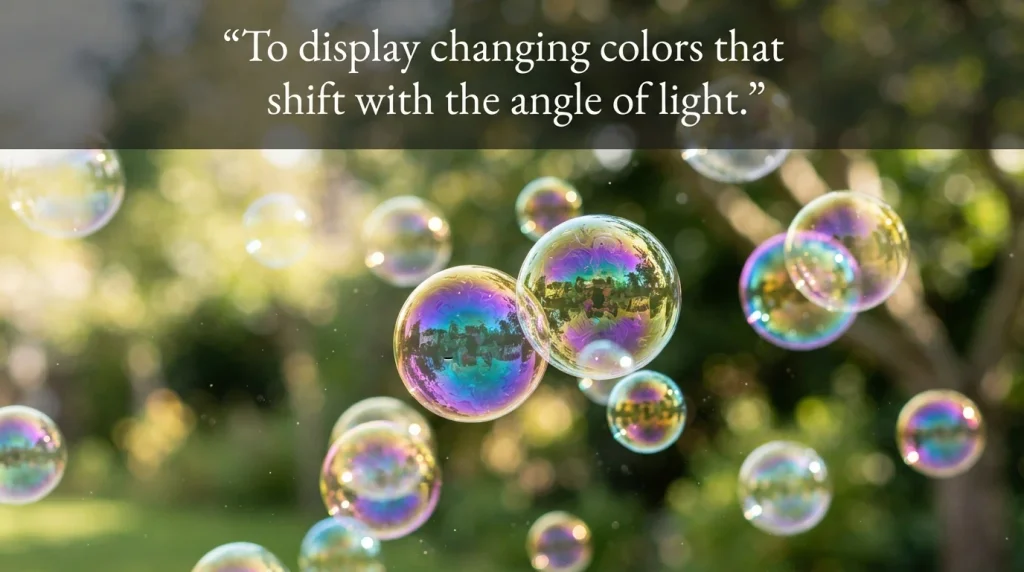
Iridesce (Verb) — US /ˌɪrɪˈdɛs/ | UK /ˌɪrɪˈdɛs/
Meaning: To display changing colors that shift with the angle of light.
Tone/Register: Descriptive, scientific
Example:
The soap bubbles iridesced in the sunlight.
The insect’s wings seemed to iridesce as it moved.
Synonyms for Glitter by Tone
Tone matters because two words can describe brightness while creating very different impressions.
Positive Synonyms
- Sparkle
- Radiant
- Radiance
- Resplendent
- Brilliant
- Sparkling
- Dazzle
- Shimmer
These words often suggest beauty, energy, elegance, or excitement.
Neutral Synonyms
- Shine
- Glow
- Gleam
- Sheen
- Glimmer
- Glisten
- Flicker
- Flash
- Shiny
- Gleaming
These words are useful when you simply want to describe light without creating a strong emotional effect.
Formal or Literary Synonyms
- Scintillate
- Coruscate
- Effulgent
- Lustre
- Resplendent
- Luminosity
- Glister
These choices work well in creative writing, formal discussion, or descriptive prose.
Playful or Informal Synonyms
- Twinkle
- Sparkle
- Shiny
- Dazzle
These choices can make descriptions feel lighter and more conversational.
Glitter vs Close Alternatives
Glitter vs Sparkle
The term glitter often suggests numerous tiny flashes of light.
Sparkle usually sounds more lively and attractive.
Use glitter for stars, decorations, or surfaces covered with tiny reflective particles. Use sparkle for jewelry, eyes, water, or lively visual effects.
Glitter vs Shimmer
Glitter usually creates a sharper impression of many bright flashes.
Shimmer suggests softer, moving, or wavering light.
Therefore, a diamond may sparkle, while silk may shimmer.
Glitter vs Gleam
Glitter suggests repeated flashes.
Gleam usually describes a steadier reflection.
For example, polished shoes may gleam, while stars may glitter.
How Glitter Changes by Context
Daily Conversation
In everyday English, shine, sparkle, glow, and shiny are often easier and more natural than highly formal alternatives.
Example:
“Your earrings really sparkle.”
This sounds natural and friendly.
Writing and Blogging
Writers can use shimmer, gleam, glimmer, and sparkle to create more precise descriptions.
Instead of writing:
“The lake glittered.”
You could write:
“The lake shimmered beneath the moon.”
The second sentence creates a softer visual effect.
Professional or Academic Tone
Technical writing may favor words such as luminosity, radiance, or brightness, depending on the subject.
However, context matters. Avoid using rare words simply to sound sophisticated.
Creative or Informal Use
Creative writers have more freedom.
Words such as scintillate, coruscate, glister, and effulgent can create an old-fashioned or poetic atmosphere.
Nevertheless, simpler words are often more effective when the scene needs to feel natural.
Common Mistakes and Native Usage
Using Sparkle for Every Type of Light
Sparkle is not always interchangeable with glitter.
A soft fabric may shimmer, while a polished surface may gleam.
Using Glow for Sharp Flashes
Glow usually suggests steady or warm light.
Therefore, it is not always suitable for tiny, sudden flashes.
Using Glitter in Technical Writing
Glitter is perfectly correct, but technical writing may require greater precision.
For example, luminosity or reflectivity may be more suitable when discussing measurable properties of light.
Overusing Rare Synonyms
Words such as coruscate and effulgent are legitimate, but they are uncommon.
Consequently, using them too often can make ordinary writing sound unnatural.
Confusing the Noun and Verb
Remember:
Verb: The stars glittered.
Noun: She added glitter to the card.
This distinction is especially useful for English learners.
Register Notes
Glitter is common in both spoken and written English.
Sparkle, shine, glow, shimmer, gleam, and twinkle are also widely understood.
By contrast, coruscate, scintillate, effulgent, and glister are much more literary or formal.
For everyday communication, choose familiar words first.
For creative writing, choose the word that creates the exact visual effect you want.
Real-Life Mini Scenarios
Workplace
A presentation screen can glow under bright lighting.
A polished conference table may gleam after cleaning.
Social Situations
Someone’s eyes may twinkle when they make a joke.
A friend’s jewelry may sparkle at a celebration.
Media and Pop Culture
A stage may dazzle viewers with powerful lighting.
A performer may appear radiant under studio lights.
Writing and Storytelling
A fantasy writer may describe magical crystals as glittering.
A poetic scene may describe frost that glisters beneath the moon.
How to Choose the Right Synonym for Glitter
First, ask what kind of light you are describing.
For something bright and lively, use sparkle.
When the light is soft and gently moving, shimmer is a natural choice.
A steady, reflective light is better described with gleam.
For a warm, consistent light, glow fits well.
A faint or distant light can be described as a glimmer.
Use flash for a quick, sudden burst of light.
When the light appears unsteady or repeatedly disappears and returns, flicker works well.
For something extremely impressive or visually striking, dazzle is the stronger choice. If the description is formal or scientific, consider luminosity or radiance.
As a result, choosing a synonym becomes easier when you focus on the exact visual effect rather than simply looking for another word.
Interactive Practice Quiz
Choose the best answer for each situation.
1. The diamonds ______ under the bright lights.
A. flickered
B. sparkled
C. glowed
D. radiated
2. The silk dress ______ softly as she moved.
A. shimmered
B. flashed
C. flickered
D. gleamed
3. The polished car ______ in the sunlight.
A. twinkled
B. glimmered
C. gleamed
D. scintillated
4. A faint light began to ______ in the distance.
A. glimmer
B. dazzle
C. radiate
D. shine
5. The candle flame ______ in the cold wind.
A. glittered
B. flickered
C. sparkled
D. gleamed
6. Her eyes ______ with amusement.
A. twinkled
B. illuminated
C. glistened
D. coruscated
7. The warm lamp began to ______ beside the bed.
A. flash
B. glow
C. glitter
D. sparkle
8. The stage lights ______ the audience.
A. dazzled
B. glimmered
C. glistened
D. flickered
9. The wet leaves were ______ after the rain.
A. glistening
B. dazzling
C. flashing
D. twinkling
10. Which word is most suitable for technical writing about light?
A. twinkle
B. luminosity
C. sparkle
D. shiny
11. Which word best describes soft, moving light?
A. shimmer
B. flash
C. gleam
D. shine
12. Which word suggests a highly literary style?
A. shiny
B. glow
C. coruscate
D. sparkle
13. The stars ______ across the clear night sky.
A. glittered
B. glowed
C. radiated
D. illuminated
14. The metal surface had a smooth ______.
A. twinkle
B. sheen
C. flicker
D. flash
15. Which word best describes a sudden burst of light?
A. flash
B. shimmer
C. glow
D. sheen
Reflection Task: Write one sentence using sparkle, shimmer, gleam, glimmer, or glow. Then explain why that word fits your sentence.
Answer Key: 1-B | 2-A | 3-C | 4-A | 5-B | 6-A | 7-B | 8-A | 9-A | 10-B | 11-A | 12-C | 13-A | 14-B | 15-A
FAQs
1. What is the best synonym for glitter in everyday English?
Sparkle is one of the closest everyday alternatives to glitter. It describes bright, lively flashes of reflected light and works naturally for jewelry, water, eyes, decorations, and stars. However, the best choice depends on context. Use shimmer for soft moving light, gleam for steady reflections, and glow for warm or continuous light.
2. What is a good synonym for glitter in creative writing?
Creative writing offers several options, including sparkle, shimmer, glimmer, gleam, twinkle, glisten, scintillate, and coruscate. The right choice depends on the mood. For example, shimmer creates a soft visual feeling, while coruscate sounds highly literary. Simpler words are usually better when you want natural, modern storytelling.
3. What word describes glittering light on water?
Shimmer is often the best choice for light moving softly across water. You can say, “The lake shimmered beneath the moon.” Sparkle also works when the water produces sharper, brighter flashes. The choice depends on whether the reflection feels soft and fluid or lively and bright.
4. What is the difference between glitter, sparkle, and shimmer?
Glitter often suggests numerous small flashes of reflected light. Sparkle usually feels brighter and more lively, while shimmer suggests soft, wavering, or moving light. For example, diamonds can sparkle, silk can shimmer, and decorative particles can glitter. These differences help writers create more precise descriptions.
5. What is the formal synonym for glitter?
There is no single formal replacement for every use of glitter. Depending on context, luminosity, radiance, scintillate, or coruscate may work. Luminosity is useful for technical discussions of light, while scintillate and coruscate are more literary. Always choose according to meaning rather than formality alone.
6. Can glitter describe someone’s eyes?
Yes. Glitter can describe eyes when they appear to show bright, sharp flashes associated with excitement, amusement, anger, or another strong emotion. However, sparkle and twinkle often sound warmer or more positive. For example, “Her eyes sparkled with happiness” has a friendlier tone than “His eyes glittered with anger.”
7. What is the opposite of glitter?
The opposite depends on the intended meaning. If glitter means shining brightly, possible contrasts include darkness, dullness, dimness, or matte. For example, a dull surface does not reflect light strongly. If glitter refers to decorative particles, the opposite idea could simply be something plain or undecorated.
8. Which synonym for glitter is best for academic writing?
Academic writing usually benefits from precise and familiar terminology rather than decorative synonyms. Depending on the subject, luminosity, radiance, reflection, or brightness may be appropriate. In scientific writing, the exact physical property should guide word choice. Avoid using literary terms such as coruscate when a precise technical description is required.
Conclusion
Learning a synonym for glitter gives you more ways to describe light, beauty, movement, and emotion without repeating the same familiar word.
Instead of using glitter everywhere, you can choose sparkle, shimmer, gleam, glow, or glimmer to create a clearer image.
Moreover, stronger vocabulary helps students, bloggers, writers, and everyday speakers communicate with greater accuracy and confidence.
Finally, practice these synonyms in emails, essays, stories, and daily conversations. The more you use them, the more naturally they become part of your English.

I’m Hezel, a passionate English language enthusiast and the creator of Synworda.com. I love exploring synonyms, vocabulary, grammar, and the many ways words can make communication clearer and more effective. Through Synworda.com, I create simple, practical, and easy-to-understand content for students, writers, professionals, and anyone who wants to improve their English. I enjoy breaking down confusing words and grammar concepts into helpful explanations with clear examples. I aim to make learning English feel less complicated and more enjoyable. I believe that understanding the right words can help everyone communicate with confidence in everyday life.