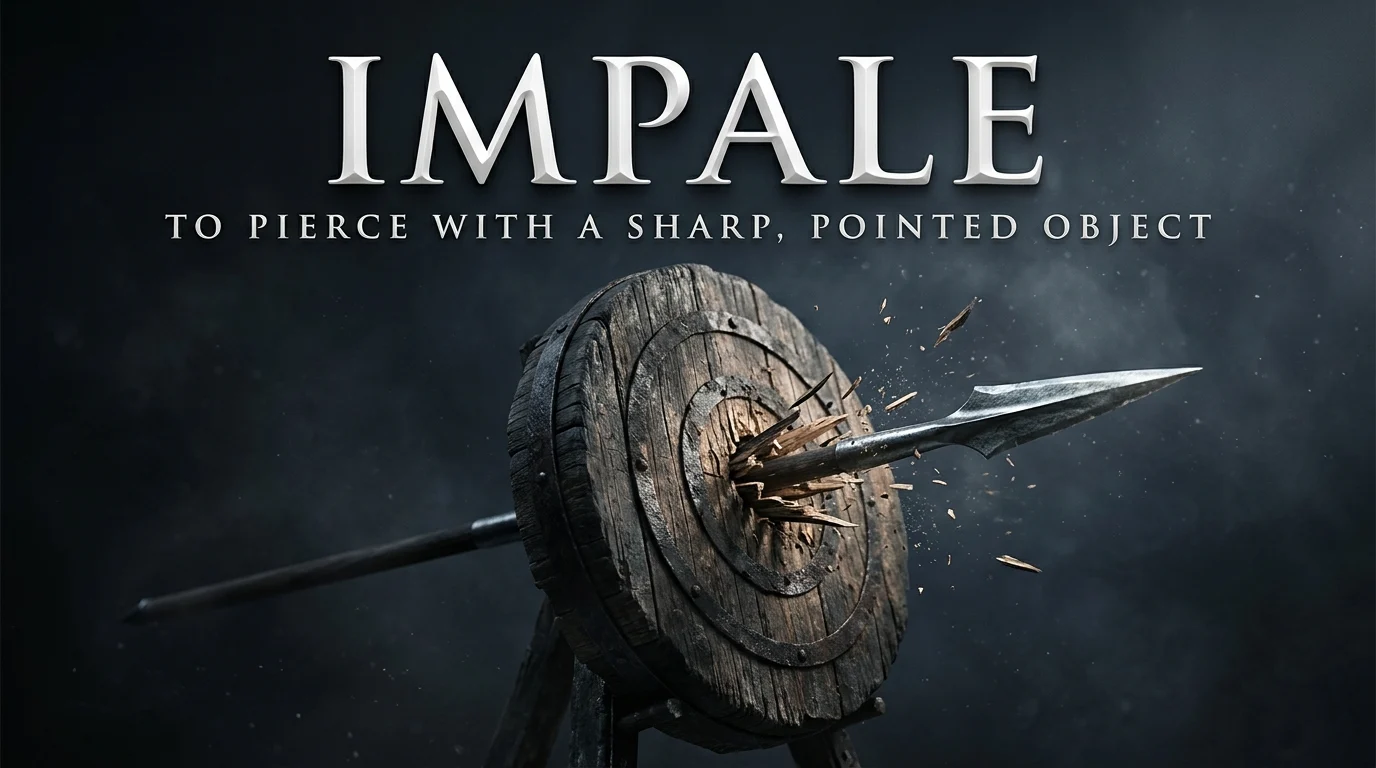
A synonym for impale is a word such as pierce, skewer, transfix, or spike. These words describe pushing a sharp object into or through something. The best choice depends on the action, the object, and the level of detail required.
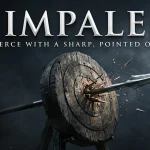
Imagine reading a suspense novel where a character discovers a sharp object piercing a wooden target. The writer could use impale, pierce, or skewer to describe the action. Each word creates a slightly different impression.
Learning a synonym for impale helps you describe physical actions more precisely. It also makes stories, essays, and explanations more vivid without repeating the same vocabulary.
The word impale often appears in literature, historical accounts, horror fiction, and descriptions of accidents. Understanding its meaning helps readers recognize the seriousness of the action.
Students, bloggers, content writers, and everyday English users can all benefit from learning these alternatives. They help you choose words that match your meaning, audience, and writing style.
What Does “Impale” Really Mean?
Impale is a verb that means to pierce something with a sharp, pointed object. It often describes an object passing into or through a person’s or animal’s body. The word can also appear in fictional, historical, and scientific descriptions.
Native English speakers usually understand impale as a strong, vivid word. It can suggest serious injury, danger, or a dramatic physical event. It is more specific than the general verb hurt.
For example, a writer might say, “The falling branch impaled the wooden fence.” This describes a pointed object piercing the fence, although pierced may sound more natural in some contexts.
Part of Speech
- Word: Impale
- Part of speech: Verb, usually transitive
- Simple definition: To pierce something with a sharp, pointed object.
- Past tense: Impaled
- Present participle: Impaling
- Related noun: Impalement
The verb normally takes a direct object. A common pattern is impale something on something.
Example: “She impaled a piece of fruit on a skewer.”
Connotative Meaning
(Connotation means the feelings, associations, or impressions a word creates beyond its basic definition.)
Positive tone: Impale rarely carries a positive tone when used literally. In some creative contexts, it may describe a successful physical action without praising or condemning it.
Negative tone: The word often suggests violence, pain, injury, or danger. This is its strongest and most familiar association.
Neutral tone: Scientific, technical, or factual writing may use impale as a precise description without deliberately expressing an emotional judgment.
The surrounding sentence determines the effect. A historical account may use the word factually, while a horror story may use it to create fear.
Etymology: Where Does “Impale” Come From?
The word impale entered English through the French empaler or Medieval Latin impalare. Its Latin elements relate to putting something onto a stake or pole. The word originally had connections with enclosing an area with stakes before developing its familiar sense of piercing.
A Short History of Impale
- Old English (450–1100): The modern verb impale was not established in Old English. Speakers used other vocabulary to describe piercing, fastening, and pointed objects.
- Middle English (1100–1500): French and Latin influences helped shape the vocabulary that later produced the English verb.
- Modern English (1500–present): The word appeared in English during the 16th century. Its meaning developed from enclosing with stakes to piercing with a pointed object, especially in descriptions of severe injury or punishment.
Pronunciation (US & UK – IPA)
- US: /ɪmˈpeɪl/
- UK: /ɪmˈpeɪl/
The stress falls on the second syllable: im-PALE.
Syllables
Syllable breakdown: im-pale
The word contains two syllables. The second syllable receives the main stress.
Affixation Pattern of Impale
- Root: pale, historically connected to a stake or pole.
- Prefix: im-, a form of in-, meaning “in” or “into” in this word’s historical development.
- Suffix: No productive suffix appears in the modern verb impale.
The modern word should not be confused with pale, the adjective meaning light in color. Their historical relationship and current meanings differ.
Synonyms List:
Transfix (Verb) — US: /trænsˈfɪks/ | UK: /trɑːnsˈfɪks/
Meaning: To hold something motionless by piercing it through with a sharp weapon or point.
Tone/Register: Formal, Literary
Example: The archer managed to transfix the wooden target with a heavy steel arrow.
She stood completely still as if transfixed by the sudden display of lightning.
Pierce (Verb) — US: /pɪrs/ | UK: /pɪəs/
Meaning: To make a hole into or through something using a sharp instrument.
Tone/Register: Neutral, General
Example: The sharp needle will pierce the thick leather fabric effortlessly.
A scream managed to pierce the quiet night air.
Skewer (Verb) — US: /ˈskjuː.ɚ/ | UK: /ˈskjuː.ər/
Meaning: To push a long pin or stick through food or an object to hold it fast.
Tone/Register: Informal, Culinary, Conversational
Example: Chef Marcus began to skewer the marinated vegetables for the afternoon grill.
The critic proceeded to skewer the new movie in his weekly column.
Spear (Verb) — US: /spɪr/ | UK: /spɪər/
Meaning: To push a long pointed pole or weapon into an object with force.
Tone/Register: Neutral, Descriptive
Example: The fisherman leaned over the boat to spear a large salmon in the river.
He used his fork to spear the last piece of roasted potato from the plate.
Spike (Verb) — US: /spaɪk/ | UK: /spaɪk/
Meaning: To pierce or fasten an object using a long, heavy metal nail or sharp point.
Tone/Register: General, Casual
Example: Workers had to spike the wooden beams together to secure the fence.
The athlete managed to spike the ball directly into the open court.
Puncture (Verb) — US: /ˈpʌŋk.tʃɚ/ | UK: /ˈpʌŋk.tʃər/
Meaning: To make a small, deep hole in something with a sharp point.
Tone/Register: Neutral, Technical
Example: A stray nail managed to puncture the front tire of the delivery truck.
Be careful not to puncture the plastic seal before cooking the meal.
Gore (Verb) — US: /ɡɔːr/ | UK: /ɡɔːr/
Meaning: To pierce or wound an animal or person using a horn or tusk.
Tone/Register: Dramatic, Descriptive
Example: The angry bull turned quickly and tried to gore the wooden barrier.
Historical accounts describe how wild boars would gore hunting dogs with their tusks.
Lance (Verb) — US: /læns/ | UK: /lɑːns/
Meaning: To pierce something with a long spear or cut open a surgical point.
Tone/Register: Formal, Medical, Historical
Example: The medieval knight prepared to lance the practice dummy during training.
The surgeon had to lance the swollen, infected area to relieve pressure.
Pin (Verb) — US: /pɪn/ | UK: /pɪn/
Meaning: To hold an object fast against a surface using a thin, sharp point.
Tone/Register: Informal, Everyday
Example: She decided to pin the notice onto the bulletin board near the entrance.
The wrestler managed to pin his opponent to the mat for the victory.
Stick (Verb) — US: /stɪk/ | UK: /stɪk/
Meaning: To push a pointed object into or through something else.
Tone/Register: Informal, Conversational
Example: Please stick the small flag into the center of the cake.
He accidentally managed to stick his finger with a sharp sewing needle.
Penetrate (Verb) — US: /ˈpen.ə.treɪt/ | UK: /ˈpen.ɪ.treɪt/
Meaning: To pass into or through an object by force or sharp pressure.
Tone/Register: Formal, Academic, Technical
Example: The heavy drill bit began to penetrate the thick concrete wall slowly.
Light could barely penetrate the dense canopy of the ancient forest.
Perforate (Verb) — US: /ˈpɝː.fə.reɪt/ | UK: /ˈpɜː.fə.reɪt/
Meaning: To make a row of small holes in a material to allow easy tearing or passage.
Tone/Register: Technical, Business
Example: The machine will perforate the paper edge so customers can tear off the coupon.
Sharp thorns can easily perforate thin rubber gardening gloves.
Run through (Phrasal Verb) — US: /rʌn θruː/ | UK: /rʌn θruː/
Meaning: To pierce someone or something completely with a sword or blade.
Tone/Register: Literary, Informal
Example: The villain threatened to run through anyone who dared to step forward.
The sword display showed how ancient weapons could run through wooden shields.
Spit (Verb) — US: /spɪt/ | UK: /spɪt/
Meaning: To impale food onto a long metal rod for roasting over an open fire.
Tone/Register: Culinary, Traditional
Example: The cooks would spit the whole chicken before turning it over the glowing embers.
They prepared to spit the meat over the campfire for dinner.
Fix (Verb) — US: /fɪks/ | UK: /fɪks/
Meaning: To fasten something firmly in place by piercing it onto a pin or stand.
Tone/Register: Formal, Scientific
Example: The entomologist used a small needle to fix the butterfly specimen to the board.
He managed to fix the poster securely to the wall using sharp tacks.
Stab (Verb) — US: /stæb/ | UK: /stæb/
Meaning: To thrust a pointed weapon or object sharply into something.
Tone/Register: General, Direct
Example: He used a pocket knife to stab a quick opening in the sealed box.
She was careful not to stab herself with the sharp embroidery scissors.
Bayonet (Verb) — US: /ˌbeɪ.əˈnet/ | UK: /ˌbeɪ.əˈnet/
Meaning: To pierce or stab someone with a rifle-mounted blade.
Tone/Register: Historical, Military
Example: The infantrymen were trained to bayonet targets during close-combat drills.
Historical archives document how soldiers had to bayonet obstacles to advance.
Harpoon (Verb) — US: /hɑːrˈpuːn/ | UK: /hɑːˈpuːn/
Meaning: To spear a large sea creature or heavy target using a barbed spear.
Tone/Register: Maritime, Specialized
Example: The crew managed to harpoon the heavy target buoy during training.
Whalers historically used forged iron points to harpoon large ocean game.
Jab (Verb) — US: /dʒæb/ | UK: /dʒæb/
Meaning: To poke or thrust a sharp point into something with quick force.
Tone/Register: Informal, Casual
Example: She used a wooden toothpick to jab the appetizer and test its texture.
He continued to jab the needle through the heavy canvas sheet.
Poke (Verb) — US: /poʊk/ | UK: /pəʊk/
Meaning: To push a sharp object or finger into or against something.
Tone/Register: Informal, Everyday
Example: Be careful not to poke a hole in the paper wrapping with that pencil.
He decided to poke the burning firewood with a sturdy iron rod.
Prick (Verb) — US: /prɪk/ | UK: /prɪk/
Meaning: To pierce slightly with a fine, sharp point.
Tone/Register: Neutral, Everyday
Example: The nurse will prick your finger to take a tiny sample of blood.
She felt a sudden sharp sting when she began to prick her thumb on a rose stem.
Bore (Verb) — US: /bɔːr/ | UK: /bɔːr/
Meaning: To pierce or make a hole through a hard surface by rotary pressure or cutting.
Tone/Register: Technical, Industrial
Example: The industrial drill will bore through the thick steel plate in minutes.
Insects can bore deep holes into wooden timber over time.
Drill (Verb) — US: /drɪl/ | UK: /drɪl/
Meaning: To pierce a hole in a hard substance using a rotating sharp tool.
Tone/Register: General, Industrial
Example: You need to drill a clean pilot hole before driving in the screw.
The team prepared to drill through the concrete layer to reach the pipe.
Embed (Verb) — US: /ɪmˈbed/ | UK: /ɪmˈbed/
Meaning: To drive a pointed object deeply into a surrounding mass.
Tone/Register: Formal, Technical
Example: The strong wind caused the sharp piece of metal to embed itself into the tree bark.
Archaeologists found a flint point embedded in the ancient wooden handle.
Thrust (Verb) — US: /θrʌst/ | UK: /θrʌst/
Meaning: To push a sharp object suddenly and violently into something.
Tone/Register: Literary, Dramatic
Example: The guard managed to thrust his blade through the heavy wooden door frame.
He prepared to thrust the iron rod into the burning coals.
Impinge (Verb) — US: /ɪmˈpɪndʒ/ | UK: /ɪmˈpɪndʒ/
Meaning: To strike against or pierce into a surface with force.
Tone/Register: Academic, Formal
Example: The sharp fragments continued to impinge upon the outer protective shell.
High-velocity particles impinge upon the metallic shield in the test chamber.
Gouge (Verb) — US: /ɡaʊdʒ/ | UK: /ɡaʊdʒ/
Meaning: To pierce and scoop out material with a sharp, curved tool.
Tone/Register: Technical, Crafts
Example: The woodcarver used a chisel to gouge out a deep groove along the timber.
A sharp rock managed to gouge a deep trench along the bottom of the boat.
Spike-mount (Verb) — US: /spaɪk-maʊnt/ | UK: /spaɪk-maʊnt/
Meaning: To fix or display an object by pushing it onto an upright spike.
Tone/Register: Technical, Display
Example: The groundskeeper had to spike-mount the directional sign into the soft turf.
Collectors often spike-mount delicate specimens onto wooden display stands.
Picket (Verb) — US: /ˈpɪk.ɪt/ | UK: /ˈpɪk.ɪt/
Meaning: To tether or pierce into place using pointed wooden stakes.
Tone/Register: Historical, Agricultural
Example: Ranchers used to picket their horses by driving sharp stakes deep into the ground.
The soldiers began to picket the boundary lines using pointed wooden posts.
Transpierce (Verb) — US: /trænsˈpɪrs/ | UK: /trænsˈpɪəs/
Meaning: To pierce completely through from one side to another.
Tone/Register: Argot, Archaic Literary
Example: The ancient sword appeared to transpierce the thick iron armor plate.
Poets used the word to describe light that would transpierce dark clouds.
Imbrue (Verb) — US: /ɪmˈbruː/ | UK: /ɪmˈbruː/
Meaning: To pierce or stain deeply, often associated with wet or sharp entry.
Tone/Register: Literary, Historical
Example: The battle narratives described how blades would imbrue the battlefield earth.
Classical prose used the term to show weapons that pierce deeply.
Sump (Verb) — US: /sʌmp/ | UK: /sʌmp/
Meaning: To drive a sharp stake down to form a drainage or anchor point.
Tone/Register: Technical, Mining
Example: Mining crews had to sump the steel posts deep into the rock bed.
The civil engineers decided to sump heavy wooden piles into the marshy soil.
Enfile (Verb) — US: /ˈen.fɪleɪ/ | UK: /ənˈfeɪl/
Meaning: To pierce or sweep through along a straight line with sharp force.
Tone/Register: Military, Strategic
Example: The battery was positioned to enfilade the narrow mountain pass.
Sharpshooters were placed where they could enfilade the enemy fortification wall.
Pinpoint (Verb) — US: /ˈpɪn.pɔɪnt/ | UK: /ˈpɪn.pɔɪnt/
Meaning: To hit or pierce a precise tiny point with extreme accuracy.
Tone/Register: General, Exact
Example: The surgeon was able to pinpoint the tiny target area with a laser needle.
A skilled archer can pinpoint the exact center of the bullseye.
Needle (Verb) — US: /ˈniː.dəl/ | UK: /ˈniː.dəl/
Meaning: To pierce or prick something repeatedly using a slender instrument.
Tone/Register: Everyday, Crafting
Example: She began to needle small perforations along the leather strip.
The doctor had to needle the blister to relieve excess fluid buildup.
Drive through (Phrasal Verb) — US: /draɪv θruː/ | UK: /draɪv θruː/
Meaning: To force a pointed object entirely through a barrier.
Tone/Register: Neutral, Descriptive
Example: He used a heavy mallet to drive a spike through the thick wooden beam.
The intense force managed to drive through the protective wall layer.
Spike-fasten (Verb) — US: /spaɪk-ˈfæs.ən/ | UK: /spaɪk-ˈfɑː.sən/
Meaning: To lock an object firmly into place using heavy pointed pins.
Tone/Register: Construction, Industrial
Example: Carpenters had to spike-fasten the joists to prevent structural movement.
The railway crew used heavy machinery to spike-fasten the steel rails to wooden ties.
Enpale (Verb) — US: /enˈpeɪl/ | UK: /enˈpeɪl/
Meaning: Variant spelling of impale; to enclose or pierce with palisades or stakes.
Tone/Register: Historical, Archaic
Example: Medieval texts describe how builders would enpale the castle boundary with timber.
Ancient engineers used sharp logs to enpale defensive ramparts.
Thread (Verb) — US: /θred/ | UK: /θred/
Meaning: To pass a sharp needle or thin rod through an object.
Tone/Register: Everyday, Crafting
Example: She was able to thread the sharp needle through several beads at once.
The chef used a metal rod to thread small pieces of meat together.
String (Verb) — US: /strɪŋ/ | UK: /strɪŋ/
Meaning: To pierce objects through their center to arrange them along a line.
Tone/Register: Informal, Crafting
Example: Children love to string popcorn kernels using a sharp sewing needle.
She used a needle to string dried flowers for decorative garlands.
Anchor (Verb) — US: /ˈæŋ.kɚ/ | UK: /ˈæŋ.kər/
Meaning: To drive a sharp point into a solid mass to hold an item still.
Tone/Register: General, Nautical
Example: Climbers must anchor their pitons securely into the rock face before ascending.
The tent stakes were driven deep to anchor the structure against high winds.
Toothpick (Verb) — US: /ˈtuːθ.pɪk/ | UK: /ˈtuːθ.pɪk/
Meaning: To pierce or secure small finger foods using tiny wooden sticks.
Tone/Register: Informal, Culinary
Example: The caterer began to toothpick the stuffed olives onto small trays.
Be sure to toothpick each small sandwich wrap so it retains its shape.
Skewer-pierce (Verb) — US: /ˈskjuː.ɚ-pɪrs/ | UK: /ˈskjuː.ər-pɪəs/
Meaning: To drive a broad pin completely through an item for cooking or holding.
Tone/Register: Descriptive, Cooking
Example: The butcher showed how to skewer-pierce thick cuts of beef evenly.
He had to skewer-pierce the canvas sheet to hold the canopy upright.
Spike-pierce (Verb) — US: /spaɪk-pɪrs/ | UK: /spaɪk-pɪəs/
Meaning: To push a broad nail or point completely through a hard material.
Tone/Register: Technical, Construction
Example: Builders must spike-pierce the underlying beam to anchor the frame.
The storm caused a heavy branch to spike-pierce the tin roof.
Transfix-pin (Verb) — US: /trænsˈfɪks-pɪn/ | UK: /trɑːnsˈfɪks-pɪn/
Meaning: To immobilize an item completely by driving a pin through its center.
Tone/Register: Technical, Specimen Display
Example: Lab technicians learn how to transfix-pin tissue samples for viewing under microscopes.
He had to transfix-pin the document to keep it flat.
Cleave (Verb) — US: /kliːv/ | UK: /kliːv/
Meaning: To pierce or split through an object with a sharp heavy edge.
Tone/Register: Literary, Historical
Example: The heavy axe threatened to cleave the wooden shield in half.
A sharp wedge can cleave tough hardwood logs cleanly.
Sink (Verb) — US: /sɪŋk/ | UK: /sɪŋk/
Meaning: To push a sharp pointed object deep into a solid surface.
Tone/Register: General, Everyday
Example: He managed to sink the sharp axe head deep into the chopping block.
Be careful when you sink the sharp garden spade into the hard soil.
Plant (Verb) — US: /plænt/ | UK: /plɑːnt/
Meaning: To drive a sharp post or point firmly upright into the ground.
Tone/Register: Everyday, Conversational
Example: They decided to plant the sharp boundary stakes along the garden perimeter.
He managed to plant his spear firmly into the dirt ground.
Peg (Verb) — US: /peɡ/ | UK: /peɡ/
Meaning: To fix or pierce down using a short pointed wooden or plastic pin.
Tone/Register: Casual, Outdoor
Example: Make sure you peg the tent corners securely down into the firm soil.
She used a small wooden pin to peg the leather strap in place.
Nail (Verb) — US: /neɪl/ | UK: /neɪl/
Meaning: To drive a sharp metal point through wood or metal to fasten it.
Tone/Register: General, Carpentry
Example: You need to nail the wooden board tightly against the frame.
He managed to nail the protective metal sheet over the broken window opening.
Spike-lock (Verb) — US: /spaɪk-lɑːk/ | UK: /spaɪk-lɒk/
Meaning: To lock a heavy object in place by driving sharp metal pins into it.
Tone/Register: Mechanical, Engineering
Example: Engineers use heavy machinery to spike-lock the rail tracks onto concrete ties.
The team had to spike-lock the wooden platform before stepping onto it.
Spit-roast (Verb) — US: /spɪt-roʊst/ | UK: /spɪt-rəʊst/
Meaning: To pierce food with a long rod and suspend it over a fire.
Tone/Register: Culinary, Traditional
Example: The chefs decided to spit-roast the seasoned meat over the open outdoor pit.
Traditional recipes require cooks to spit-roast the poultry slowly over coal.
Trans-puncture (Verb) — US: /træns-ˈpʌŋk.tʃɚ/ | UK: /træns-ˈpʌŋk.tʃər/
Meaning: To puncture fully across a barrier from front to back.
Tone/Register: Technical, Material Science
Example: High pressure can cause severe stress that will trans-puncture thin membrane layers.
Testing ensures that debris cannot trans-puncture the protective suit wall.
Spear-pierce (Verb) — US: /spɪr-pɪrs/ | UK: /spɪər-pɪəs/
Meaning: To thrust a broad spearhead completely through an object.
Tone/Register: Descriptive, Narrative
Example: The hunter was able to spear-pierce the target during the practice run.
A sharp iron tip can easily spear-pierce thick wooden barricades.
Point-fix (Verb) — US: /pɔɪnt-fɪks/ | UK: /pɔɪnt-fɪks/
Meaning: To secure an object at an exact single point by piercing or pinning.
Tone/Register: Technical, Design
Example: Architects often point-fix glass panels using specialized sharp metal pins.
The display team chose to point-fix each photo onto the felt backdrop.
Synonyms for Impale by Tone
The best synonym depends on the impression you want to create. A word that fits a historical account may sound too dramatic in everyday conversation.
Positive
There are few genuinely positive synonyms for impale because the literal action usually involves piercing. In a neutral, task-focused context, words such as skewer can describe ordinary food preparation without suggesting violence.
- Skewer: Suitable for cooking and food preparation.
- Pin: Useful when describing fastening fabric or paper.
- Fix: Appropriate when the main purpose is securing an object.
Neutral
These alternatives describe physical actions without necessarily emphasizing suffering.
- Pierce: A versatile choice for making a hole or passing through a material.
- Puncture: Best for describing a hole in a surface, tire, or container.
- Prick: Appropriate for a small puncture.
- Embed: Useful when an object becomes lodged in a material.
- Stick: Common in everyday conversation.
- Transfix: More formal or literary, depending on the context.
Negative
These words can suggest force, injury, or violence.
- Stab: Emphasizes a forceful thrust with a pointed object.
- Spear: Suggests piercing with a spear or similar object.
- Bayonet: Specifically refers to using a bayonet.
- Run through: Often describes a blade passing through a body.
- Thrust through: Emphasizes the force of the movement.
- Transpierce: Can create a dramatic or literary effect.
Playful or Informal
Some alternatives are casual in ordinary situations, but their tone changes when used to describe an injury.
- Stick: Informal and versatile.
- Nail: Casual when it means fastening something.
- Prick: Can sound informal, but it may also refer to pain or a sharp puncture.
Why Tone Matters in Word Choice
Tone helps readers understand whether a sentence is casual, technical, serious, or dramatic. For instance, puncture fits a report about a damaged tire, while impale may sound unnecessarily graphic.
Choose the word that describes the action accurately without adding an unintended emotional effect.
Impale vs. Close Alternatives
| Word | Main difference | Best context |
|---|---|---|
| Impale | Suggests piercing with a pointed object, often deeply or through a body | Historical accounts, fiction, serious descriptions |
| Pierce | Broadly describes making a hole or passing through something | Everyday and technical writing |
| Skewer | Often means piercing and holding something on a long pointed object | Cooking, demonstrations, descriptive scenes |
| Puncture | Focuses on making a hole, often a small one | Tires, containers, medical or technical contexts |
The key difference is the action each word emphasizes. Impale can sound more severe than pierce. Skewer often implies that the object remains on the pointed implement. Puncture focuses on the hole itself.
How Impale Changes by Context
Daily Conversation
In everyday speech, impale is relatively uncommon unless someone is describing an accident, a dangerous object, or a dramatic event. Speakers often choose simpler alternatives such as pierce or puncture.
For example, “The sharp branch pierced the tent” sounds more natural in a casual conversation than a more graphic description.
Writing and Blogging
Bloggers can use impale when the word accurately captures a physical event. However, repeated use may make an article sound unnecessarily dramatic.
A clear sentence such as “The metal rod pierced the panel” often communicates the action without distracting readers.
Professional or Academic Writing
Professional writing benefits from precise vocabulary. Puncture may fit a description of material damage, while pierce may suit a broader explanation of penetration.
In specialist contexts, always check whether the term has a defined technical meaning.
Creative or Informal Writing
In fiction, impale can create tension and make an action feel serious. It may suit horror, fantasy, historical fiction, or a dramatic scene.
In lighter writing, skewer can work for cooking or humorous imagery. The context should make the intended meaning clear.
Common Mistakes Learners Make
1. Treating Every Synonym as Identical
Pierce, puncture, and impale overlap, but they are not always interchangeable. A pin may puncture paper, while a large pointed object may impale a character in a fictional scene.
2. Using Impale for Every Kind of Injury
The word specifically involves piercing with a pointed object. It does not simply mean hurt, hit, or injure.
For example, “The player impaled his knee during the match” is inappropriate if the player merely bruised it.
3. Confusing Impale With Embed
Impale emphasizes piercing. Embed emphasizes becoming firmly lodged in a material. An object can be embedded without having passed completely through something.
4. Ignoring the Intended Tone
A technical report usually benefits from precise, restrained wording. A dramatic novel may call for a more vivid term. Consider the reader and purpose before selecting a synonym.
Register Notes
- Formal: Transfix, transpierce, and impale may appear in formal or literary writing.
- Everyday: Pierce, stick, and puncture are often more accessible.
- Technical: Puncture and embed can be useful when describing materials or equipment.
- Spoken English: Speakers usually prefer simple, familiar verbs unless they need a specific or dramatic meaning.
For further vocabulary practice, you can also explore an article about synonyms for pierce and compare the contexts in which the two words appear.
Real-Life Mini Scenarios
Workplace
A technician discovers that a sharp fragment has penetrated a protective panel. The report uses pierced because it clearly describes the damage without unnecessary drama.
Social Situations
Someone warns a friend about a broken garden fence. The warning uses sharp and dangerous rather than impale because the immediate goal is to communicate a safety risk clearly.
Media and Pop Culture
A fantasy film shows a creature pinned by a giant thorn. A reviewer may use impaled because it captures the scene’s severity and dramatic tone.
Writing and Storytelling
A writer describes a character stepping onto a sharp object. The writer chooses punctured for a shoe, but may use impaled if the scene involves a much more severe injury.
These examples show why context matters more than simply memorizing a list of synonyms.
Interactive Practice Quiz
Choose the best word or phrase for each situation. Select the option that matches the meaning and tone of the sentence.
Multiple-Choice Questions
1. A sharp thorn makes a small hole in a person’s finger. Which verb fits best?
- a) Prick
- b) Stake
- c) Transfix
2. A nail makes a hole in a bicycle tire. Which word is most appropriate?
- a) Skewer
- b) Puncture
- c) Bayonet
3. A chef places vegetables on a long, pointed cooking stick. Which verb fits?
- a) Embed
- b) Transpierce
- c) Skewer
4. A historical novel describes a person being pierced by a pointed stake. Which word is most precise?
- a) Impale
- b) Fix
- c) Pin
5. A sewing student attaches fabric temporarily with small pins. Which verb fits?
- a) Lance
- b) Pin
- c) Spear
6. A report explains that a tiny sensor was placed firmly inside a test material. Which word fits best?
- a) Stab
- b) Bayonet
- c) Embed
7. A character in an action story forces a spear through a wooden shield. Which phrase best emphasizes the force?
- a) Thrust through
- b) Prick
- c) Nail
8. A technician describes a hole in a plastic container caused by a sharp tool. Which word is most suitable?
- a) Transfix
- b) Puncture
- c) Stake
9. A writer wants a formal, literary verb for piercing something completely through. Which word is suitable?
- a) Stick
- b) Nail
- c) Transpierce
10. A carpenter attaches a loose wooden board with nails. Which verb fits?
- a) Nail
- b) Impale
- c) Transfix
11. A science report describes a fragment lodged firmly inside a panel. Which word emphasizes that position?
- a) Stab
- b) Embed
- c) Lance
12. A film reviewer describes a frightening scene in which a character is pierced by a long, pointed object. Which verb may best convey the severity?
- a) Fix
- b) Pin
- c) Impale
Reflection Task
Write two short sentences describing a pointed object interacting with a material. Use pierce in the first sentence and a different synonym in the second. Explain why you chose each word.
Answer Key
1. a 2. b 3. c 4. a 5. b 6. c 7. a 8. b 9. c 10. a 11. b 12. c
Conclusion
Learning a synonym for impale helps you describe physical actions with greater accuracy. Words such as pierce, skewer, and puncture offer different shades of meaning.
The right alternative depends on the object, the action, and the intended tone. Careful word choice makes your writing clearer and helps readers understand exactly what you mean.
A stronger vocabulary also benefits students, bloggers, content writers, and everyday English users. It supports more precise essays, engaging articles, natural conversations, and effective communication.
Practice these synonyms in your emails, essays, and daily conversations. Choose one new word today, write your own example, and build confidence through regular use.
FAQs
1. What is the closest synonym for impale in English?
Pierce is one of the closest general synonyms for impale. Both words describe passing a sharp object into or through something. However, impale often suggests a more severe or dramatic action, especially when a person’s or animal’s body is involved. Use pierce when you need a broader, less graphic description.
2. Can impale be used figuratively?
Yes. Impale can appear in figurative writing to describe someone becoming trapped by a difficult position, argument, or circumstance. This use is less common than the literal meaning. In such sentences, the word creates an image of being unable to escape, so it usually suits literary or dramatic contexts rather than ordinary conversation.
3. What is the difference between impale and skewer?
Impale generally means to pierce something with a pointed object, often in a serious or graphic context. Skewer commonly refers to piercing and holding food on a long pointed implement. It can also describe piercing in fictional scenes. Choose skewer for food preparation and impale when the stronger meaning is necessary.
4. Is impale a formal or informal word?
Impale is generally a neutral-to-formal verb with strong associations. It appears frequently in historical writing, fiction, news descriptions of serious accidents, and technical contexts. Although people can use it in conversation, it may sound dramatic when a simpler word such as pierce or puncture communicates the meaning more naturally.
5. What is the noun form of impale?
The noun form is impalement, which describes the act or process of impaling. For example, a historical text might discuss impalement as a form of punishment. The related noun impaler refers to a person or thing that impales. Use these forms when discussing the action as a concept rather than describing the action with a verb.
6. What is the opposite of impale?
There is no single exact antonym for impale in every context. Depending on the sentence, words such as withdraw, remove, or extract may express the opposite action of taking a pointed object out. For example, extract is appropriate when someone carefully removes an object embedded in a material.
7. How can I use impale correctly in a sentence?
Use impale when a pointed object pierces something. A common grammatical pattern is impale something on something. For example, “She impaled a piece of fruit on a skewer.” When describing an injury, make sure the word accurately reflects the event rather than using it as a general synonym for hurt.
External Source
For a reliable dictionary definition, pronunciation, and authentic usage examples, consult the Cambridge Dictionary: Impale.

I’m Hezel, a passionate English language enthusiast and the creator of Synworda.com. I love exploring synonyms, vocabulary, grammar, and the many ways words can make communication clearer and more effective. Through Synworda.com, I create simple, practical, and easy-to-understand content for students, writers, professionals, and anyone who wants to improve their English. I enjoy breaking down confusing words and grammar concepts into helpful explanations with clear examples. I aim to make learning English feel less complicated and more enjoyable. I believe that understanding the right words can help everyone communicate with confidence in everyday life.