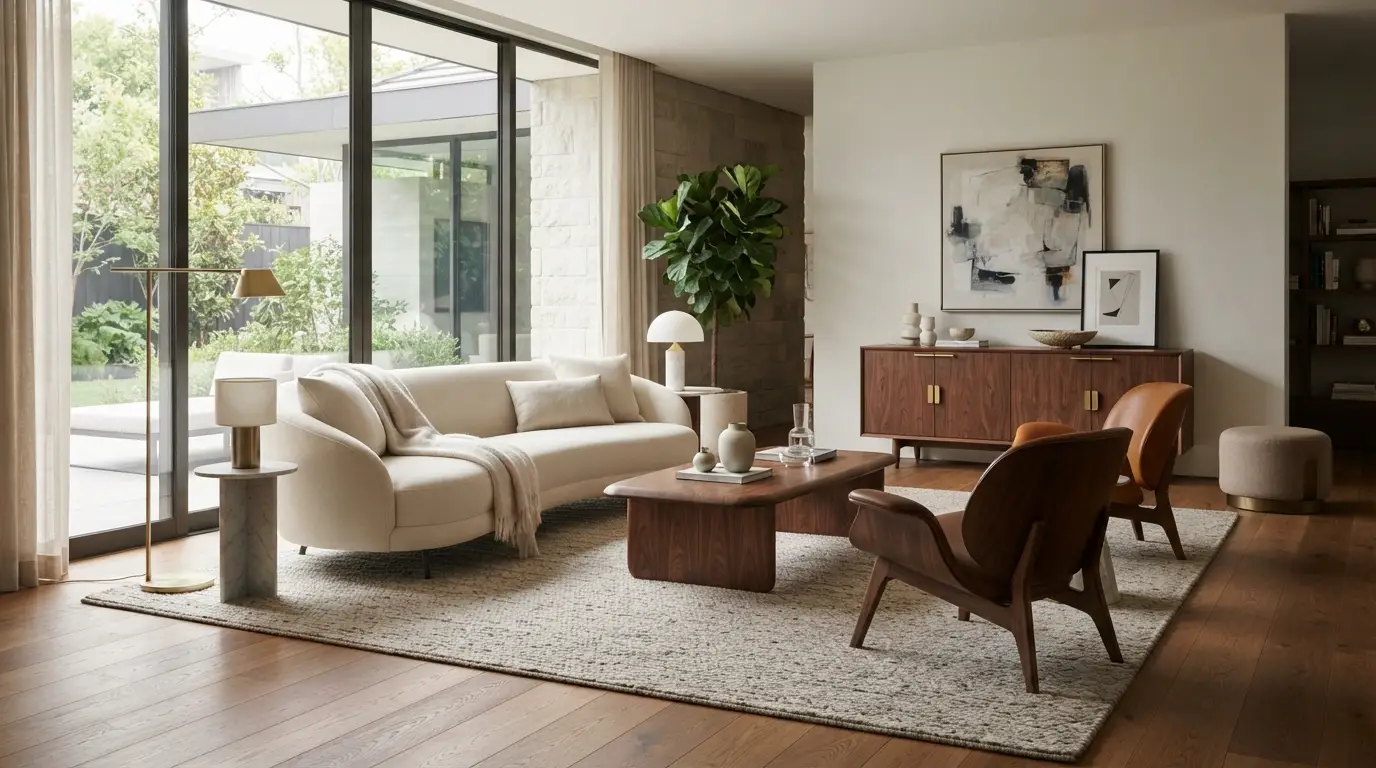
Synonyms for furniture become useful when you want your English to sound natural, precise, and less repetitive in everyday writing or conversation.
Imagine describing a new apartment. Instead of saying “furniture” five times, you can use words like “furnishings” or “pieces.”
For students, bloggers, content writers, and daily English users, learning a synonym for furniture makes descriptions clearer and more varied.
Because “furniture” is so common, knowing its alternatives helps you choose the right word for a room, article, essay, or conversation.
What Does “Furniture” Really Mean?
Furniture means movable objects used to make a room, home, office, or other space useful and comfortable.
Common examples include chairs, tables, desks, beds, sofas, cabinets, wardrobes, and bookcases.
The word furniture is usually a noun. It is generally treated as an uncountable noun in standard English.
For example:
We bought some new furniture for the living room.
Native speakers normally do not say:
We bought three furnitures.
Instead, they say:
We bought three pieces of furniture.
The word is usually neutral in tone. It does not normally express a positive or negative attitude by itself.
Native speakers use “furniture” in homes, offices, schools, hotels, restaurants, shops, interior design, real estate, and everyday conversations.
Simple Definition
Furniture: movable objects such as chairs, tables, beds, and cabinets that are used to equip or decorate a space.
Connotative Meaning
Connotation (the feeling or association a word can create beyond its basic dictionary meaning) matters when choosing alternatives.
Positive tone
“Furnishings” can sound polished or stylish, especially in interior design and lifestyle writing.
Negative tone
“Clutter” can describe too many objects in a room, but it is not a true synonym for furniture. It has a negative meaning.
Neutral tone
“Furniture,” “pieces of furniture,” and “furniture items” are generally neutral and straightforward.
Therefore, context matters. A writer describing an elegant hotel may choose “furnishings,” while a student writing a simple essay may simply use “furniture.”
Etymology
The word furniture comes from the French fourniture, meaning “equipment” or “provision.”
It is related to the French verb fournir, meaning “to furnish” or “to provide.”
Old English: 450–1100
The modern word furniture was not a normal Old English term in its present form. Old English speakers used native Germanic vocabulary for household objects and equipment.
Words such as hus for “house” and terms for specific household objects were more typical.
Middle English: 1100–1500
After the Norman Conquest, French vocabulary strongly influenced English.
The French fourniture entered English-related usage, bringing the idea of supplying or equipping something.
Modern English: 1500–Present
Over time, furniture developed its familiar meaning of movable household or room equipment.
Today, it is a standard English word used globally, although some related expressions vary between British and American English.
Pronunciation
US English
Furniture: /ˈfɝː.nɪ.tʃɚ/
UK English
Furniture: /ˈfɜː.nɪ.tʃə/
Syllables
fur-ni-ture
The final part is commonly pronounced very lightly in natural speech.
Affixation Pattern of Furniture
Root: related to French fournir, “to furnish” or “provide”
Prefix: none in modern English
Suffix: -ure, forming a noun associated with a result, condition, or thing
Synonyms List:
A small but important point comes first: furniture has very few perfect one-word synonyms.
Instead, English uses several close alternatives and context-specific expressions.
The following terms are useful because they can replace “furniture” in particular situations without forcing unnatural English.
Furnishings (noun) — US / UK: /ˈfɝː.nɪ.ʃɪŋz/
Meaning: Furnishings are the furniture and other decorative or functional items used to equip a room.
Tone/Register: Neutral to polished; common in lifestyle and interior-design writing.
Example:
The hotel has elegant furnishings throughout the lobby.
The apartment’s furnishings give it a warm, modern feel.
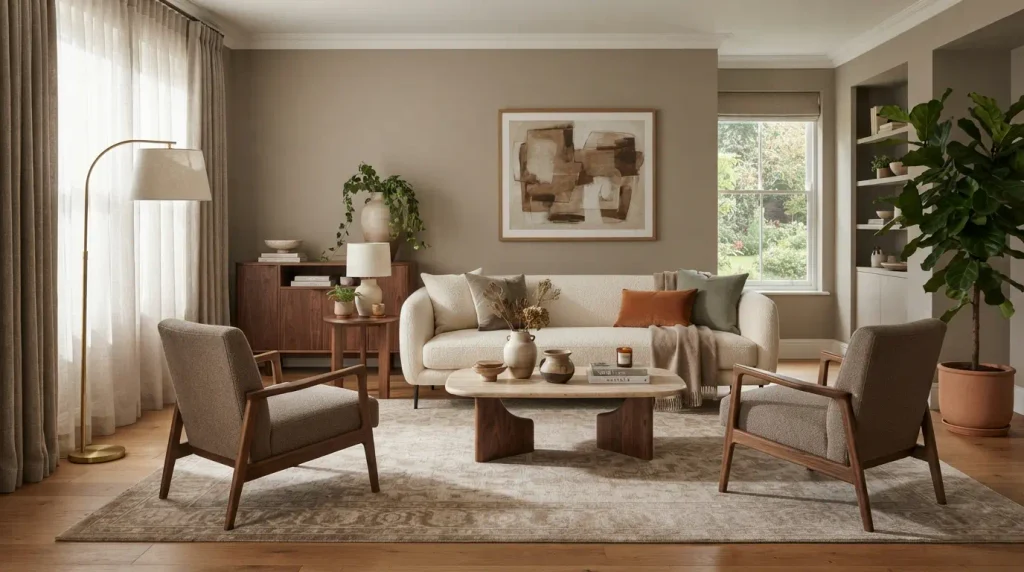
Furniture Pieces (noun phrase) — US / UK: /ˈfɝː.nɪ.tʃɚ piːsɪz/
Meaning: Furniture pieces are individual objects such as chairs, sofas, desks, or tables.
Tone/Register: Neutral and descriptive.
Example:
We moved several furniture pieces into the new office.
Each furniture piece was carefully selected for the room.
Pieces of Furniture (noun phrase) — US / UK: /piːsɪz əv ˈfɝː.nɪ.tʃɚ/
Meaning: This phrase refers to individual examples of furniture.
Tone/Register: Neutral; very common and grammatically useful.
Example:
The room contains only three pieces of furniture.
A large sofa was the most noticeable piece of furniture.
Furniture Items (noun phrase) — US / UK: /ˈfɝː.nɪ.tʃɚ ˈaɪtəmz/
Meaning: Furniture items are individual objects belonging to the category of furniture.
Tone/Register: Neutral; useful in descriptions and formal writing.
Example:
The movers labeled all the furniture items.
Several furniture items need to be repaired.
Household Furnishings (noun phrase) — US / UK: /ˈhaʊsˌhoʊld ˈfɝː.nɪ.ʃɪŋz/
Meaning: Household furnishings are furniture and related items used inside a home.
Tone/Register: Formal to neutral.
Example:
The insurance policy covers certain household furnishings.
The family replaced its old household furnishings.
Home Furnishings (noun phrase) — US / UK: /hoʊm ˈfɝː.nɪ.ʃɪŋz/
Meaning: Home furnishings are items used to equip, decorate, or improve a home.
Tone/Register: Neutral; common in lifestyle and design contexts.
Example:
She enjoys choosing home furnishings for each room.
Natural materials are popular in modern home furnishings.
Domestic Furnishings (noun phrase) — US / UK: /dəˈmɛstɪk ˈfɝː.nɪ.ʃɪŋz/
Meaning: Domestic furnishings are furnishings intended for use in a home.
Tone/Register: Formal.
Example:
The museum displays traditional domestic furnishings.
The collection shows how domestic furnishings changed over time.
Interior Furnishings (noun phrase) — US / UK: /ɪnˈtɪriər ˈfɝː.nɪ.ʃɪŋz/
Meaning: Interior furnishings are objects used to equip or decorate the inside of a building.
Tone/Register: Professional and design-oriented.
Example:
The designer selected simple interior furnishings.
The hotel’s interior furnishings reflect its historic style.
Room Furnishings (noun phrase) — US / UK: /ruːm ˈfɝː.nɪ.ʃɪŋz/
Meaning: Room furnishings are furniture and related objects placed in a particular room.
Tone/Register: Neutral and descriptive.
Example:
The room furnishings were simple and practical.
The landlord replaced several room furnishings before the tenant arrived.
Office Furnishings (noun phrase) — US / UK: /ˈɔːfɪs ˈfɝː.nɪ.ʃɪŋz/
Meaning: Office furnishings are furniture and related equipment used in a workplace.
Tone/Register: Professional.
Example:
The company updated its office furnishings.
Comfortable office furnishings can change the feel of a workspace.
Household Goods (noun phrase) — US / UK: /ˈhaʊsˌhoʊld ɡʊdz/
Meaning: Household goods are goods used in a home, including furniture, appliances, and other domestic objects.
Tone/Register: Neutral.
Example:
The truck was filled with household goods.
Furniture was packed separately from the smaller household goods.
Usage note: This is broader than “furniture,” so it is not an exact synonym.
Home Goods (noun phrase) — US / UK: /hoʊm ɡʊdz/
Meaning: Home goods are products and objects used in a home, including furniture and household accessories.
Tone/Register: Informal to neutral.
Example:
The room contains several useful home goods.
Her article discusses practical home goods for small spaces.
Usage note: “Home goods” includes much more than furniture.
Movables (noun) — US / UK: /ˈmuːvəbəlz/
Meaning: Movables are movable possessions that can be transported from one place to another.
Tone/Register: Formal, legal, or historical.
Example:
The estate inventory listed several valuable movables.
The old house was sold with its movables.
Usage note: This term is broader and less common in everyday English.
Chattels (noun) — US / UK: /ˈtʃætəlz/
Meaning: Chattels are movable personal possessions, which can include furniture.
Tone/Register: Legal and formal.
Example:
The document lists the owner’s personal chattels.
The antique table was treated as a valuable chattel.
Usage note: “Chattels” is not a casual substitute for “furniture.”
Furniture Articles (noun phrase) — US / UK: /ˈfɝː.nɪ.tʃɚ ˈɑːrtɪkəlz/
Meaning: Furniture articles refers to individual furniture objects, especially in formal descriptions.
Tone/Register: Formal and technical.
Example:
The catalog describes several furniture articles from the period.
Each article has a different construction method.
Furnishing (noun) — US / UK: /ˈfɝː.nɪʃɪŋ/
Meaning: A furnishing is an object used to equip or decorate a room; the plural “furnishings” is more common for the general category.
Tone/Register: Neutral.
Example:
The chair became an important furnishing in the study.
A single furnishing can change the appearance of a room.
Room Contents (noun phrase) — US / UK: /ruːm ˈkɑːntents/
Meaning: Room contents are all the objects inside a room, including furniture.
Tone/Register: Neutral and descriptive.
Example:
The movers carefully recorded the room contents.
The room contents included a desk, sofa, and bookshelf.
Usage note: This expression is broader than furniture.
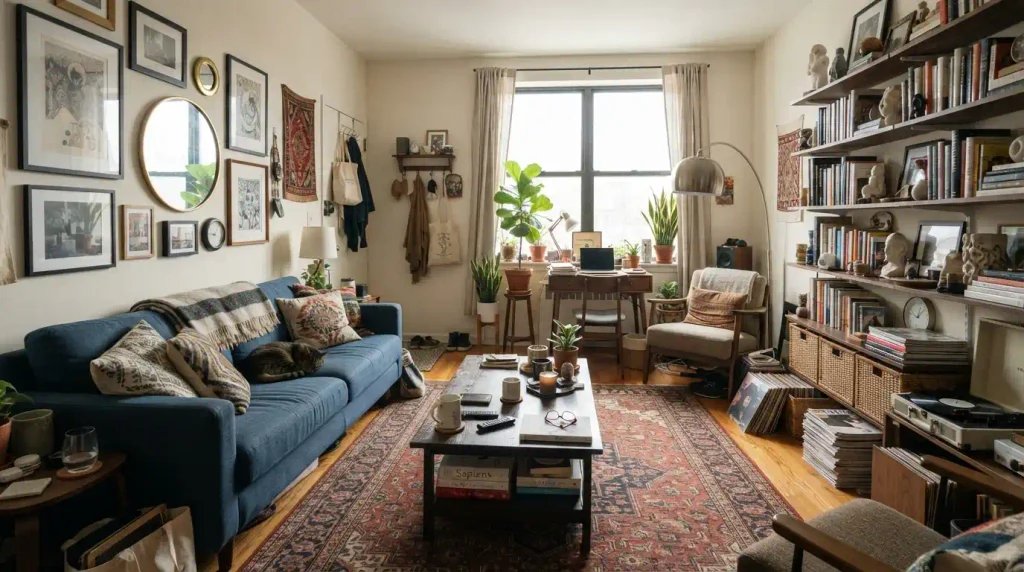
Interior Contents (noun phrase) — US / UK: /ɪnˈtɪriər ˈkɑːntents/
Meaning: Interior contents are objects located inside a building or room.
Tone/Register: Formal.
Example:
The report describes the building’s interior contents.
The interior contents were removed before renovation began.
Usage note: This is a broad descriptive phrase rather than a direct synonym.
Domestic Equipment (noun phrase) — US / UK: /dəˈmɛstɪk ɪˈkwɪpmənt/
Meaning: Domestic equipment refers to equipment used in the home and may sometimes include furniture-like items.
Tone/Register: Formal.
Example:
The study examined traditional domestic equipment.
The house contained basic domestic equipment.
Usage note: Appliances and tools are usually included, so it is broader than furniture.
Household Articles (noun phrase) — US / UK: /ˈhaʊsˌhoʊld ˈɑːrtɪkəlz/
Meaning: Household articles are individual objects used in a home, including some furniture.
Tone/Register: Formal and somewhat old-fashioned.
Example:
The collection contains household articles from the nineteenth century.
Several household articles were displayed in the room.
Furnished Items (noun phrase) — US / UK: /ˈfɝː.nɪʃt ˈaɪtəmz/
Meaning: Furnished items refer broadly to objects provided as part of a furnished space.
Tone/Register: Neutral.
Example:
The apartment came with several furnished items.
The furnished items included a bed and dining table.
Usage note: “Furnished items” is less natural than “furniture” in many everyday sentences.
Interior Pieces (noun phrase) — US / UK: /ɪnˈtɪriər piːsɪz/
Meaning: Interior pieces are individual objects selected for an interior space, often with a design focus.
Tone/Register: Creative and design-oriented.
Example:
The designer chose bold interior pieces for the lounge.
Each interior piece adds character to the space.
Usage note: This can include decorative objects, so it is broader than furniture.
Furnishing Elements (noun phrase) — US / UK: /ˈfɝː.nɪʃɪŋ ˈɛləmənts/
Meaning: Furnishing elements are individual components that contribute to the furnishing of a space.
Tone/Register: Professional and academic.
Example:
The architect used natural materials for the furnishing elements.
The furnishing elements support the room’s visual theme.
Furniture Collection (noun phrase) — US / UK: /ˈfɝː.nɪ.tʃɚ kəˈlɛkʃən/
Meaning: A furniture collection is a group of furniture pieces considered together.
Tone/Register: Neutral to professional.
Example:
The hotel selected a traditional furniture collection.
The collection includes tables, chairs, and storage units.
Usage note: This describes a group rather than furniture itself.
Furnished Contents (noun phrase) — US / UK: /ˈfɝː.nɪʃt ˈkɑːntents/
Meaning: Furnished contents refers to the objects provided inside a furnished room or property.
Tone/Register: Formal and property-related.
Example:
The inventory records the furnished contents of the apartment.
The furnished contents were inspected before the move.
Fixtures (noun) — US / UK: /ˈfɪkstʃərz/
Meaning: Fixtures are items attached to or installed in a building, although the term can sometimes include built-in furniture.
Tone/Register: Formal; property and construction contexts.
Example:
The apartment has several built-in fixtures.
The fixtures include fitted storage and seating.
Cabinetry (noun) — US / UK: /ˈkæbənətri/
Meaning: Cabinetry refers collectively to cabinets and built-in storage units used in homes or other interiors.
Tone/Register: Professional; interior design and construction.
Example:
The kitchen cabinetry is made from natural wood.
New cabinetry transformed the appearance of the room.
Case Goods (noun) — US / UK: /ˈkeɪs ɡʊdz/
Meaning: Case goods are furniture pieces with rigid structures, especially cabinets, chests, desks, and storage units.
Tone/Register: Professional; furniture and interior-design terminology.
Example:
The designer selected dark case goods for the office.
The bedroom includes several matching case goods.
Upholstery (noun) — US / UK: /ʌpˈhoʊlstəri/
Meaning: Upholstery refers to furniture covered with fabric, leather, or other materials, as well as the material and work used to cover it.
Tone/Register: Professional; design and furniture restoration.
Example:
The sofa has traditional upholstery.
The restaurant chose durable upholstery for its chairs.
Seating (noun) — US / UK: /ˈsiːtɪŋ/
Meaning: Seating refers collectively to chairs, sofas, benches, and other furniture designed for sitting.
Tone/Register: Neutral to professional.
Example:
The waiting area has comfortable seating.
Additional seating was arranged around the table.
Tables (noun) — US / UK: /ˈteɪbəlz/
Meaning: Tables are pieces of furniture with flat surfaces supported by legs or another structure.
Tone/Register: Neutral.
Example:
The dining room contains several wooden tables.
Small tables can make a narrow room more practical.
Chairs (noun) — US / UK: /tʃerz/
Meaning: Chairs are pieces of furniture designed primarily for one person to sit on.
Tone/Register: Neutral.
Example:
The café replaced its old chairs.
The dining chairs match the wooden table.
Cabinets (noun) — US / UK: /ˈkæbənəts/
Meaning: Cabinets are enclosed furniture units used for storing or displaying objects.
Tone/Register: Neutral.
Example:
The books are stored in tall cabinets.
The new cabinets provide extra kitchen storage.
Cupboards (noun) — US / UK: /ˈkʌbərdz/
Meaning: Cupboards are enclosed storage units commonly found in kitchens, bedrooms, and other rooms.
Tone/Register: Neutral; particularly common in British English.
Example:
The plates are kept in the kitchen cupboards.
The old cupboards were replaced during the renovation.
Wardrobes (noun) — US / UK: /ˈwɔːrdroʊbz/
Meaning: Wardrobes are tall storage units designed mainly for clothes and other personal items.
Tone/Register: Neutral; especially common in British English.
Example:
The bedroom has two large wardrobes.
The wooden wardrobes provide plenty of storage.
Dressers (noun) — US / UK: /ˈdrɛsərz/
Meaning: Dressers are furniture units with drawers used to store clothing and personal belongings.
Tone/Register: Neutral; especially common in American English.
Example:
The bedroom has two matching dressers.
She keeps her clothes in the wooden dresser.
Chests (noun) — US / UK: /tʃɛsts/
Meaning: Chests are storage furniture with a box-like structure, often used for clothing or personal belongings.
Tone/Register: Neutral to traditional.
Example:
The antique chest stood beside the bed.
The wooden chest contains old family photographs.
Sideboards (noun) — US / UK: /ˈsaɪdbɔːrdz/
Meaning: Sideboards are low storage furniture commonly placed against a wall in dining rooms or living areas.
Tone/Register: Neutral; interior-design vocabulary.
Example:
A long sideboard stands against the dining-room wall.
The sideboard provides useful storage for dishes.
Dressers (noun) — US / UK: /ˈdrɛsərz/
Meaning: Dressers are storage units containing drawers, commonly used for clothing or personal possessions.
Tone/Register: Neutral.
Example:
The dresser has six spacious drawers.
He placed a lamp on the bedroom dresser.
Desks (noun) — US / UK: /dɛsks/
Meaning: Desks are furniture pieces with a working surface designed for writing, studying, computer work, or office tasks.
Tone/Register: Neutral and professional.
Example:
The office needs larger desks.
Her wooden desk fits perfectly beside the window.
Benches (noun) — US / UK: /ˈbɛntʃɪz/
Meaning: Benches are long seats designed for several people or for one person to use comfortably.
Tone/Register: Neutral.
Example:
The hallway has a narrow wooden bench.
Visitors sat on benches near the entrance.
Sofas (noun) — US / UK: /ˈsoʊfəz/
Meaning: Sofas are upholstered seats designed for several people and commonly used in living rooms and lounges.
Tone/Register: Neutral.
Example:
The living room has two comfortable sofas.
The new sofas create a relaxed atmosphere.
Couches (noun) — US / UK: /ˈkaʊtʃɪz/
Meaning: Couches are upholstered seats for several people and are commonly used as an everyday alternative to “sofas.”
Tone/Register: Informal to neutral; especially common in American English.
Example:
We bought a comfortable couch for the apartment.
Everyone gathered on the couch to watch the movie.
Armchairs (noun) — US / UK: /ˈɑːrmtʃerz/
Meaning: Armchairs are comfortable chairs with supported arms, usually designed for one person.
Tone/Register: Neutral.
Example:
An old armchair sits beside the fireplace.
She relaxed in the blue armchair with a book.
Recliners (noun) — US / UK: /rɪˈklaɪnərz/
Meaning: Recliners are chairs that allow the user to lean back and often raise their feet.
Tone/Register: Neutral; everyday and home-related.
Example:
The family room has two comfortable recliners.
He fell asleep in his favorite recliner.
Ottomans (noun) — US / UK: /ˈɑːtəmənz/
Meaning: Ottomans are low upholstered furniture pieces used as footrests, seats, or occasional tables.
Tone/Register: Neutral; interior-design vocabulary.
Example:
The ottoman can also be used as extra seating.
A small ottoman sits beside the armchair.
Stools (noun) — US / UK: /stuːlz/
Meaning: Stools are simple seats without a back or arms, commonly used at counters, bars, and work areas.
Tone/Register: Neutral.
Example:
Three stools sit beneath the kitchen counter.
The café uses wooden stools instead of chairs.
Benches (noun) — US / UK: /ˈbɛntʃɪz/
Meaning: Benches are long seats that can accommodate multiple people and may be used indoors or outdoors.
Tone/Register: Neutral.
Example:
The entryway includes a storage bench.
The wooden benches provide casual seating.
Shelving (noun) — US / UK: /ˈʃɛlvɪŋ/
Meaning: Shelving refers collectively to shelves or shelf units used for storing and displaying objects.
Tone/Register: Neutral to professional.
Example:
The study has built-in shelving.
Open shelving makes the small kitchen feel larger.
Storage Units (noun phrase) — US / UK: /ˈstɔːrɪdʒ ˈjuːnɪts/
Meaning: Storage units are furniture or structures designed to hold and organize belongings.
Tone/Register: Neutral to professional.
Example:
The bedroom needs additional storage units.
The modular storage units fit beneath the stairs.
Occasional Furniture (noun phrase) — US / UK: /əˈkeɪʒənəl ˈfɝːnɪtʃər/
Meaning: Occasional furniture refers to smaller, movable pieces used when needed, such as side tables, coffee tables, or stools.
Tone/Register: Professional; interior-design terminology.
Example:
The designer added occasional furniture to the lounge.
Small tables are common examples of occasional furniture.
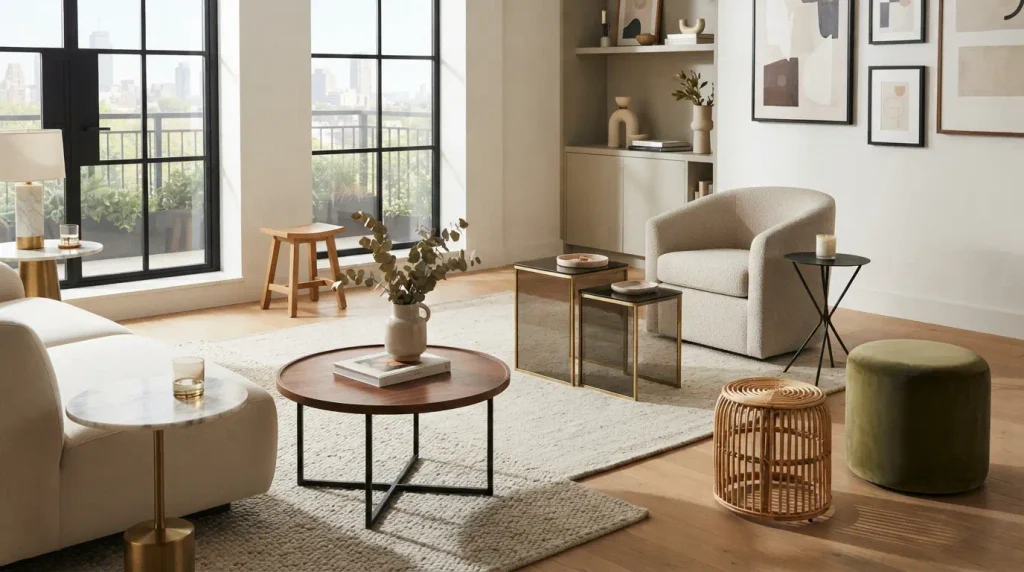
Quick Usage Guide
These alternatives are not all interchangeable with “furniture.” Each one identifies a particular category or type.
For a general meaning, use “furniture.”
When describing the overall look of an interior, “furnishings” works well.
If you mean individual objects, choose “pieces of furniture.”
When referring to chairs, sofas, and similar items collectively, “seating” is appropriate.
Built-in storage can be described as “cabinetry” or “storage units.”
In legal contexts, “chattels” can refer to movable personal property.
Design-focused writing may benefit from terms such as “case goods,” “occasional furniture,” and “interior pieces.”
In everyday speech, specific nouns like “sofas,” “chairs,” “desks,” “cabinets,” “wardrobes,” and “tables” often sound more natural than forcing a general synonym.
Important Native-Usage Note
A useful vocabulary principle is this: specific words are often better than artificial synonyms.
For example, instead of writing:
The room contained several pieces of furniture.
you might write:
The room contained a sofa, two armchairs, and a wooden desk.
The second sentence gives the reader more information.
Similarly, “cabinetry” is better than “furniture” when you specifically mean fitted cabinets.
“Seating” is better when you are discussing chairs and sofas collectively.
“Upholstery” is appropriate when the material or covering of upholstered furniture is the focus.
Therefore, these terms should be treated as contextual alternatives and semantic variants, rather than claiming that every term is a perfect dictionary synonym for “furniture.”
Synonyms for Furniture by Tone
Not every alternative works equally well in every situation.
Positive or polished
- Furnishings
- Home furnishings
- Interior furnishings
- Interior pieces
- Furnishing elements
These expressions work especially well when discussing design, comfort, style, or atmosphere.
Neutral
- Furniture pieces
- Pieces of furniture
- Furniture items
- Room furnishings
- Household furnishings
- Furnishing
These are useful for everyday English and general writing.
Formal
- Domestic furnishings
- Movables
- Chattels
- Household articles
- Furniture articles
These may appear in legal, historical, academic, or specialized contexts.
Informal or conversational
English does not have many truly informal one-word replacements for “furniture.”
Instead, speakers often use phrases such as stuff in the room, pieces, or home items, depending on the context.
However, “stuff” is vague and should not replace “furniture” in formal writing.
Why Tone Matters in Word Choice
Word choice changes how your sentence feels.
For example, “furniture” is simple and neutral.
“Furnishings” can sound more polished.
“Chattels” sounds legal.
“Interior pieces” sounds design-focused.
Therefore, the best synonym depends on the audience and purpose.
“Furniture” vs Close Alternatives
Furniture vs Furnishings
The term Furniture directly refers to objects such as chairs, tables, beds, and sofas.
Furnishings can include furniture plus decorative or functional items used to equip a space.
Use furniture when you want a clear, everyday term.
Use furnishings when discussing the overall look or equipment of an interior.
Furniture vs Household Goods
Furniture is one category of household goods.
Household goods can also include appliances, utensils, linens, and other domestic products.
Therefore, “household goods” is broader.
Furniture vs Chattels
Furniture refers specifically to items used to equip a room.
Chattels refers to movable personal property in legal contexts.
Thus, “chattels” should not normally replace “furniture” in everyday conversation.
How “Furniture” Changes by Context
Daily Conversation
In everyday speech, furniture is the safest choice.
For example:
We need new furniture for the bedroom.
If you want to refer to individual objects, use pieces of furniture.
The sofa is my favorite piece of furniture.
This sounds natural and conversational.
Writing and Blogging
Bloggers often use furnishings, home furnishings, or interior pieces to avoid repeating “furniture.”
For example:
Natural wood furnishings can make a small room feel warmer.
This works particularly well in interior design, home organization, and lifestyle content.
Professional or Academic Writing
Formal writing may use terms such as household furnishings, domestic furnishings, or chattels, depending on the subject.
However, sophisticated writing does not mean using the most complicated word.
Clarity should come first.
Creative or Informal Use
Creative writers can describe furniture through appearance, function, or atmosphere.
Instead of:
The furniture was old.
A writer might say:
The worn furnishings gave the room a quiet, historic feeling.
This creates a stronger image without simply repeating “furniture.”
Common Mistakes Learners Make
Mistake 1: Making “furniture” plural
Incorrect:
We bought five furnitures.
Correct:
We bought five pieces of furniture.
Mistake 2: Treating every alternative as an exact synonym
“Household goods” is broader than furniture.
“Chattels” is more legal.
“Furnishings” may include decorative items.
Therefore, always check the context.
Mistake 3: Using formal words in casual conversation
Saying:
I bought several chattels for my apartment.
sounds unusually legal or technical.
A native speaker would normally say:
I bought some furniture for my apartment.
Mistake 4: Overusing synonyms
Synonyms should improve clarity, not make writing sound unnatural.
If “furniture” is the clearest word, keep it.
Register Notes
Furniture is neutral and widely used in both speech and writing.
Furnishings is also common but can sound more polished.
Chattels and movables are formal and specialized.
Home furnishings is especially useful in lifestyle and interior-design writing.
For additional vocabulary practice, an internal article about words for describing rooms and interiors can help expand this topic naturally.
Real-Life Mini Scenarios
Workplace
A manager is preparing a new office.
We need to move the office furniture before Monday.
In a formal report, the same idea could become:
The office furnishings will be rearranged before Monday.
Social Situation
A friend moves into a new apartment.
I love your new furniture!
A more specific comment might be:
Your living-room furnishings look really comfortable.
Media and Pop Culture
A magazine discusses a celebrity’s home.
The article highlights the home’s luxurious furnishings.
Here, “furnishings” sounds more natural than repeatedly using “furniture.”
Writing and Storytelling
A novelist describes an abandoned house.
Dust covered the old furniture.
A more atmospheric version could be:
The faded furnishings stood silently beneath layers of dust.
The second version creates a stronger mood.
How to Choose the Right Synonym
Before replacing furniture, ask three simple questions.
First, what exactly am I describing?
If you mean chairs, tables, beds, and sofas, “furniture” is usually correct.
Second, who is reading or listening?
For general readers, choose familiar words.
For legal or academic audiences, specialized terms may be appropriate.
Third, what feeling do I want?
For a polished interior-design tone, choose “furnishings.”
When you need precision, use “pieces of furniture.”
In legal or historical contexts, “chattels” may be appropriate.
Interactive Practice Quiz
Choose the best answer for each situation.
1. Which sentence uses “furniture” correctly?
A. Three furnitures were bought for the new apartment.
B. For the new apartment, we bought three pieces of furniture.
C. The phrase “three furniture” is grammatically correct.
D. Three furniture pieces were bought for the new apartment.
2. Which word sounds most appropriate in an interior-design article?
A. Chattels
B. Furnishings
C. Movables
D. Household articles
3. Which term is broader than furniture?
A. Pieces of furniture
B. Furniture items
C. Household goods
D. Furniture pieces
4. Which word has a legal or formal tone?
A. Furniture
B. Furnishings
C. Chattels
D. Home furnishings
5. Which sentence sounds most natural?
A. Several furnitures are in the room.
B. Inside the room, there are several pieces of furniture.
C. Having several pieces of furniture is common in this room.
D. Many furniture pieces are placed inside the room. The room has many furniture pieces.
6. A blogger wants to describe a stylish apartment. Which term works well?
A. Furnishings
B. Chattels
C. Movables
D. Domestic equipment
7. Which term can include appliances and other household products?
A. Furniture
B. Household goods
C. Furniture pieces
D. Room furnishings
8. Which phrase refers to individual furniture objects?
A. Pieces of furniture
B. Household goods
C. Interior contents
D. Domestic equipment
9. Which term is most specialized and legal?
A. Home furnishings
B. Chattels
C. Room furnishings
D. Furniture items
10. Which sentence is appropriate for everyday conversation?
A. I purchased several chattels.
B. I bought some furniture.
C. I acquired domestic furnishings.
D. I obtained several movables.
11. Which word may include decorative items as well as furniture?
A. Furnishings
B. Furniture pieces
C. Furniture items
D. Pieces of furniture
12. Which alternative is especially suitable for workplace writing?
A. Office furnishings
B. Chattels
C. Stuff
D. Movables
13. Which sentence uses the word “furniture” correctly?
A. This sofa is my favorite furniture.
B. The sofa is my favorite piece of furniture.
C. We bought three furnitures yesterday.
D. My favorite furniture item is the sofa.
14. Which word should you avoid when you simply mean everyday furniture?
A. Furniture
B. Furnishings
C. Chattels
D. Pieces of furniture
15. Which expression best describes furniture together with other objects inside a room?
A. Room contents
B. Furniture
C. Furniture pieces
D. Furnishings only
Answer Key: 1-B | 2-B | 3-C | 4-C | 5-B | 6-A | 7-B | 8-A | 9-B | 10-B | 11-A | 12-A | 13-B | 14-C | 15-A
Reflection Task
Choose one synonym from this article and write your own sentence with it. Then rewrite the sentence using furniture and compare the difference in tone.
FAQs
1. What is the best synonym for furniture in everyday English?
The closest natural alternative in many everyday contexts is furnishings, especially when referring to the overall items that equip a room. However, “furniture” itself is often the clearest choice. When referring to individual objects, pieces of furniture is more precise and very natural.
2. What is another word for furniture in formal writing?
Furnishings, household furnishings, and domestic furnishings can work well in formal writing. The correct choice depends on context. In legal writing, chattels may refer to movable personal property, but it is broader and more specialized than “furniture.”
3. What can I say instead of furniture in an essay?
You can use furnishings, pieces of furniture, household furnishings, or furniture items, depending on your meaning. However, you should not replace every occurrence of “furniture.” Repeating a clear word is often better than choosing an unnatural synonym simply to avoid repetition.
4. Is “furnishings” the same as “furniture”?
Not exactly. Furniture normally means movable objects such as tables, chairs, beds, and sofas. Furnishings can include furniture as well as other items that equip or decorate a room. Therefore, “furnishings” is often slightly broader than “furniture.”
5. What is the difference between furniture and household goods?
Furniture is a specific category of household objects. Household goods is a broader expression that can include furniture, appliances, kitchen equipment, linens, and other items used at home. Therefore, household goods should not normally be used as an exact replacement for furniture.
6. Is “chattels” a synonym for furniture?
“Chattels” can include furniture, but it is not an exact everyday synonym. The word refers to movable personal property and is particularly associated with legal, financial, or historical contexts. For ordinary conversation, “furniture” or “pieces of furniture” is much more natural.
7. How do I avoid repeating the word furniture in an article?
First, use the most precise alternative for the context. You can alternate naturally between furniture, furnishings, pieces of furniture, home furnishings, and specific object names such as “chairs” or “tables.” Most importantly, do not replace “furniture” when the original word is already the clearest option.
8. Why is furniture an uncountable noun?
In standard English, furniture is treated as an uncountable category rather than a collection of separate countable units. Therefore, English speakers normally say “some furniture” or “three pieces of furniture,” not “three furnitures.” This grammatical pattern is important for ESL learners.
Conclusion
Learning a synonym for furniture is not simply about memorizing extra words. It is about choosing language that fits your meaning, audience, and situation.
For everyday English, “furniture” remains clear and natural. However, “furnishings,” “pieces,” and related expressions can add useful variety.
Moreover, careful synonym choice can make essays, blogs, emails, stories, and conversations more precise without making your English sound forced.
Start small. Choose two or three alternatives, use them in your own sentences, and practice them in real emails, essays, and daily conversations.

I’m Hezel, a passionate English language enthusiast and the creator of Synworda.com. I love exploring synonyms, vocabulary, grammar, and the many ways words can make communication clearer and more effective. Through Synworda.com, I create simple, practical, and easy-to-understand content for students, writers, professionals, and anyone who wants to improve their English. I enjoy breaking down confusing words and grammar concepts into helpful explanations with clear examples. I aim to make learning English feel less complicated and more enjoyable. I believe that understanding the right words can help everyone communicate with confidence in everyday life.