A synonym for fuzzy can be surprisingly useful when you want to describe something unclear, blurry, soft, or difficult to understand.
Imagine looking at an old photo where the faces are hard to see. You might call the image fuzzy, but blurry could be more precise.
Likewise, a fuzzy memory may be better described as vague, unclear, or hazy, depending on what you mean.
Learning a good synonym for fuzzy helps students, bloggers, writers, and daily English users choose words that sound more natural and precise.
What Does “Fuzzy” Really Mean?
Fuzzy is an adjective with several related meanings. In simple English, it can describe something soft and covered with fine hairs, unclear in appearance, unclear in meaning, or hard to remember.
The exact meaning depends heavily on context.
For example:
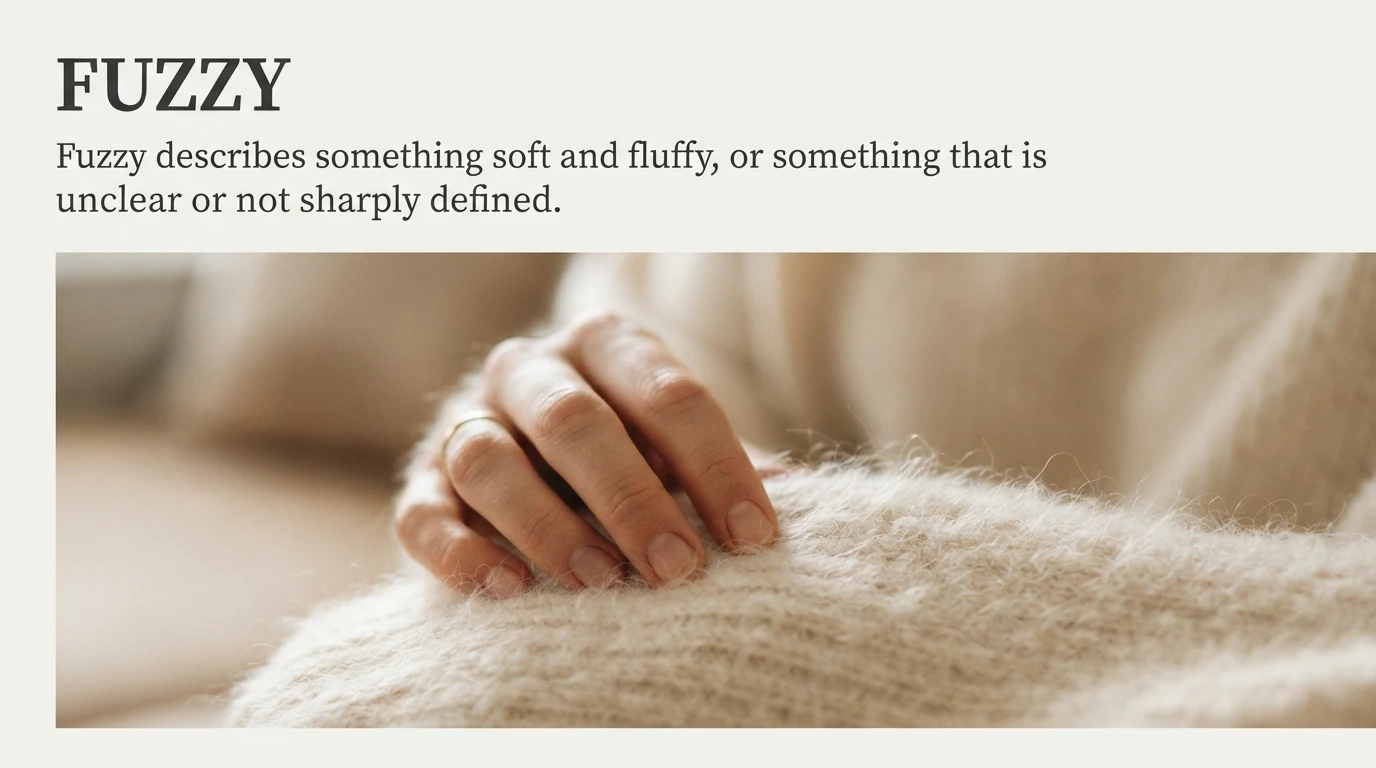
- “The kitten has fuzzy fur.” → soft and hairy
- “The picture looks fuzzy.” → unclear or blurred
- “I have a fuzzy memory of that day.” → unclear or incomplete
- “The instructions are fuzzy.” → vague or poorly defined
Native speakers commonly use fuzzy because it is flexible and conversational. It can describe both physical appearance and abstract ideas.
Part of Speech
Fuzzy is primarily an adjective.
Easy definition: Something fuzzy is soft and hairy, unclear, blurry, vague, or difficult to understand, depending on the context.
Connotative Meaning
Connotation (the feeling or idea that a word suggests beyond its basic dictionary meaning) can change the effect of fuzzy.
Positive Tone
When describing something soft, fuzzy can sound warm, cute, or comforting.
Example:
“The baby rabbit has fuzzy ears.”
Negative Tone
When describing information, fuzzy can suggest confusion, uncertainty, or poor clarity.
Example:
“The company’s plans are still fuzzy.”
Neutral Tone
Fuzzy can describe an unclear visual image or incomplete memory.
Example:
“I have a fuzzy memory of the concert.”
Therefore, the best synonym depends on the intended meaning and emotional effect.
Etymology
Fuzzy comes from fuzz, combined with the adjective-forming suffix -y.
The noun fuzz refers to fine, loose fibers, hairs, or a soft surface. The word has a somewhat uncertain and relatively recent history in English, with related forms appearing in English from the early modern period.
Old English: 450–1100
The modern word fuzzy does not come directly from a clearly documented Old English form. Old English had other words for hair, softness, fibers, and rough surfaces.
Middle English: 1100–1500
No direct Middle English form neatly corresponds to modern fuzzy. English vocabulary for texture and appearance continued developing through later periods.
Modern English: 1500–Present
The word fuzz developed as a term for fine fibers or hair. Later, fuzzy came to describe something covered with fuzz.
Over time, its meaning expanded. It began describing images that were unclear, thoughts that were poorly defined, and memories that were incomplete.
Today, fuzzy is common in everyday English and can be either literal or figurative.
Pronunciation
US: /ˈfʌzi/
UK: /ˈfʌzi/
Syllables
fuz-zy
Affixation
Root: fuzz
Prefix: none
Suffix: -y
The suffix -y helps form an adjective meaning “characterized by” or “having the quality of.”
Synonyms List:
Because fuzzy has several meanings, there is no single replacement that works in every sentence. The following alternatives cover its main uses, including unclear information, blurred appearance, weak memory, and soft texture.
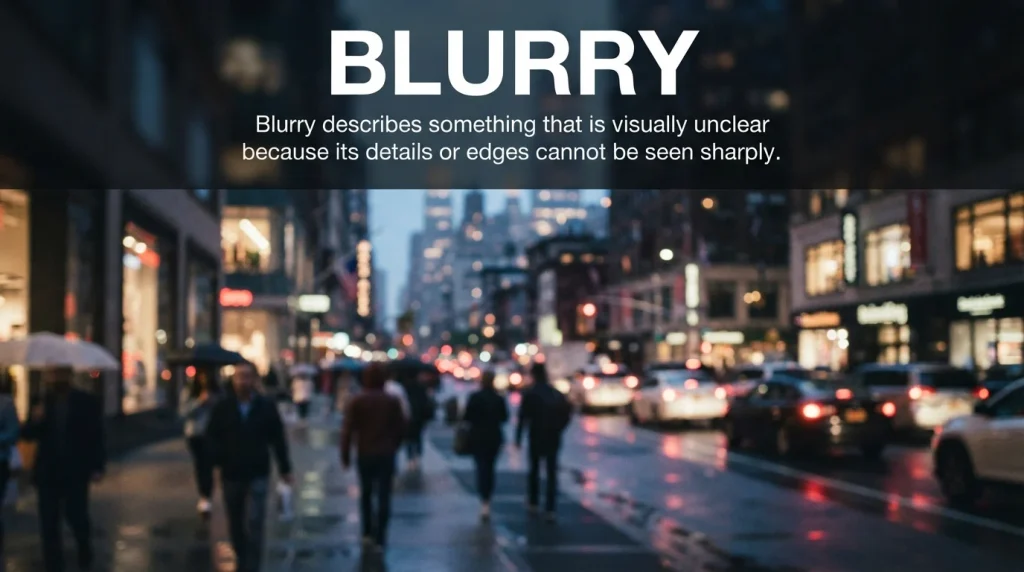
Blurry (Adjective) — US /ˈblɝːi/ — UK /ˈblɜːri/
Meaning: Blurry describes something that is visually unclear because its details or edges cannot be seen sharply.
Tone/Register: Neutral, everyday
Example:
“The photo is blurry because I moved the camera.”
“The streetlights looked blurry through the rain.”
Vague (Adjective) — US /veɪɡ/ — UK /veɪɡ/
Meaning: Vague describes an idea, statement, or memory that lacks clear details.
Tone/Register: Neutral, common
Example:
“She gave me a vague explanation.”
“I only have a vague memory of the conversation.”
Hazy (Adjective) — US /ˈheɪzi/ — UK /ˈheɪzi/
Meaning: Hazy means unclear, indistinct, or difficult to remember or understand.
Tone/Register: Neutral, descriptive
Example:
“My memory of that summer is hazy.”
“The distant hills looked hazy in the heat.”
Unclear (Adjective) — US /ˌʌnˈklɪr/ — UK /ˌʌnˈklɪə/
Meaning: Unclear means difficult to understand, identify, or interpret.
Tone/Register: Neutral, formal-friendly
Example:
“The instructions are unclear.”
“It is still unclear what happened.”
Indistinct (Adjective) — US /ˌɪndɪˈstɪŋkt/ — UK /ˌɪndɪˈstɪŋkt/
Meaning: Indistinct describes something that cannot be clearly seen, heard, or recognized.
Tone/Register: Formal, descriptive
Example:
“We saw an indistinct figure in the distance.”
“Her voice became indistinct as she moved away.”
Blurred (Adjective) — US /blɝːd/ — UK /blɜːd/
Meaning: Blurred describes an image, boundary, or distinction that has lost sharpness.
Tone/Register: Neutral
Example:
“The writing was blurred by the rain.”
“The blurred image was impossible to read.”
Obscure (Adjective) — US /əbˈskjʊr/ — UK /əbˈskjʊə/
Meaning: Obscure describes something difficult to understand, notice, or know.
Tone/Register: Formal, academic
Example:
“The reference was obscure to most readers.”
“The meaning of the phrase remains obscure.”
Ambiguous (Adjective) — US /æmˈbɪɡjuəs/ — UK /æmˈbɪɡjuəs/
Meaning: Ambiguous describes language or information that can reasonably have more than one interpretation.
Tone/Register: Formal, academic
Example:
“His answer was ambiguous.”
“The final sentence has an ambiguous meaning.”
Indefinite (Adjective) — US /ɪnˈdefənət/ — UK /ɪnˈdefənət/
Meaning: Indefinite describes something that has not been clearly fixed, defined, or determined.
Tone/Register: Formal
Example:
“The project has an indefinite deadline.”
“She gave an indefinite answer.”
Imprecise (Adjective) — US /ˌɪmprɪˈsaɪs/ — UK /ˌɪmprɪˈsaɪs/
Meaning: Imprecise means lacking exactness or accuracy.
Tone/Register: Academic, professional
Example:
“His wording was too imprecise.”
“The report contains several imprecise claims.”
Nebulous (Adjective) — US /ˈnebjələs/ — UK /ˈnebjələs/
Meaning: Nebulous describes something vague, poorly defined, or difficult to understand.
Tone/Register: Formal, literary
Example:
“The proposal remains nebulous.”
“They discussed a nebulous plan.”
Ill-defined (Adjective) — US /ˌɪl dɪˈfaɪnd/ — UK /ˌɪl dɪˈfaɪnd/
Meaning: Ill-defined describes something whose limits, meaning, or purpose have not been clearly established.
Tone/Register: Formal, academic
Example:
“The research question is ill-defined.”
“The term has an ill-defined meaning.”
Faint (Adjective) — US /feɪnt/ — UK /feɪnt/
Meaning: Faint describes something weak, pale, distant, or difficult to perceive.
Tone/Register: Neutral, descriptive
Example:
“A faint outline appeared on the wall.”
“We heard a faint sound outside.”
Indeterminate (Adjective) — US /ˌɪndɪˈtɝːmənət/ — UK /ˌɪndɪˈtɜːmɪnət/
Meaning: Indeterminate means not clearly known, fixed, or decided.
Tone/Register: Formal, academic
Example:
“The cause of the problem remains indeterminate.”
“The final result is still indeterminate.”
Confused (Adjective) — US /kənˈfjuːzd/ — UK /kənˈfjuːzd/
Meaning: Confused describes something difficult to understand or a person who cannot think clearly about an issue.
Tone/Register: Neutral
Example:
“I was confused by the sudden change.”
“His explanation left everyone confused.”
Bewildering (Adjective) — US /bɪˈwɪldərɪŋ/ — UK /bɪˈwɪldərɪŋ/
Meaning: Bewildering describes something that causes considerable confusion.
Tone/Register: Neutral, expressive
Example:
“The new system was bewildering at first.”
“The number of choices was bewildering.”
Murky (Adjective) — US /ˈmɝːki/ — UK /ˈmɜːki/
Meaning: Murky means unclear, confusing, or difficult to understand, often because important information is missing.
Tone/Register: Informal to neutral
Example:
“The details surrounding the event are murky.”
“His explanation made the situation even murkier.”
Cloudy (Adjective) — US /ˈklaʊdi/ — UK /ˈklaʊdi/
Meaning: Cloudy can describe something difficult to understand, especially an idea, judgment, or mental state.
Tone/Register: Neutral, figurative
Example:
“My thinking was cloudy after the long day.”
“The issue became cloudy after several changes.”
Soft (Adjective) — US /sɔːft/ — UK /sɒft/
Meaning: Soft can describe a fuzzy physical texture when something feels gentle, plush, or covered with fine fibers.
Tone/Register: Neutral, everyday
Example:
“The blanket feels soft and warm.”
“The puppy has soft fur.”
Fluffy (Adjective) — US /ˈflʌfi/ — UK /ˈflʌfi/
Meaning: Fluffy describes something light, soft, and covered with loose fibers, feathers, or hair.
Tone/Register: Informal, descriptive
Example:
“The kitten has fluffy fur.”
“She bought a fluffy winter scarf.”
Hairy (Adjective) — US /ˈheri/ — UK /ˈheəri/
Meaning: Hairy describes something covered with or growing a noticeable amount of hair.
Tone/Register: Neutral, everyday
Example:
“The animal has hairy legs.”
“The caterpillar has a hairy body.”
Downy (Adjective) — US /ˈdaʊni/ — UK /ˈdaʊni/
Meaning: Downy describes something covered with very soft, fine hairs or feathers.
Tone/Register: Descriptive, literary
Example:
“The bird had downy feathers.”
“The plant developed a downy surface.”
Plush (Adjective) — US /plʌʃ/ — UK /plʌʃ/
Meaning: Plush describes something luxuriously soft, thick, and comfortable.
Tone/Register: Descriptive
Example:
“The child hugged a plush toy.”
“The chair has a plush fabric surface.”
Velvety (Adjective) — US /ˈvelvəti/ — UK /ˈvelvəti/
Meaning: Velvety describes something that feels exceptionally smooth and soft, like velvet.
Tone/Register: Descriptive, literary
Example:
“The flower has velvety petals.”
“The peach felt velvety against my hand.”
Furry (Adjective) — US /ˈfɝːi/ — UK /ˈfɜːri/
Meaning: Furry describes something covered with fur or hair.
Tone/Register: Informal, everyday
Example:
“The little dog has furry ears.”
“I found a furry insect in the garden.”
Misty (Adjective) — US /ˈmɪsti/ — UK /ˈmɪsti/
Meaning: Misty describes a view that appears unclear because of mist, or something that feels indistinct in memory or thought.
Tone/Register: Neutral, literary
Example:
“The mountains looked misty at sunrise.”
“I have a misty recollection of that trip.”
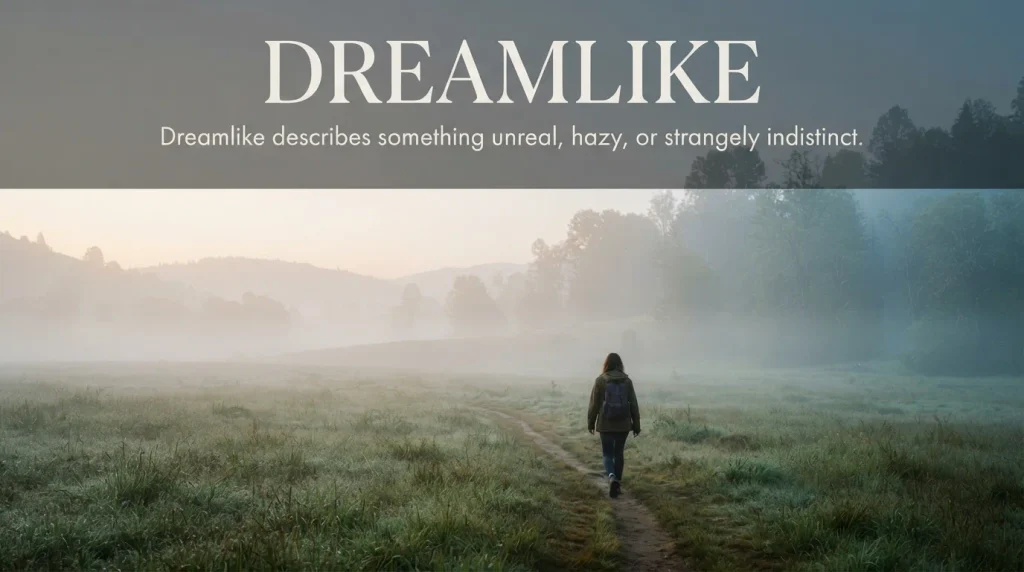
Dreamlike (Adjective) — US /ˈdriːmˌlaɪk/ — UK /ˈdriːmˌlaɪk/
Meaning: Dreamlike describes something unreal, hazy, or strangely indistinct.
Tone/Register: Creative, literary
Example:
“The scene had a dreamlike quality.”
“The soft lighting made everything look dreamlike.”
Dim (Adjective) — US /dɪm/ — UK /dɪm/
Meaning: Dim describes something that is not bright or is difficult to see clearly.
Tone/Register: Neutral
Example:
“A dim shape appeared behind the curtain.”
“The room was too dim for reading.”
Vague-looking (Adjective phrase) — US /veɪɡ ˈlʊkɪŋ/ — UK /veɪɡ ˈlʊkɪŋ/
Meaning: Vague-looking describes something whose visual form or details are difficult to identify.
Tone/Register: Informal
Example:
“The object looked vague in the distance.”
“The logo became vague-looking after the image was enlarged.”
Woolly (Adjective) — US /ˈwʊli/ — UK /ˈwʊli/
Meaning: Woolly can describe something covered in wool or, figuratively, an idea that is unclear or poorly organized.
Tone/Register: Informal, descriptive
Example:
“His explanation was a little woolly.”
“The sheep had a thick, woolly coat.”
Indistinctive (Adjective) — US /ˌɪndɪˈstɪŋktɪv/ — UK /ˌɪndɪˈstɪŋktɪv/
Meaning: Indistinctive describes something that lacks noticeable or clearly recognizable features.
Tone/Register: Formal
Example:
“The distant object looked indistinctive.”
“The design was too indistinctive to recognize quickly.”
Obfuscated (Adjective) — US /ˈɑːbfəˌskeɪtɪd/ — UK /ˈɒbfəskeɪtɪd/
Meaning: Obfuscated describes information that has been deliberately or unnecessarily made difficult to understand.
Tone/Register: Formal, technical
Example:
“The report used obfuscated language.”
“The explanation was obfuscated by unnecessary details.”
Uncertain (Adjective) — US /ʌnˈsɝːtən/ — UK /ʌnˈsɜːtən/
Meaning: Uncertain describes something that is not known, decided, or established with confidence.
Tone/Register: Neutral, formal
Example:
“The outcome is still uncertain.”
“I am uncertain about what happened.”
Indeterminate-looking (Adjective phrase) — US /ˌɪndɪˈtɝːmənət ˈlʊkɪŋ/ — UK /ˌɪndɪˈtɜːmɪnət ˈlʊkɪŋ/
Meaning: This phrase describes something whose appearance does not reveal a definite form or identity.
Tone/Register: Descriptive
Example:
“The object had an indeterminate-looking shape.”
“An indeterminate-looking shadow appeared outside.”
Unfocused (Adjective) — US /ʌnˈfoʊkəst/ — UK /ʌnˈfəʊkəst/
Meaning: Unfocused describes an image that lacks sharpness or a person, idea, or discussion that lacks clear direction.
Tone/Register: Neutral, professional
Example:
“The camera produced an unfocused image.”
“Her argument felt unfocused.”
Out-of-focus (Adjective) — US /ˌaʊt əv ˈfoʊkəs/ — UK /ˌaʊt əv ˈfəʊkəs/
Meaning: Out-of-focus describes a photograph or visual image whose subject is not sharply defined.
Tone/Register: Neutral, technical
Example:
“The background is completely out of focus.”
“I accidentally took an out-of-focus photo.”
Smudged (Adjective) — US /smʌdʒd/ — UK /smʌdʒd/
Meaning: Smudged describes something made unclear because its lines, marks, or details have been rubbed or spread.
Tone/Register: Neutral
Example:
“The ink was smudged across the page.”
“The label looked smudged and difficult to read.”
Soft-focus (Adjective) — US /ˌsɔːft ˈfoʊkəs/ — UK /ˌsɒft ˈfəʊkəs/
Meaning: Soft-focus describes an image with deliberately softened details and edges.
Tone/Register: Creative, photography
Example:
“The portrait has a soft-focus effect.”
“She chose a soft-focus style for the photograph.”
Diffuse (Adjective) — US /dɪˈfjuːs/ — UK /dɪˈfjuːs/
Meaning: Diffuse describes something spread out so that its edges, concentration, or boundaries are not sharply defined.
Tone/Register: Formal, academic
Example:
“A diffuse glow filled the room.”
“The photograph showed a diffuse outline.”
Diffused (Adjective) — US /dɪˈfjuːzd/ — UK /dɪˈfjuːzd/
Meaning: Diffused describes light, shapes, or information that has been spread out and softened.
Tone/Register: Formal, descriptive
Example:
“Diffused light entered through the curtains.”
“The image had a diffused appearance.”
Soft-edged (Adjective) — US /ˌsɔːft ˈedʒd/ — UK /ˌsɒft ˈedʒd/
Meaning: Soft-edged describes an object or image whose boundaries are smooth rather than sharp.
Tone/Register: Descriptive, visual
Example:
“The painting uses soft-edged shapes.”
“The clouds have soft-edged outlines.”
Fuzzy-minded (Adjective) — US /ˈfʌzi ˌmaɪndɪd/ — UK /ˈfʌzi ˌmaɪndɪd/
Meaning: Fuzzy-minded describes someone whose thinking is unclear or poorly organized.
Tone/Register: Informal
Example:
“I was too fuzzy-minded to make a decision.”
“The long meeting left everyone fuzzy-minded.”
Woolly-headed (Adjective) — US /ˌwʊli ˈhedɪd/ — UK /ˌwʊli ˈhedɪd/
Meaning: Woolly-headed describes thinking that is confused, unclear, or lacking logical structure.
Tone/Register: Informal, British-leaning
Example:
“His argument sounded woolly-headed.”
“I felt woolly-headed after staying awake all night.”
Foggy (Adjective) — US /ˈfɑːɡi/ — UK /ˈfɒɡi/
Meaning: Foggy describes something difficult to see, remember, or understand clearly.
Tone/Register: Informal, everyday
Example:
“My memory is still foggy.”
“The road looked foggy in the early morning.”
Fog-bound (Adjective) — US /ˈfɑːɡ baʊnd/ — UK /ˈfɒɡ baʊnd/
Meaning: Fog-bound describes a place or situation obscured or restricted by thick fog.
Tone/Register: Literary, descriptive
Example:
“The village remained fog-bound all morning.”
“The fog-bound landscape looked mysterious.”
Veiled (Adjective) — US /veɪld/ — UK /veɪld/
Meaning: Veiled describes something partly hidden, concealed, or expressed indirectly.
Tone/Register: Literary, formal
Example:
“She gave a veiled criticism of the proposal.”
“The mountain peaks were veiled by clouds.”
Shrouded (Adjective) — US /ˈʃraʊdɪd/ — UK /ˈʃraʊdɪd/
Meaning: Shrouded describes something that is hidden or obscured from clear view or understanding.
Tone/Register: Literary, formal
Example:
“The valley was shrouded in mist.”
“The reason for his decision remains shrouded in mystery.”
Concealed (Adjective) — US /kənˈsiːld/ — UK /kənˈsiːld/
Meaning: Concealed describes something intentionally or naturally hidden from view or knowledge.
Tone/Register: Neutral, formal
Example:
“The entrance was concealed behind the wall.”
“Important details were concealed from the public.”
Hidden (Adjective) — US /ˈhɪdən/ — UK /ˈhɪdən/
Meaning: Hidden describes something that cannot be easily seen, found, or known.
Tone/Register: Neutral, everyday
Example:
“The details were hidden in the final paragraph.”
“A hidden shape appeared behind the trees.”
Unresolved (Adjective) — US /ˌʌnrɪˈzɑːlvd/ — UK /ˌʌnrɪˈzɒlvd/
Meaning: Unresolved describes an issue or question that has not yet been settled or explained.
Tone/Register: Formal, professional
Example:
“Several questions remain unresolved.”
“The investigation left some issues unresolved.”
Unsettled (Adjective) — US /ʌnˈsetəld/ — UK /ʌnˈsetəld/
Meaning: Unsettled describes something that remains uncertain, undecided, or unstable.
Tone/Register: Neutral
Example:
“The question of ownership remains unsettled.”
“The situation is still unsettled.”
Indecisive (Adjective) — US /ˌɪndɪˈsaɪsɪv/ — UK /ˌɪndɪˈsaɪsɪv/
Meaning: Indecisive describes a person, choice, or process that does not reach a clear decision.
Tone/Register: Neutral, sometimes negative
Example:
“He was indecisive about which option to choose.”
“The committee remained indecisive for several weeks.”
Inconclusive (Adjective) — US /ˌɪnkənˈkluːsɪv/ — UK /ˌɪnkənˈkluːsɪv/
Meaning: Inconclusive describes evidence, results, or investigations that fail to provide a definite answer.
Tone/Register: Formal, academic
Example:
“The test results were inconclusive.”
“The investigation produced inconclusive evidence.”
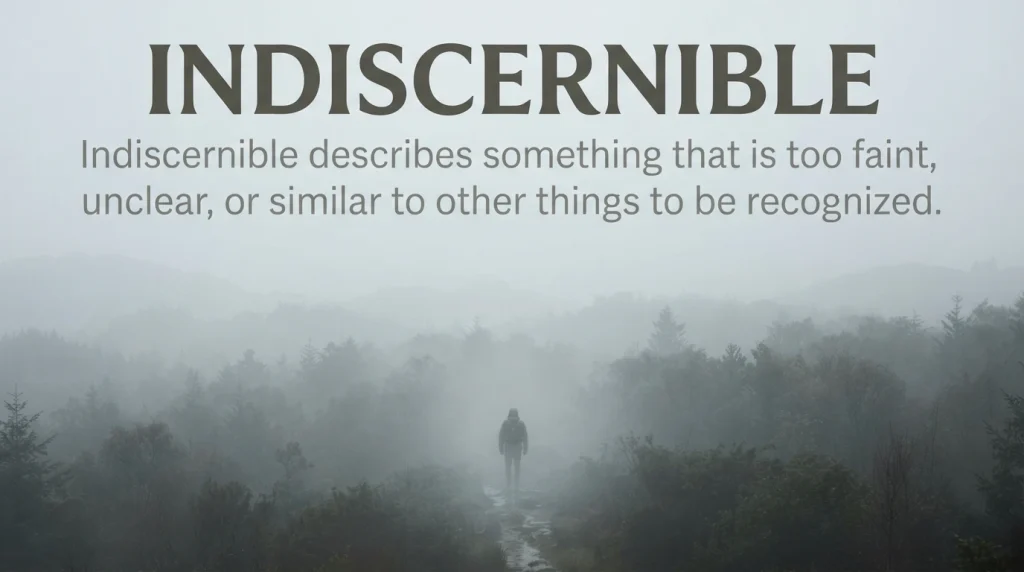
Indiscernible (Adjective) — US /ˌɪndɪˈsɝːnəbəl/ — UK /ˌɪndɪˈsɜːnəbəl/
Meaning: Indiscernible describes something that is too faint, unclear, or similar to other things to be recognized.
Tone/Register: Formal
Example:
“The writing was almost indiscernible.”
“Her face was indiscernible in the dark.”
Synonyms for “Fuzzy” by Tone
Tone matters because two words can share a basic meaning while creating very different impressions.
Positive
For soft or pleasant physical meanings, these words work well:
- Fluffy
- Furry
- Downy
- Plush
- Velvety
- Soft
These words can create a warm, cute, comfortable, or pleasant image.
Neutral
For ordinary descriptions of unclear information or appearance, consider:
- Blurry
- Vague
- Hazy
- Unclear
- Blurred
- Faint
- Misty
- Dim
These are useful in everyday conversation and general writing.
Negative
When something creates confusion or lacks precision, these alternatives can sound more critical:
- Imprecise
- Ill-defined
- Confused
- Murky
- Ambiguous
- Nebulous
The negative effect comes mainly from the context rather than from every word itself.
Playful or Informal
For casual descriptions of physical texture, these are especially natural:
- Fluffy
- Furry
- Fuzzy
- Soft
- Plush
For example, “Look at that fuzzy little puppy!” sounds much more playful than “The puppy has an indistinct appearance.”
“Fuzzy” vs. Close Alternatives
Fuzzy vs. Blurry
The term Fuzzy is broader. It can describe physical texture, unclear images, memories, or ideas.
Blurry is more strongly connected with a lack of visual sharpness.
Use fuzzy for several types of uncertainty. Use blurry when an image or visual detail lacks sharpness.
Fuzzy vs. Vague
Fuzzy is conversational and flexible.
Vague is more precise when information, instructions, explanations, or memories lack detail.
For example, “The instructions are vague” sounds more natural than “The instructions are fuzzy” in many professional contexts.
Fuzzy vs. Hazy
Hazy often suggests something indistinct, unclear, or difficult to remember.
Fuzzy has the same figurative possibility but also describes soft physical surfaces.
Therefore, “I have a hazy memory” and “I have a fuzzy memory” are both natural, while “hazy fur” would normally be inappropriate.
How “Fuzzy” Changes by Context
Daily Conversation
In casual speech, fuzzy is extremely flexible.
You might say, “My memory is fuzzy,” when you cannot remember an event clearly. You might also say, “The picture is fuzzy,” when an image lacks sharpness.
The word sounds natural and relaxed.
Writing or Blogging
In blogs, fuzzy can make explanations feel conversational.
However, writers should choose a more exact alternative when precision matters. For example, ambiguous, imprecise, or ill-defined may be better in an analytical article.
Professional or Academic English
Professional writing usually benefits from greater specificity.
Instead of saying, “The results are fuzzy,” you could write, “The results are unclear” or “The findings are inconclusive.”
Similarly, imprecise and indeterminate language may work better when discussing technical ideas.
Creative or Informal Use
Creative writing can use fuzzy to create atmosphere.
A fuzzy photograph, hazy memory, misty landscape, or dreamlike scene can make a description feel softer and more emotional.
Therefore, the right synonym depends not only on meaning but also on the mood you want to create.
Common Mistakes Learners Make
Mistake 1: Using “blurry” for every meaning of fuzzy
Blurry mainly relates to a lack of sharpness.
Better:
“My memory is fuzzy.”
Not every fuzzy memory is literally blurry.
Mistake 2: Using “vague” for physical texture
Vague normally describes information, meaning, memories, or ideas.
Better:
“The kitten has fuzzy fur.”
Using “vague fur” would sound unnatural.
Mistake 3: Assuming “fuzzy” always has a negative meaning
It does not.
A fuzzy blanket can sound cozy, while a fuzzy explanation can sound unclear.
Context controls the emotional effect.
Mistake 4: Choosing formal words in casual conversation
Words such as nebulous and indeterminate are useful, but they may sound unnecessarily formal in everyday speech.
A simple word such as unclear is often better.
Mistake 5: Overusing one synonym
Replacing every instance of fuzzy with vague can make writing less precise.
Instead, identify what fuzzy means in each sentence before selecting an alternative.
Register Notes
Fuzzy is generally informal to neutral.
It is very common in spoken English and also appears frequently in general writing.
In academic or professional writing, alternatives like unclear, ambiguous, imprecise, ill-defined, and indeterminate can make the meaning more exact.
When describing texture or appearance, fluffy, furry, downy, plush, and velvety can create a more vivid and engaging image. For a deeper vocabulary-building exercise, you can also connect this topic with other synonym guides and compare how context changes word choice.
Real-Life Mini Scenarios
Workplace
A manager reviews a project proposal and notices that the objectives are not specific.
They might say, “The goals are still fuzzy.”
In a formal report, ill-defined or unclear may be more suitable.
Social Situation
Someone asks whether you remember a party from several years ago.
You might reply, “I have a fuzzy memory of it.”
You could also say, “I have a hazy memory of it.”
Media and Pop Culture
An old video may have poor image quality.
A viewer might say, “The footage is blurry.”
If the scene has a soft, nostalgic appearance, dreamlike could be a better creative choice.
Writing and Storytelling
A novelist describing a childhood memory might write about a hazy afternoon or a misty recollection.
Meanwhile, a character wearing a soft sweater could be described as having a fuzzy sleeve.
The context determines the best word.
How to Choose the Right Synonym for Fuzzy
First, identify what you are describing.
For an image, blurry or blurred usually sounds more natural.
When describing an idea, vague, unclear, or ill-defined can express a lack of clarity.
For an incomplete memory, hazy, vague, or fuzzy are common choices.
When talking about an animal or fabric, furry, fluffy, downy, or soft can describe the texture more precisely.
In formal analysis, ambiguous, imprecise, or indeterminate may communicate the issue with greater accuracy. Consequently, the best synonym is not always the most advanced word. It is the word that communicates the exact meaning with the right tone.
Interactive Practice Quiz
Choose the synonym that best fits each situation.
1. The old photograph was difficult to see clearly.
A. Fluffy
B. Blurry
C. Plush
D. Hairy
2. The manager’s instructions did not explain the task clearly.
A. Downy
B. Velvety
C. Vague
D. Furry
3. I cannot remember exactly what happened that night.
A. Hazy
B. Plush
C. Hairy
D. Fluffy
4. The research question does not have clearly defined boundaries.
A. Furry
B. Ill-defined
C. Soft
D. Faint
5. The kitten has very soft, thick fur.
A. Ambiguous
B. Imprecise
C. Fluffy
D. Indeterminate
6. The report uses language that lacks exactness.
A. Imprecise
B. Furry
C. Misty
D. Plush
7. The meaning of the sentence can be interpreted in two ways.
A. Downy
B. Ambiguous
C. Blurry
D. Soft
8. A weak outline could barely be seen in the distance.
A. Faint
B. Fluffy
C. Vague
D. Plush
9. The situation is difficult to understand because important details are missing.
A. Velvety
B. Murky
C. Hairy
D. Downy
10. The child’s blanket feels thick, soft, and comfortable.
A. Nebulous
B. Ambiguous
C. Plush
D. Indeterminate
11. The distant mountains looked unclear because of the mist.
A. Misty
B. Imprecise
C. Confused
D. Ill-defined
12. The scientist could not determine the exact cause.
A. Furry
B. Indeterminate
C. Fluffy
D. Soft
13. The explanation made everyone unsure about what was happening.
A. Confused
B. Downy
C. Plush
D. Velvety
14. The writer wants a poetic description of an unreal-looking scene.
A. Imprecise
B. Dreamlike
C. Indeterminate
D. Unclear
15. The speaker answered without enough specific detail.
A. Vague
B. Furry
C. Fluffy
D. Plush
Reflection Task: Write one sentence using a synonym for fuzzy that you would naturally use in an email, essay, conversation, or social situation.
Answer Key: 1-B | 2-C | 3-A | 4-B | 5-C | 6-A | 7-B | 8-A | 9-B | 10-C | 11-A | 12-B | 13-A | 14-B | 15-A
FAQs
1. What is the best synonym for fuzzy when describing an unclear idea?
Vague is often the best everyday synonym when an idea lacks clear details. However, unclear, ambiguous, imprecise, or ill-defined may be better depending on the exact problem. For example, use ambiguous when something has multiple possible interpretations and imprecise when the wording lacks accuracy.
2. What is a good synonym for fuzzy when talking about a memory?
Hazy is one of the most natural alternatives for an unclear or incomplete memory. Vague and unclear also work. For example, “I have a hazy memory of my first day at school” sounds natural and clearly communicates that the memory is incomplete.
3. What word can replace fuzzy in professional writing?
In professional writing, unclear, imprecise, ambiguous, or ill-defined can often replace fuzzy. The correct choice depends on the problem. Use unclear for a general lack of clarity, imprecise for a lack of exactness, and ambiguous when multiple interpretations are possible.
4. What is the difference between fuzzy and blurry?
Fuzzy has a broader meaning than blurry. Fuzzy can describe unclear memories, ideas, images, or soft textures. Blurry mainly describes something that lacks visual sharpness. Therefore, a photograph can be blurry, while a memory can be fuzzy or hazy.
5. Which synonym for fuzzy is best for soft animal fur?
For animal fur, furry, fluffy, or soft are usually more natural choices. Downy works when the hair or feathers are especially fine and soft. The choice depends on the texture you want to emphasize rather than simply replacing fuzzy word for word.
6. Can fuzzy describe feelings or thoughts?
Yes. Fuzzy can describe thoughts, mental states, or feelings that are unclear or difficult to organize. For example, someone might say, “My thoughts feel fuzzy after a long day.” In this figurative use, unclear, cloudy, or confused may also fit.
7. Is fuzzy formal or informal English?
Fuzzy is mainly informal to neutral English. It is common in conversation and general writing. In academic or highly professional writing, more specific terms such as ambiguous, imprecise, indeterminate, or ill-defined may sound more appropriate.
Conclusion
Learning a synonym for fuzzy is not simply about memorizing bigger words. It is about choosing language that matches the exact meaning, context, and tone.
When an idea lacks clarity, vague, unclear, or ill-defined can express the meaning more precisely. For visual quality, blurry and blurred are more suitable choices. If you are talking about an incomplete recollection, hazy is often the most natural option.
When describing a soft texture, alternatives such as fluffy, furry, downy, and plush help create a more vivid picture. Each word highlights a slightly different quality, so choosing the right one makes your writing clearer and more expressive. Therefore, context should always guide your choice.
The more synonyms you understand, the easier it becomes to write naturally, speak confidently, and communicate precise ideas. Practice these words in emails, essays, stories, and everyday conversations.

I’m Hezel, a passionate English language enthusiast and the creator of Synworda.com. I love exploring synonyms, vocabulary, grammar, and the many ways words can make communication clearer and more effective. Through Synworda.com, I create simple, practical, and easy-to-understand content for students, writers, professionals, and anyone who wants to improve their English. I enjoy breaking down confusing words and grammar concepts into helpful explanations with clear examples. I aim to make learning English feel less complicated and more enjoyable. I believe that understanding the right words can help everyone communicate with confidence in everyday life.