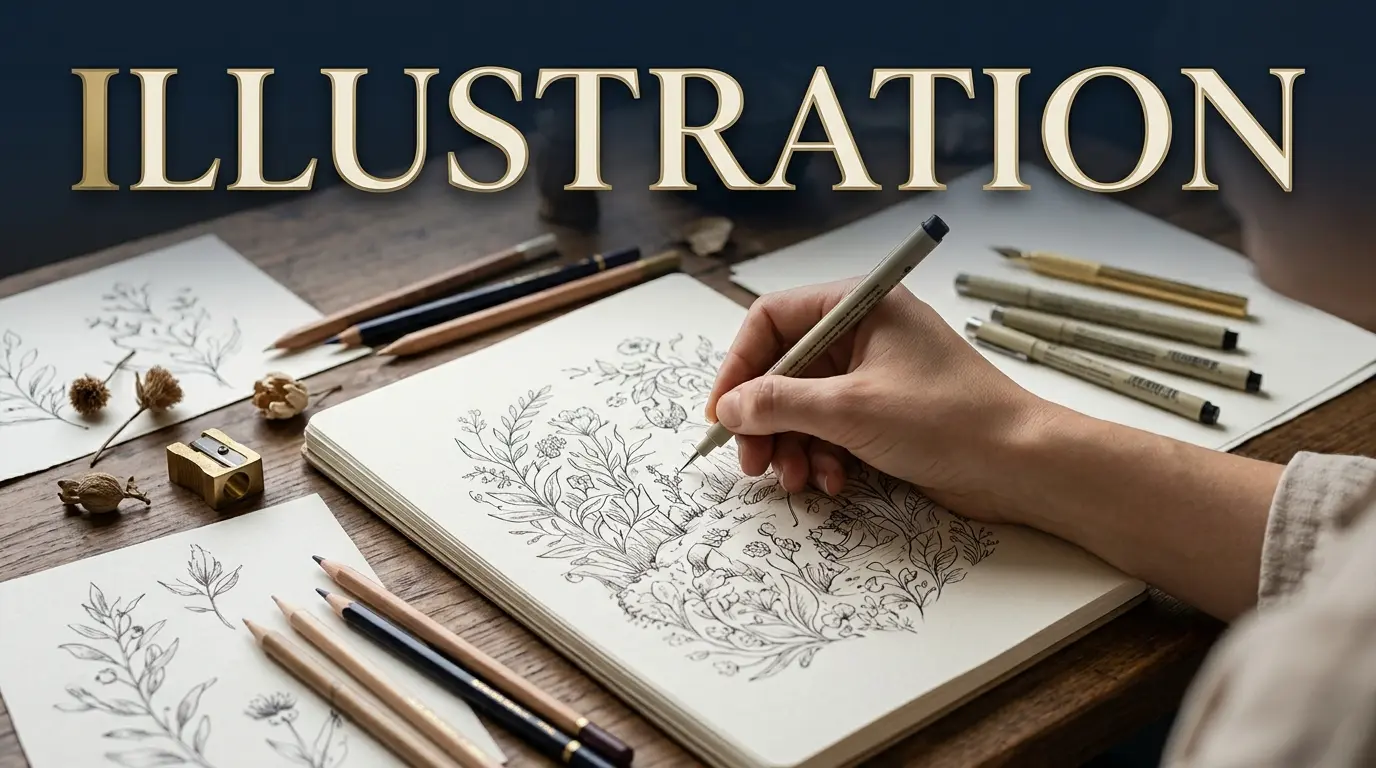
A synonym for illustration is a word that describes an example, explanation, picture, or visual representation, depending on the context. Common alternatives include example, demonstration, depiction, diagram, image, and visual. The best choice depends on whether you mean explaining an idea or showing it visually.
Imagine explaining a difficult topic to a friend. A simple example can make the idea easier to understand. That is where the right synonym for illustration becomes useful.
Writers often use illustrations to make information clearer and more engaging. Bloggers, students, and content creators can choose alternatives to avoid repetition and explain ideas more precisely.
In everyday English, illustration can describe a drawing, a picture in a book, or an example that explains a point. Learning related words helps you communicate naturally in different situations.
Whether you are writing an essay, preparing a presentation, or chatting with friends, choosing the right alternative can strengthen your vocabulary. This guide explores useful options with clear meanings and practical examples.
What Does “Illustration” Really Mean?
An illustration is something that explains, clarifies, or visually represents an idea. It can be a picture, drawing, diagram, example, or demonstration that helps people understand information.
The word is a noun. Native English speakers commonly use it in education, publishing, business presentations, storytelling, and everyday explanations.
For example:
- A textbook may contain an illustration of the human heart.
- A teacher may use a real-life example as an illustration of honesty.
- A blogger may include an image to illustrate a complicated concept.
The word has no fixed emotional tone. Its meaning depends on the situation. A scientific illustration sounds technical, while an illustration in a children’s book may feel creative and playful.
Connotative Meaning
Connotation (the emotional or cultural associations a word carries beyond its basic definition) helps explain how illustration feels in different contexts.
- Positive tone: An illustration can make a difficult concept clearer, more engaging, and easier to remember.
- Negative tone: An illustration can expose a problem or highlight an unpleasant reality, depending on the message.
- Neutral tone: The word commonly describes a picture, example, or visual explanation without expressing an opinion.
Etymology of Illustration
The English word illustration comes through Middle English and Old French from Latin illustratio, associated with making something clear or illuminating it. The Latin verb illustrare means to illuminate, enlighten, or make clear.
Its history reflects the modern meaning: helping people see or understand something more clearly.
- Old English (450–1100): The modern noun illustration was not an established Old English word. English used other words and expressions to communicate ideas of showing and explaining.
- Middle English (1100–1500): French and Latin influences helped introduce forms related to illustration, particularly in religious, scholarly, and explanatory writing.
- Modern English (1500–present): The word developed broader uses in books, art, education, science, and figurative explanations. Today, it can refer to both a visual image and an example that clarifies an idea.
Pronunciation (US & UK – IPA)
- US: /ˌɪləˈstreɪʃən/
- UK: /ˌɪləˈstreɪʃən/
Syllables
il-lus-tra-tion — four syllables.
Affixation Pattern of Illustration
- Root: Latin illustrare, meaning to illuminate or make clear.
- Prefix: No productive English prefix is normally added to the complete word illustration.
- Suffix: -ation, which commonly forms nouns related to actions, processes, or results.
The word is related to illustrate (verb) and illustrative (adjective).
Synonym List:
Picture (Noun) — US: /ˈpɪk.tʃɚ/ | UK: /ˈpɪk.tʃər/
- Meaning: A visual representation of a person, object, or scene created by drawing, painting, or photography.
- Tone/Register: Informal to General Neutral
- Example 1: The children loved the colorful picture on the front cover of the book.
- Example 2: She painted a detailed picture of the countryside during her trip.
Visual (Noun) — US: /ˈvɪʒ.u.əl/ | UK: /ˈvɪʒ.u.əl/
- Meaning: A graphic image, display, or piece of film used to accompany a presentation or text.
- Tone/Register: Professional / Business
- Example 1: Our presentation needs a strong visual to explain the revenue growth.
- Example 2: The designer created an engaging visual for the modern advertising campaign.
Graphic (Noun) — US: /ˈɡræf.ɪk/ | UK: /ˈɡræf.ɪk/
- Meaning: A visual image or design produced on a surface such as paper, canvas, or a computer screen.
- Tone/Register: Technical / Digital / Media
- Example 1: The article contains an interactive graphic showing population trends over time.
- Example 2: He works as a digital artist specializing in website graphics.
Drawing (Noun) — US: /ˈdrɑː.ɪŋ/ | UK: /ˈdrɔː.ɪŋ/
- Meaning: A picture made with a pencil, pen, or crayon rather than paint.
- Tone/Register: General / Artistic
- Example 1: The architect showed us a quick drawing of the building plan.
- Example 2: She keeps a sketchbook full of detailed hand-made drawings.
Artwork (Noun) — US: /ˈɑːrt.wɝːk/ | UK: /ˈɑːt.wɜːk/
- Meaning: Illustrative material or artistic work prepared for publication or exhibition.
- Tone/Register: Formal / Creative Industry
- Example 1: The book features original artwork from world-renowned painters.
- Example 2: Please send the final vector artwork to the printing company today.
Diagram (Noun) — US: /ˈdaɪ.ə.ɡræm/ | UK: /ˈdaɪ.ə.ɡræm/
- Meaning: A simplified drawing showing the appearance, structure, or workings of something.
- Tone/Register: Technical / Educational / Scientific
- Example 1: Follow the labeled diagram to assemble the wooden cabinet correctly.
- Example 2: The biology textbook includes a detailed diagram of the human heart.
Figure (Noun) — US: /ˈfɪɡ.jɚ/ | UK: /ˈfɪɡ.ər/
- Meaning: A numbered diagram, chart, or visual item in a printed document or book.
- Tone/Register: Academic / Formal
- Example 1: Refer to Figure 3.2 for the breakdown of survey results.
- Example 2: The research report includes several figures outlining financial forecasts.
Image (Noun) — US: /ˈɪm.ɪdʒ/ | UK: /ˈɪm.ɪdʒ/
- Meaning: A representation of the external form of a person or thing in art or photography.
- Tone/Register: General Neutral
- Example 1: High-resolution images make your website look clean and trustworthy.
- Example 2: The mirror reflected a clear image of the decorated living room.
Exemplar (Noun) — US: /ɪɡˈzem.plɑːr/ | UK: /ɪɡˈzem.plɑː/
- Meaning: A person or thing serving as a typical example or excellent model.
- Tone/Register: Formal / Academic
- Example 1: Her recent project serves as an exemplar of high-quality research writing.
- Example 2: The teacher highlighted his essay as an exemplar for the entire class.
Depiction (Noun) — US: /dɪˈpɪk.ʃən/ | UK: /dɪˈpɪk.ʃən/
- Meaning: A representation or portrait of someone or something in an artwork or written text.
- Tone/Register: Formal / Literary / Critical
- Example 1: The movie offers a realistic depiction of historical events in Europe.
- Example 2: Her modern sculpture is a unique depiction of urban life.
Instance (Noun) — US: /ˈɪn.stəns/ | UK: /ˈɪn.stəns/
- Meaning: An example or single occurrence of something being explained.
- Tone/Register: Academic / Analytical
- Example 1: This case provides a clear instance where the rule does not apply.
- Example 2: We recorded every instance of software error during the testing phase.
Demonstration (Noun) — US: /ˌdem.ənˈstreɪ.ʃən/ | UK: /ˌdem.ənˈstreɪ.ʃən/
- Meaning: An act of showing or explaining how something works or exists.
- Tone/Register: Educational / Business
- Example 1: The chef gave a live demonstration of proper knife techniques.
- Example 2: The sales team prepared a product demonstration for prospective buyers.
Case in Point (Noun Phrase) — US: /keɪs ɪn pɔɪnt/ | UK: /keɪs ɪn pɔɪnt/
- Meaning: An example that illustrates or supports a specific argument or point being made.
- Tone/Register: Business / Conversational Professional
- Example 1: Hard work leads to success, and her rapid promotion is a case in point.
- Example 2: Prices are rising quickly; the cost of housing is a clear case in point.
Clarification (Noun) — US: /ˌklær.ə.fəˈkeɪ.ʃən/ | UK: /ˌklær.ɪ.fɪˈkeɪ.ʃən/
- Meaning: An explanation that makes a statement or situation easier to understand.
- Tone/Register: Formal / Corporate
- Example 1: The manager issued a clarification regarding the updated work guidelines.
- Example 2: He asked for further clarification before signing the legal contract.
Representation (Noun) — US: /ˌrep.rɪ.zenˈteɪ.ʃən/ | UK: /ˌrep.rɪ.zenˈteɪ.ʃən/
- Meaning: The depiction or portrayal of someone or something in a visual or written format.
- Tone/Register: Formal / Cultural / Media
- Example 1: The graph offers a visual representation of monthly consumer spending.
- Example 2: Accurate cultural representation in literature fosters mutual empathy.
Sketch (Noun) — US: /sketʃ/ | UK: /sketʃ/
- Meaning: A rough or unfinished drawing made to assist in making a more finished picture.
- Tone/Register: Casual / Creative
- Example 1: The artist made a quick sketch of the city skyline before painting.
- Example 2: He drafted a rough sketch of the room layout on a napkin.
Photo (Noun) — US: /ˈfoʊ.toʊ/ | UK: /ˈfəʊ.təʊ/
- Meaning: An image created by light falling on a photosensitive surface or digital sensor.
- Tone/Register: Informal / General Neutral
- Example 1: She uploaded a clear photo of the ocean landscape to her blog.
- Example 2: The news article included a recent photo of the conference venue.
Chart (Noun) — US: /tʃɑːrt/ | UK: /tʃɑːt/
- Meaning: A sheet of information in the form of a table, graph, or diagram.
- Tone/Register: Business / Educational
- Example 1: The sales manager presented a monthly chart showing revenue growth.
- Example 2: Look at the comparison chart to see which plan fits your budget.
Graph (Noun) — US: /ɡræf/ | UK: /ɡrɑːf/
- Meaning: A diagram showing the relation between variable quantities along two axes.
- Tone/Register: Academic / Analytical
- Example 1: The research paper includes a line graph tracking temperature changes.
- Example 2: We used a bar graph to display the survey responses clearly.
Portrait (Noun) — US: /ˈpɔːr.trət/ | UK: /ˈpɔː.trət/
- Meaning: A visual representation of a person showing their face and expression.
- Tone/Register: Artistic / Formal
- Example 1: The museum displays a famous portrait painted during the Renaissance.
- Example 2: She ordered a custom digital portrait of her family for the holidays.
Vignette (Noun) — US: /vɪnˈjet/ | UK: /vɪnˈjet/
- Meaning: A brief evocative description, account, or small decorative illustration.
- Tone/Register: Literary / Creative
- Example 1: The novel opens with a charming vignette of village life.
- Example 2: Her essay contains a short vignette that perfectly captures the mood.
Plate (Noun) — US: /pleɪt/ | UK: /pleɪt/
- Meaning: A full-page illustration printed separately from the text in a book.
- Tone/Register: Academic / Formal / Historical
- Example 1: The antique encyclopedia features a color plate of rare botanical species.
- Example 2: Refer to Plate 4 at the back of the historical volume.
Blueprint (Noun) — US: /ˈbluː.prɪnt/ | UK: /ˈbluː.prɪnt/
- Meaning: A detailed technical plan or drawing showing how to build something.
- Tone/Register: Technical / Professional
- Example 1: The chief architect examined the blueprint before construction began.
- Example 2: They shared a digital blueprint of the proposed office expansion.
Schematic (Noun) — US: /skəˈmæt.ɪk/ | UK: /skɪˈmæt.ɪk/
- Meaning: A diagram showing the main parts of an electrical or mechanical system.
- Tone/Register: Technical / Engineering
- Example 1: The technician studied the electrical schematic to locate the short circuit.
- Example 2: This instruction manual includes a simplified schematic of the motor.
Silhouette (Noun) — US: /ˌsɪl.uˈet/ | UK: /ˌsɪl.uˈet/
- Meaning: The dark shape and outline of someone or something visible against a light background.
- Tone/Register: Artistic / Descriptive
- Example 1: The artist captured the silhouette of the mountains at sunset.
- Example 2: A clear silhouette of a sailboat appeared on the horizon.
Snapshot (Noun) — US: /ˈsnæp.ʃɑːt/ | UK: /ˈsnæp.ʃɒt/
- Meaning: An informal photograph or a quick summary showing the state of something.
- Tone/Register: Casual / Business Informal
- Example 1: He took a quick snapshot of his friends during the weekend trip.
- Example 2: The report provides a helpful snapshot of current market trends.
Map (Noun) — US: /mæp/ | UK: /mæp/
- Meaning: A visual representation of an area showing physical features or spatial relationships.
- Tone/Register: General / Educational
- Example 1: The guidebook contains a detailed map of the city subway system.
- Example 2: She drew a simple map to show guests how to reach the venue.
Infographic (Noun) — US: /ˌɪn.foʊˈɡræf.ɪk/ | UK: /ˌɪn.fəʊˈɡræf.ɪk/
- Meaning: A visual representation of information or data designed to be easily understood.
- Tone/Register: Modern Digital / Marketing
- Example 1: The online blog uses an infographic to explain complex climate data.
- Example 2: Our team created a colorful infographic for the social media campaign.
Draft (Noun) — US: /dræft/ | UK: /drɑːft/
- Meaning: A preliminary version of a piece of writing, plan, or visual drawing.
- Tone/Register: Professional / Design
- Example 1: The designer submitted an initial draft of the logo for approval.
- Example 2: Please review this early draft of the magazine cover design.
Rendering (Noun) — US: /ˈren.də.rɪŋ/ | UK: /ˈren.dər.ɪŋ/
- Meaning: A visual perspective drawing or digital image showing how a design will look.
- Tone/Register: Professional / Architectural / 3D Design
- Example 1: The architectural firm presented a 3D rendering of the new skyscraper.
- Example 2: The game developer shared a photorealistic rendering of the main character.
Canvas (Noun) — US: /ˈkæn.vəs/ | UK: /ˈkæn.vəs/
- Meaning: An artwork painted on canvas material, or the surface used for digital creation.
- Tone/Register: Artistic / Literary
- Example 1: The gallery displayed a large oil canvas depicting a stormy sea.
- Example 2: She spent hours working on a colorful digital canvas.
Vignette-picture (Noun) — US: /vɪnˈjet ˈpɪk.tʃɚ/ | UK: /vɪnˈjet ˈpɪk.tʃər/
- Meaning: An illustration that fades softly into its background without a definite border.
- Tone/Register: Fine Art / Traditional Publishing
- Example 1: The storybook features a delicate vignette-picture on every chapter head.
- Example 2: The designer selected a soft vignette-picture for the invitation background.
Portrayal (Noun) — US: /pɔːrˈtreɪ.əl/ | UK: /pɔːˈtreɪ.əl/
- Meaning: A depiction or representation of someone or something in an artistic format.
- Tone/Register: Formal / Critical Review
- Example 1: Critics praised the graphic novel for its vivid portrayal of historical struggles.
- Example 2: Her accurate portrayal of nature won first place in the contest.
Print (Noun) — US: /prɪnt/ | UK: /prɪnt/
- Meaning: A reproduced copy of a painting, drawing, or photograph made by printing.
- Tone/Register: General / Commercial Art
- Example 1: She bought a framed art print to decorate her home office wall.
- Example 2: The museum shop sells high-quality prints of famous museum artworks.
Woodcut (Noun) — US: /ˈwʊd.kʌt/ | UK: /ˈwʊd.kʌt/
- Meaning: A print made from a carved wooden block, or the relief illustration style itself.
- Tone/Register: Artistic / Historical
- Example 1: The medieval manuscript contains a detailed woodcut of a dragon.
- Example 2: He specializes in creating modern art using traditional woodcut techniques.
Etching (Noun) — US: /ˈetʃ.ɪŋ/ | UK: /ˈetʃ.ɪŋ/
- Meaning: A print produced by engraving a design on a metal plate with acid.
- Tone/Register: Fine Art / Specialist
- Example 1: The antique book features an intricate copper etching of the city cathedral.
- Example 2: Collectors appreciated the fine line work in her original etching.
Likeness (Noun) — US: /ˈlaɪk.nəs/ | UK: /ˈlaɪk.nəs/
- Meaning: A visual representation or realistic copy of a person’s physical appearance.
- Tone/Register: Formal / Literary
- Example 1: The sculptor captured a striking likeness of the former president.
- Example 2: The court artist drew an accurate likeness of the witness during testimony.
Caricature (Noun) — US: /ˈker.ə.kə.tʃʊr/ | UK: /ˈkær.ɪ.kə.tʃʊər/
- Meaning: A picture or drawing in which striking characteristics are exaggerated for comic effect.
- Tone/Register: Informal / Satirical
- Example 1: A street artist drew a funny caricature of the couple at the fair.
- Example 2: The newspaper published a political caricature illustrating the legislative debate.
Icon (Noun) — US: /ˈaɪ.kɑːn/ | UK: /ˈaɪ.kɒn/
- Meaning: A small visual symbol or graphic used in software user interfaces or design.
- Tone/Register: Technical / Digital Design
- Example 1: Click on the printer icon to send your document to the queue.
- Example 2: The app interface uses intuitive icons to make navigation effortless.
Symbol (Noun) — US: /ˈsɪm.bəl/ | UK: /ˈsɪm.bəl/
- Meaning: A mark, sign, or visual image that represents an idea, object, or relationship.
- Tone/Register: General / Analytical
- Example 1: The dove is widely recognized as a visual symbol of peace.
- Example 2: Ancient texts often use geometric symbols to illustrate natural cycles.
Exemplification (Noun) — US: /ɪɡˌzem.plə.fəˈkeɪ.ʃən/ | UK: /ɪɡˌzem.plɪ.fɪˈkeɪ.ʃən/
- Meaning: The act or process of showing or clarifying something by providing an example.
- Tone/Register: Highly Academic / Formal
- Example 1: The professor provided a clear exemplification of the economic theory.
- Example 2: This case study serves as an exemplification of successful corporate leadership.
Elucidation (Noun) — US: /iːˌluː.səˈdeɪ.ʃən/ | UK: /iːˌluː.sɪˈdeɪ.ʃən/
- Meaning: An explanation or clarification that makes something difficult clear and understandable.
- Tone/Register: Formal / Academic Writing
- Example 1: The author offered an insightful elucidation of complex quantum principles.
- Example 2: We appreciate your detailed elucidation of the new policy guidelines.
Case (Noun) — US: /keɪs/ | UK: /keɪs/
- Meaning: An instance of a particular situation, used conceptually to illustrate a point.
- Tone/Register: Professional / General
- Example 1: This trial offers a classic case where initial assumptions were completely wrong.
- Example 2: Let us examine a specific case to see how the software works in practice.
Paradigm (Noun) — US: /ˈpær.ə.daɪm/ | UK: /ˈpær.ə.daɪm/
- Meaning: A typical example, pattern, or outstanding model of a concept or system.
- Tone/Register: Academic / Corporate Strategic
- Example 1: Her business strategy became a new paradigm for tech startups worldwide.
- Example 2: The project serves as an ideal paradigm of sustainable engineering.
Proof (Noun) — US: /pruːf/ | UK: /pruːf/
- Meaning: Evidence or a clear visual example that establishes a fact or truth.
- Tone/Register: Analytical / Formal
- Example 1: The charts provided clear visual proof of the project’s success.
- Example 2: Her successful career is living proof that determination pays off.
Synonyms by Tone
Tone matters because two words can share a broad meaning but suit different situations. A casual conversation may call for picture or example, while a research paper may need representation or depiction.
Positive
These words often emphasize clarity, usefulness, or effective communication:
- Example: Makes an idea easier to understand.
- Demonstration: Shows how something works.
- Visual aid: Supports learning and understanding.
- Explanation: Clarifies a difficult subject.
- Analogy: Connects a new concept with a familiar one.
Neutral
These alternatives describe a visual or explanatory function without adding strong emotional judgment:
- Image
- Picture
- Diagram
- Chart
- Figure
- Representation
- Instance
- Model
Negative
No common synonym for illustration is inherently negative. However, words such as caricature or misrepresentation may introduce criticism in specific contexts.
- Caricature: An exaggerated portrayal that may make someone or something look ridiculous.
- Misrepresentation: An inaccurate or misleading account of something.
These are context-dependent alternatives, not direct replacements in every sentence.
Playful or Informal
- Sketch: A simple drawing, often created quickly.
- Picture: An everyday term for a visual image.
- Doodle: A casual drawing made without much planning.
A doodle is only appropriate when the illustration is informal or spontaneous.
Illustration vs. Close Alternatives
Several words overlap with illustration, but their meanings are not identical. Choosing carefully makes your English clearer and more natural.
| Word | Main difference | Best use |
|---|---|---|
| Illustration | A visual representation or an example that clarifies an idea | Books, explanations, presentations |
| Example | A particular instance that supports a general point | Essays, teaching, conversation |
| Depiction | A portrayal of a person, scene, event, or concept | Art, film, literature |
| Diagram | A simplified visual showing structure or process | Science, education, technical writing |
Quick comparison:
- Use example when explaining an abstract idea through a particular situation.
- Use depiction when discussing how something is portrayed.
- Use diagram when a visual explains parts, connections, or steps.
- Use illustration when you need a broader term for a visual or explanatory example.
How Illustration Changes by Context
The meaning of illustration depends on how people use it. Understanding the context helps you select a synonym that sounds natural instead of forcing a word into the wrong sentence.
Daily Conversation
In everyday conversations, people usually choose simple words such as example, picture, or demonstration. These alternatives sound natural and help explain ideas without making the conversation feel formal.
For example, instead of saying, “Let me provide an illustration,” you might say, “Let me give you an example.”
Writing and Blogging
Bloggers and content writers use illustrations to explain unfamiliar ideas, support arguments, and keep readers interested. Words such as example, image, diagram, and visual help describe different ways of presenting information.
For instance, a cooking blog might include a picture of a finished meal, while an educational article might use a diagram to explain a recipe’s steps.
Professional and Academic English
Formal writing often uses words such as representation, depiction, case study, and demonstration. These terms communicate the exact purpose of the material being discussed.
A researcher might use a chart to present results and a case study to examine a particular situation. Selecting the precise term improves clarity.
Creative and Informal English
Artists, authors, and storytellers often use sketch, drawing, portrayal, and rendering. These words describe different creative methods and visual outcomes.
A sketch may show an early idea, while a rendering may present a detailed design. A portrayal may describe how a character appears in a novel or film.
Common Mistakes Learners Make
Learning synonyms involves more than memorizing similar words. You also need to understand their grammatical roles and the situations in which native speakers use them.
1. Treating Every Synonym as Interchangeable
An example and a diagram can both clarify an idea, but they work differently. An example describes a particular instance, while a diagram presents information visually.
Incorrect: The teacher gave a diagram of honesty.
Better: The teacher gave an example of honesty.
A diagram would be more appropriate if the teacher wanted to show a process or relationship.
2. Using Formal Words in Casual Conversations
Words such as elucidation and exposition can sound unnecessarily formal in everyday speech.
Instead of saying, “I need an elucidation of your message,” say, “Could you explain your message?”
Choose words that suit your audience and purpose.
3. Confusing Illustration with Decoration
An illustration can decorate a page, but its purpose often extends beyond appearance. It may explain a process, support an argument, or help readers understand a complex topic.
When describing a picture that serves no explanatory purpose, image or picture may be more appropriate.
4. Repeating the Same Word Too Often
Using illustration repeatedly can make an article sound monotonous. However, replacing it with an inaccurate synonym can confuse readers.
Use alternatives only when they preserve the intended meaning. Clarity matters more than variety.
Register Notes: Formal vs. Informal English
- Formal: Representation, exposition, elucidation, depiction.
- Neutral: Illustration, example, image, picture, diagram.
- Informal or creative: Sketch, doodle, picture.
In spoken English, example and picture often feel more natural. Academic writing may require more specific terms such as figure, diagram, or representation.
For related vocabulary practice, explore other synonym guides that explain word meanings, pronunciation, tone, and practical usage.
Real-Life Scenarios Using Illustration
These short scenarios show how different alternatives work in real situations.
Workplace
A manager wants to explain a complicated project timeline. She shares a chart showing important dates and a diagram explaining how the teams connect.
Both visuals help employees understand the project, but each serves a different purpose.
Social Situations
A friend struggles to understand your travel experience. You show a picture of the location and give an example of what made the trip memorable.
The picture provides visual information, while the example explains your experience.
Media and Pop Culture
A film critic discusses a movie’s depiction of historical events. Another reviewer examines the actor’s portrayal of the main character.
Both words relate to representation, but depiction can describe the overall presentation of events, while portrayal often focuses on how a person or character is presented.
Writing and Storytelling
A children’s author includes a drawing of a forest and a sketch of a new character. The drawing helps readers imagine the setting, while the sketch communicates the character’s appearance.
These choices make the story easier to visualize without repeating the same word.
Interactive Practice Quiz:
Choose the best answer for each situation. Consider the meaning, tone, and context before selecting your response.
Multiple-Choice Questions
1. Your teacher wants to explain a difficult idea using a real-life situation. Which word fits best?
a) Example
b) Rendering
c) Doodle
2. A science textbook shows how blood moves through the heart. What is this visual most likely called?
a) Analogy
b) Diagram
c) Portrayal
3. An architect presents a digital image of a building that has not been constructed yet. Which word is most suitable?
a) Instance
b) Explanation
c) Rendering
4. A film reviewer discusses how a movie presents a historical event. Which word fits best?
a) Depiction
b) Chart
c) Specimen
5. A speaker uses an image to help an audience understand a presentation. What is the image functioning as?
a) Case study
b) Visual aid
c) Exposition
6. A student compares the human brain to a computer to explain how memory works. Which term describes this comparison?
a) Analogy
b) Figure
c) Drawing
7. A research paper labels a numbered diagram as Figure 3. Which word is being used?
a) Sketch
b) Picture
c) Figure
8. An artist quickly draws the first version of a new design. Which word is most appropriate?
a) Elucidation
b) Sketch
c) Representation
9. A researcher studies one company in detail to understand its business strategy. What is this approach called?
a) Case study
b) Visual aid
c) Picture
10. A teacher wants to show the results of a class survey in a visual format. Which option is best?
a) Portrayal
b) Chart
c) Exposition
11. Which word is most suitable for a formal explanation that makes a difficult theory clearer?
a) Doodle
b) Picture
c) Elucidation
12. A children’s book contains a colorful image of a dragon. Which word is the simplest natural choice?
a) Picture
b) Instance
c) Demonstration
Reflection and Application Task
Write two short sentences about something you learned recently. Use an illustration in one sentence and a suitable synonym in the other.
Then explain why you chose that alternative. Does it describe a picture, a practical example, or an explanation?
Answer Key
1. a 2. b 3. c 4. a 5. b 6. a 7. c 8. b 9. a 10. b 11. c 12. a
Conclusion
Learning a synonym for illustration helps you express ideas with greater precision. Words such as example, depiction, and diagram make your writing clearer and more engaging.
A stronger vocabulary also improves blogging, academic writing, professional communication, and everyday conversations. Choosing words that fit the context helps readers understand your message without confusion.
You do not need to memorize every alternative at once. Start with a few useful words, notice how native speakers use them, and practise applying them in real situations.
Make vocabulary practice part of your daily routine. Try using these synonyms in emails, essays, and conversations to build confidence and communicate more naturally in English.
FAQs
1. What is the best synonym for illustration in an essay?
The best synonym depends on the purpose of the sentence. Use example when supporting an argument with a particular case. Choose diagram when referring to a visual explanation, or representation when describing how an idea or system is shown. For academic writing, prioritize accuracy and clarity rather than replacing every occurrence of illustration.
2. What is another word for illustration in a research paper?
In a research paper, useful alternatives include figure, diagram, chart, representation, and example. Use figure for a numbered visual, such as a graph or diagram. Choose chart when presenting data, and use example when supporting a theoretical claim. Always follow the terminology and formatting conventions of your academic discipline.
3. What is a synonym for illustration in art and design?
In art and design, common alternatives include drawing, depiction, sketch, rendering, and visual representation. A drawing describes an image created with lines or marks, while a sketch often communicates an early idea. A rendering typically shows how a proposed design may look when completed. The best word depends on the medium and purpose.
4. Can illustration mean an example rather than a picture?
Yes. Illustration can refer to an example that clarifies a point, not just a visual image. For instance, a teacher might say, “This story is an illustration of courage.” The story explains the idea through a particular situation. In this sense, an example is often a simple and natural substitute.
5. What is the difference between illustration and explanation?
An illustration helps clarify an idea through a picture, example, or demonstration. An explanation provides information that makes a subject understandable. For instance, a diagram of a machine is an illustration, while a description of how the machine operates is an explanation. The two often work together, but they are not identical.
6. What is the best formal word for illustration?
Representation, depiction, and exposition can suit formal writing, depending on the intended meaning. Representation describes how something is shown, depiction emphasizes how a subject is portrayed, and exposition refers to detailed explanation. In scientific documents, figure or diagram may be more precise when referring to a visual element.
7. How can I avoid repeating illustration in an article?
First, identify what each use of illustration means. Replace it with example when discussing a particular situation, image when referring to a visual, or demonstration when showing how something works. Read the revised paragraph aloud to check its flow. Do not change a word merely for variety if the replacement alters the meaning.
External Source
For further vocabulary learning, consult the Cambridge Dictionary’s entry for illustration to explore its definitions, pronunciation, and example sentences.
– Cambridge Dictionary — Illustration

I’m Hezel, a passionate English language enthusiast and the creator of Synworda.com. I love exploring synonyms, vocabulary, grammar, and the many ways words can make communication clearer and more effective. Through Synworda.com, I create simple, practical, and easy-to-understand content for students, writers, professionals, and anyone who wants to improve their English. I enjoy breaking down confusing words and grammar concepts into helpful explanations with clear examples. I aim to make learning English feel less complicated and more enjoyable. I believe that understanding the right words can help everyone communicate with confidence in everyday life.